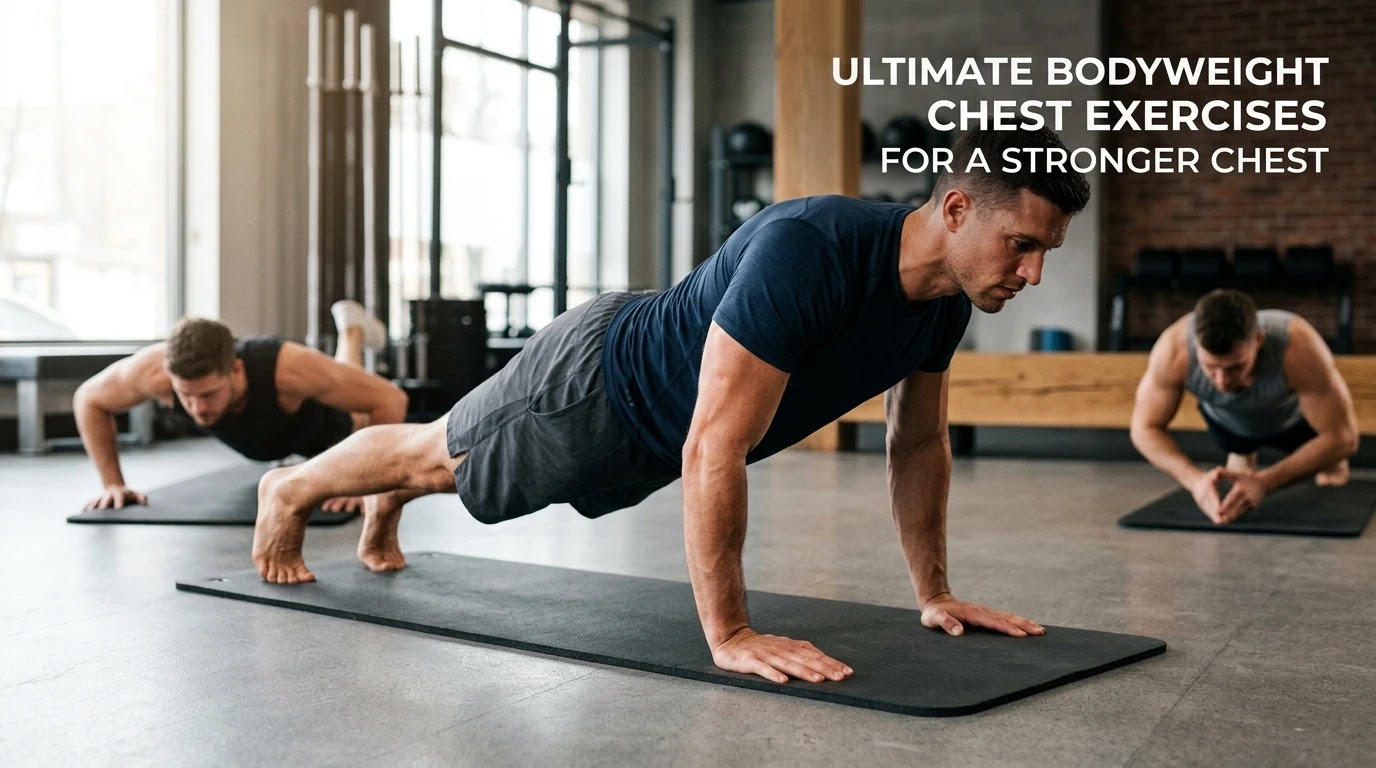
Ultimate Bodyweight Chest Exercises for a Stronger Chest
Ultimate Bodyweight Chest Exercises for a Stronger Chest
 |
You don’t need a crowded gym or expensive machines to build a strong upper body. Learning bodyweight chest exercises lets you work out at home. It’s easy and effective.
This guide will teach you everything from basic to advanced exercises. You’ll learn how to change your hand position, foot height, and pace. This keeps your muscles working hard as you get stronger.
True progress is more than just moving. We’ll talk about the importance of regular workouts, proper technique, and rest. Eating right and sleeping well help your muscles grow best.
Key Takeaways
- Build significant upper body strength without relying on gym equipment.
- Master foundational push-up variations to target different muscle fibers.
- Use tempo and range of motion to increase intensity over time.
- Implement progressive overload strategies to ensure continuous muscle growth.
- Combine training with proper nutrition and sleep for optimal recovery.
How Bodyweight Chest Exercises Build Strength and Definition
Building a strong chest at home is more than just push-ups. It’s about knowing how your body moves. Mastering these movements lets you grow muscles without heavy gym gear.
How Your Pectoral Muscles Work During Pressing Movements
When you do bodyweight chest exercises, your pectoralis major is the main mover. It works with your anterior deltoids and triceps to push you up.
Your core muscles are also key. They help keep your body stable. This lets your chest muscles work better, helping you build them over time.
Choosing Exercise Angles for the Upper, Mid, and Lower Chest
You can change how you do exercises to focus on different parts of your chest. Standard exercises work the mid-chest well, building a solid base.
By raising your feet, you work your upper chest and shoulders more. Lowering your hands works your lower chest. These changes help you target specific muscles for a better look.
How to Warm Up Your Shoulders, Wrists, and Chest
Getting ready is key to avoiding injuries. A good warm-up gets blood flowing and readies your body for exercise.
Scapular push-ups and arm circles for joint preparation
Begin with scapular push-ups to get your shoulder muscles ready. Then, do arm circles to loosen up your shoulders. These steps make sure your shoulders are ready for your chest exercises.
Core bracing and hand placement before each set
Before starting, make sure to brace your core. Pull in your abs and glutes to keep your back safe.
Put your hands on the ground, a bit wider than shoulder-width apart. This setup helps you push harder without hurting your joints or posture. Paying attention to these details is crucial for long-term strength gains.
Foundational Bodyweight Chest Exercises for Your Home Workout
Start your journey to a stronger upper body with these key bodyweight chest exercises. Mastering these movements lays a strong foundation for muscle growth and strength.
Standard Push-Ups for Overall Chest Strength
Proper hand position, body alignment, and range of motion
The standard push-up is a top choice for a strong chest. Place your hands wider than shoulder-width apart, with fingers pointing forward. Keep your body straight from head to heels by engaging your core and glutes.
Lower your chest until it’s just above the floor, then push back up slowly. Full-range, consistent reps are better than quick, shallow ones.
Knee push-ups and incline push-ups for beginners
For beginners, modify the standard push-up to fit your strength level. These changes help build confidence and protect your joints:
- Knee Push-Ups: Keep knees on the ground to lift less weight.
- Incline Push-Ups: Use a bench or low table for hands.
Wide-Grip Push-Ups for Greater Chest Emphasis
How to use a wider hand position without stressing your shoulders
Wide-grip push-ups focus on the outer chest. Place hands wider than shoulders. Make sure elbows don’t flare out too much to avoid shoulder strain.
Keep shoulder blades back during the movement. This adjustment boosts chest engagement in your home chest building exercises.
Close-Grip Push-Ups for the Chest and Triceps
Maintaining controlled movement with your elbows tucked
Close-grip push-ups, or diamond push-ups, target the inner chest and triceps. Hands should be close together under your chest, forming a diamond shape.
Lower your body with elbows tight against your ribs. This controlled movement focuses the load on your triceps and chest, not shoulders.
Archer Push-Ups for Unilateral Strength
Building toward the exercise with side-to-side progressions
Archer push-ups challenge one side of your chest at a time. Start in a wide-grip, then shift weight to one arm while the other remains straight.
Practice side-to-side shifts in a plank if you’re not ready for full archer push-ups. This builds the strength and stability needed for the full exercise.
Bodyweight Chest Exercises for Every Chest Angle
By focusing on different chest angles, you can shape your chest better with bodyweight chest exercises. Changing your body position makes different muscles work harder. This helps your chest muscles grow evenly.
Decline Push-Ups for Greater Upper-Chest and Shoulder Demand
Decline push-ups make your upper body work harder. They stress the upper chest muscles a lot. This is like doing an incline bench press, which is key for a bigger upper chest.
Adjusting foot height to control difficulty
Begin with your feet on a low surface, like a step. As you get stronger, raise the step to make your shoulders and upper chest work harder.
Incline Push-Ups as an Accessible Lower Chest Workout at Home
Incline push-ups are great for working your lower chest at home. By placing your hands higher, you focus on the lower chest. This also makes lifting easier.
Using a sturdy bench, countertop, or step safely
Make sure your equipment is stable before you start. A heavy countertop or a locked-in weight bench is the safest choice.
Push-Up Plus for Chest Control and Serratus Engagement
The Push-Up Plus targets the end range of motion. It works the serratus anterior, a muscle often missed in regular exercises.
Adding the shoulder-blade protraction without bending your elbows
Do a regular push-up, then push your back up at the top. Keep your arms straight to make sure your scapular muscles do the work, not your triceps.
Pseudo-Planche Push-Ups for Advanced Chest and Front-Shoulder Strength
This advanced move leans your body forward a lot. By placing your hands closer to your waist, you make your chest and front deltoids work harder.
Using a forward lean and gradual progression
Start with a small lean and increase it slowly. Don’t rush, as this move is hard on your wrists and elbows.
Chest Dips Between Stable Surfaces
Dips are great for working your entire chest. They allow for a deep stretch that’s hard to get with floor exercises.
Safety considerations and alternatives when you lack parallel bars
If you don’t have parallel bars, use two chairs of the same height. Make sure they’re against a wall so they don’t move apart.
| Exercise | Primary Focus | Difficulty Level |
|---|---|---|
| Incline Push-Up | Lower Chest | Beginner |
| Decline Push-Up | Upper Chest | Intermediate |
| Pseudo-Planche | Front Delts/Chest | Advanced |
Consistency is more important than how hard you work. Change your foot height, surface, and lean slowly to avoid injury and keep making progress.
How to Progress Your Bodyweight Chest Exercises
Progressive overload is key to growing your chest muscles. You need to increase the challenge your muscles face over time to see results.
Increasing Repetitions, Sets, and Time Under Tension
First, focus on mastering the movement. Once you can do a set with perfect form, add more volume to your bodyweight chest exercises.
When to add volume and when to keep the same workload
If you can do your target reps easily, it’s time to add another set or more reps. But if your form starts to slip, keep the same workload. Instead, focus on improving the quality of each rep.
Using Tempo, Pauses, and Extended Ranges of Motion
You don’t need extra weight to make chest muscle exercises harder. Changing the speed of your movement can increase workout intensity.
Applying slow lowering phases and bottom-position pauses
Try lowering slowly over three seconds, then pause for two seconds at the bottom. This technique makes your muscles work harder without extra equipment. It’s a great way to build pectoral muscles through increased time under tension.
Moving From Beginner to Advanced Push-Up Variations
As you get stronger, move to more challenging variations. This keeps your training fresh and ensures your muscles adapt to new stimuli.
A progression from incline push-ups to single-arm variations
Begin with incline push-ups, then move to standard push-ups. Next, try decline push-ups, archer push-ups, and eventually single-arm variations.
Tracking Strength, Form, and Chest Muscle Development
Keeping a training log is crucial for long-term success. Without data, it’s hard to know if you’re making progress or just getting tired.
Recording repetitions, difficulty, recovery, and visible changes
Track your daily reps, set difficulty, and how you feel the next day. This helps you decide when to push harder and when to recover more.
| Level | Primary Exercise | Focus Area | Difficulty |
|---|---|---|---|
| Beginner | Incline Push-Ups | Upper Chest | Low |
| Intermediate | Standard/Decline | Mid/Lower Chest | Moderate |
| Advanced | Archer/Pseudo-Planche | Overall Definition | High |
| Elite | Single-Arm Push-Ups | Max Strength | Very High |
Home Chest Building Exercises: Sample Workouts and Safety Tips
To build a strong chest at home, you need a plan. This plan helps your muscles grow. These bodyweight chest exercises are safe and effective.
Beginner Home Chest Workout
Incline push-ups, knee push-ups, standard push-ups, and rest periods
Begin with basic exercises to build confidence. Do three sets of each, resting 90 seconds between sets. This lets your muscles recover.
- Incline push-ups: 12 repetitions
- Knee push-ups: 10 repetitions
- Standard push-ups: 8 repetitions
Intermediate Chest Workout for Strength and Definition
Standard, wide-grip, decline, and close-grip push-up sequencing
When you get better, try harder exercises. This mix works your chest well and strengthens your upper body.
- Standard push-ups: 15 repetitions
- Wide-grip push-ups: 12 repetitions
- Decline push-ups: 10 repetitions
- Close-grip push-ups: 10 repetitions
Advanced Bodyweight Chest Workout
Archer push-ups, pseudo-planche push-ups, dips, and controlled volume
For advanced athletes, focus on mechanical tension and precise movements. These home chest building exercises increase the challenge.
- Archer push-ups: 8 repetitions per side
- Pseudo-planche push-ups: 10 repetitions
- Chest dips: 12 repetitions
How Often to Train Your Chest and Recover Effectively
Allowing recovery while supporting muscle growth with nutrition and sleep
Train your chest 2-3 times a week. Good nutrition and 7-9 hours of sleep help muscles repair.
Don’t train too hard every time. Consistency is better than intense, short workouts that exhaust you.
Common Form Errors That Limit Results
Preventing sagging hips, flared elbows, partial repetitions, and shoulder pain
Bad form can stop your progress and cause injuries. Keep your core strong to avoid lower back strain.
Keep elbows at 45 degrees to protect your shoulders. Do full reps to engage your muscles fully.
Conclusion
Building a strong body takes dedication and the right technique. You can get great muscle definition by doing bodyweight chest exercises. These exercises push you to your limits.
Changing how you place your hands, your body angle, and your speed helps target different muscles. These exercises are great for working out at home. Choose one that fits your current strength level to keep your form right.
Keep track of how you do in these exercises to see how you’re improving. Only move on to harder exercises when you can do them perfectly. Success isn’t just about how long you work out.
Make sure to rest well and eat right to help your muscles heal. Always check how your shoulders feel during workouts to avoid injuries. Sticking to these tips will help you build a stronger, more defined chest with just your body weight.