
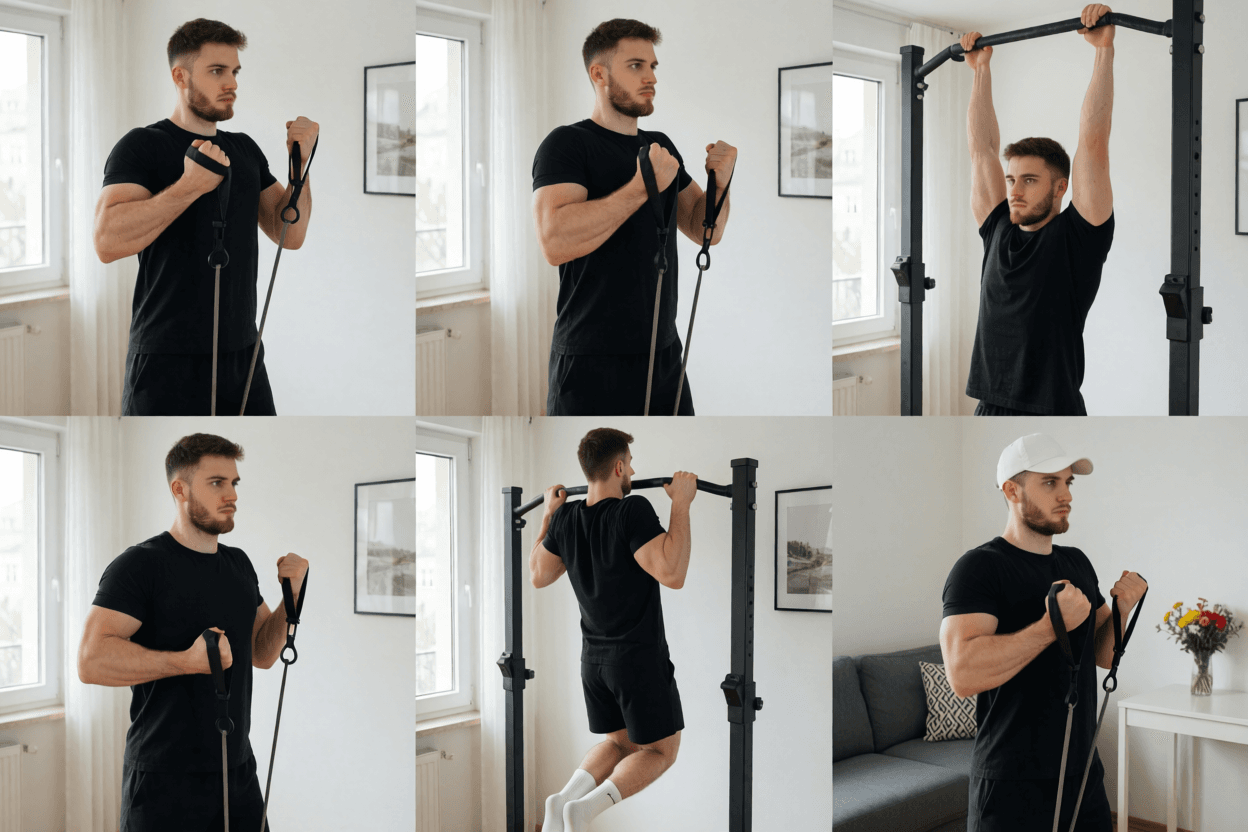
Best Lat Exercises at Home to Sculpt a Powerful Back
If you want a wider, stronger back without a gym membership, the best lat exercises can absolutely be done at home. Your lats the large, fan-shaped muscles that run down the sides of your back respond well to simple pulling movements, and you don’t need a cable machine to train them effectively. With a pair of dumbbells, a resistance band, or even just your own body weight, you can build real back strength from your living room.
This guide breaks down the most effective lat exercises at home, shows you proper form, and gives you a simple beginner workout to get started.
What Are the Latissimus Dorsi Muscles?
The latissimus dorsi usually just called “lats” are the largest muscles in your upper back. They start near your spine and stretch out toward your armpits, giving the back its wide, V-shaped appearance when developed. Functionally, the lats help you pull your arms down and back toward your body, which is why most latissimus dorsi exercises involve some kind of rowing or pulling motion.
Beyond looks, strong lats support nearly every pulling movement in daily life, from carrying groceries to pulling open a heavy door, and they play a supporting role in shoulder stability and posture.
Why Train Your Lats at Home?
Training your lats at home has real advantages. Pulling exercises are easy to load with basic equipment, and consistency matters more than fancy machines when it comes to results. A well-rounded home back workout can:
- Build noticeable back strength over time
- Improve your ability to perform pulling movements like rows and pull-ups
- Support better posture by counterbalancing all the forward-leaning we do at desks and on phones
- Round out a balanced training routine, since many home workouts focus heavily on the chest and shoulders while neglecting the back
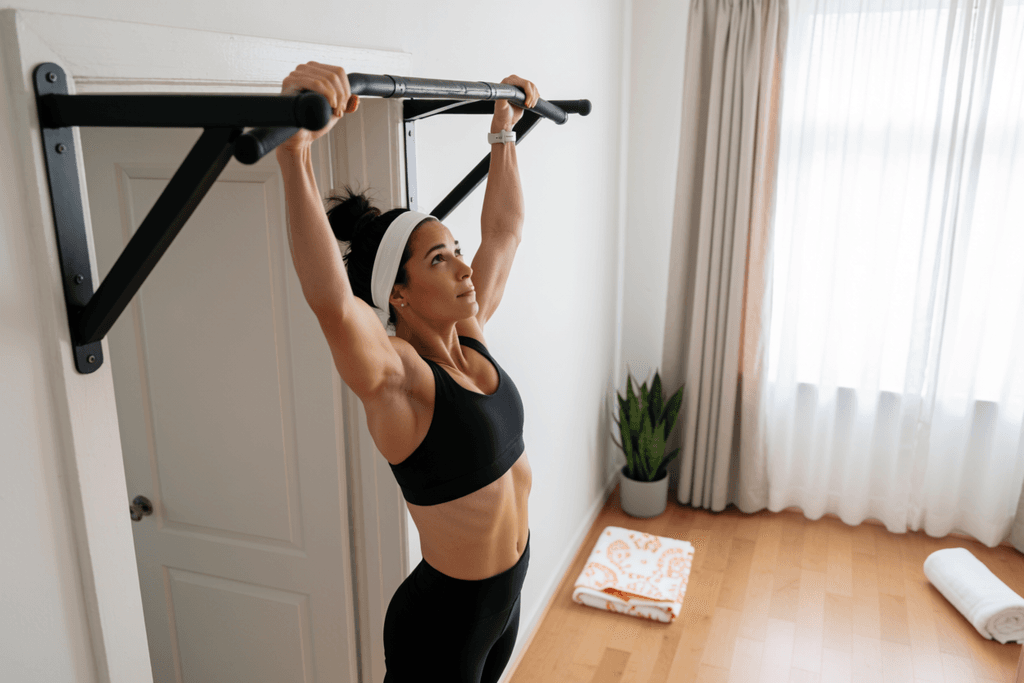
The key is picking exercises that let you feel the lats working through a full range of motion, even without a lat pulldown machine.
Best Lat Exercises at Home
These are some of the best lat exercises at home, using equipment most people already own or can pick up cheaply: dumbbells, a resistance band, or a simple towel.
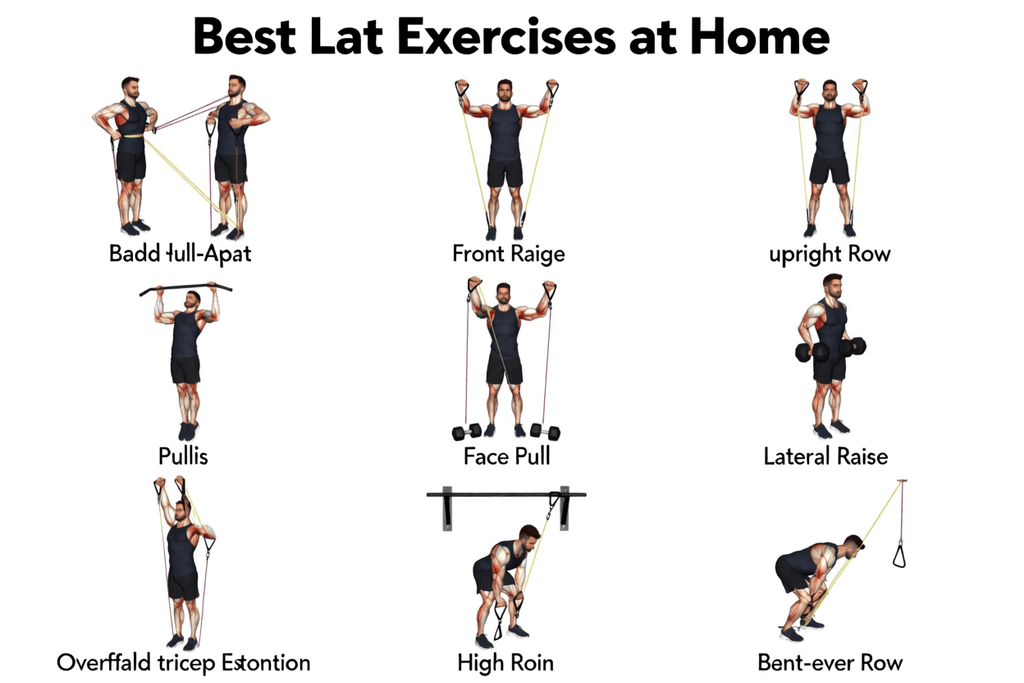
1. Dumbbell Pullover
Muscles worked: Lats, chest, triceps Equipment: One dumbbell, a bench or sturdy surface
Lie with your upper back supported on a bench, feet flat on the floor. Hold one dumbbell with both hands above your chest, arms slightly bent. Slowly lower the weight backward over your head until you feel a stretch in your lats, then pull it back to the starting position using your back, not just your arms.
Sets/reps: 3 sets of 10–12 Form tip: Keep your ribs down and core braced so you don’t arch your lower back excessively. Common mistake: Bending the elbows too much, which shifts the work to the triceps instead of the lats.
2. One-Arm Dumbbell Row
Muscles worked: Lats, upper back, biceps Equipment: One dumbbell, a bench or chair
Place one knee and hand on a bench for support, with your back flat and parallel to the floor. Hold a dumbbell in your free hand, arm extended. Pull the weight up toward your hip, squeezing your shoulder blade at the top, then lower it under control.
Sets/reps: 3 sets of 10–12 per side Form tip: Lead with your elbow, keeping it close to your body. Common mistake: Twisting the torso to “help” lift the weight instead of letting the back do the work.
3. Dumbbell Bent-Over Row
Muscles worked: Lats, rear shoulders, upper back Equipment: Two dumbbells
Hinge at the hips with a slight knee bend, back flat, holding a dumbbell in each hand. Pull both weights toward your waist, squeezing your shoulder blades together, then lower with control.
Sets/reps: 3 sets of 10–12 Form tip: Keep your neck in a neutral position rather than looking straight up. Common mistake: Rounding the lower back under load, which increases injury risk.
4. Resistance Band Lat Pulldown
Muscles worked: Lats, biceps Equipment: Resistance band, a door anchor or sturdy overhead point
Anchor the band above head height and kneel or sit facing it. Grip the band with both hands and pull it down toward your chest, driving your elbows down and back.
Sets/reps: 3 sets of 12–15 Form tip: Focus on pulling with your elbows rather than just closing your hands. Common mistake: Using momentum from the torso instead of controlling the pull with the back.
5. Resistance Band Straight-Arm Pulldown
Muscles worked: Lats, core Equipment: Resistance band, overhead anchor
Stand facing the anchor point with arms extended and a slight bend at the elbow. Keeping your arms straight, pull the band down toward your thighs in an arc, then return slowly.
Sets/reps: 3 sets of 12–15 Form tip: Keep the movement slow to maximize tension on the lats. Common mistake: Bending the elbows partway through, which turns it into a different exercise.
6. Towel or Resistance Band Row
Muscles worked: Lats, upper back Equipment: A towel or band looped around a sturdy anchor
Sit on the floor with legs extended, loop the towel or band around your feet or a fixed point, and pull both ends toward your waist, squeezing the shoulder blades together at the end of the movement.
Sets/reps: 3 sets of 12–15 Form tip: Sit tall rather than leaning back to create fake range of motion. Common mistake: Shrugging the shoulders up toward the ears during the pull.
7. Doorway Bodyweight Row
Muscles worked: Lats, upper back, core Equipment: A sturdy table edge or low bar
Lie underneath a sturdy table or low bar, grip the edge with both hands, and keep your body in a straight line from head to heels. Pull your chest up toward your hands, then lower with control.
Sets/reps: 3 sets of 8–12 Form tip: Keep your core tight to avoid sagging at the hips. Common mistake: Letting the hips drop, which turns the row into a poor imitation of a plank.
Lat Exercises With Dumbbells
If you only own one piece of equipment, dumbbells are the most versatile option for training your back. Several of the exercises above the pullover, the one-arm row, and the bent-over row — are all effective lat exercises with dumbbells that can be done in a small space.
For beginners, start with a lighter pair of dumbbells and prioritize a full range of motion over heavy weight. As the movements start to feel easy for 12–15 reps, gradually increase the load in small increments. This progressive approach lets you keep challenging your lats without compromising form.
How to Perform Lat Exercises Correctly
Technique matters more than weight when it comes to lat muscle exercises. Keep these principles in mind:
- Full range of motion: Let your arms extend fully at the start of each rep and pull all the way through.
- Controlled tempo: Avoid jerking the weight; a slow, controlled lowering phase builds more strength.
- Stable shoulders: Keep your shoulder blades pulling down and back rather than shrugging upward.
- Minimal momentum: If you’re swinging your torso to move the weight, it’s too heavy.
- Pull with your back: Think about leading with your elbows rather than just gripping and curling with your arms.
- Appropriate weight: Choose a load that lets you complete every rep with good form, even on the last set.
Beginner Lat Workout at Home
Here’s a simple home workout using a few exercises from this list. It’s a realistic starting point if you’re new to training your back.
| Exercise | Sets | Reps | Rest |
|---|---|---|---|
| Dumbbell Bent-Over Row | 3 | 10–12 | 60 seconds |
| One-Arm Dumbbell Row | 3 | 10–12 per side | 60 seconds |
| Resistance Band Lat Pulldown | 3 | 12–15 | 45 seconds |
| Towel or Resistance Band Row | 2 | 12–15 | 45 seconds |
Aim to do this routine two to three times per week, allowing at least one rest day between sessions.
Tips for Building Stronger Lats
- Progressive overload: Gradually add reps, sets, or weight over time rather than staying at the same level indefinitely.
- Consistency: Two to three focused sessions a week beat one occasional intense workout.
- Recovery: Muscles grow during rest, so give your back at least 48 hours between hard sessions.
- Nutrition: Adequate protein intake supports muscle repair after training.
- Sleep: Quality sleep is a often-overlooked factor in recovery and strength gains.
Common Mistakes When Training the Lats
- Using too much weight: This usually leads to shortened range of motion and poor form.
- Swinging the body: Momentum takes tension off the lats and puts more strain on the lower back.
- Relying too much on the arms: The biceps often take over when the back isn’t engaged properly.
- Poor range of motion: Partial reps limit how much the lats actually get worked.
- Skipping recovery: Training the same muscles every day without rest can stall progress.
Frequently Asked Questions
What are the best lat exercises at home? Some of the best lat exercises at home include the dumbbell pullover, one-arm dumbbell row, bent-over row, and resistance band pulldowns. Each targets the lats through a pulling motion and can be done with minimal equipment.
Can I build my lats without a gym? Yes. With dumbbells, a resistance band, or even just your body weight, you can effectively train your lats and see real strength improvements over time without ever stepping into a gym.
What are the best lat exercises with dumbbells? The dumbbell pullover, one-arm row, and bent-over row are among the most effective lat exercises with dumbbells, since they allow a full range of motion and adjustable resistance.
How often should I train my lats? Two to three times per week is a solid starting point for most beginners, with at least one rest day between sessions to allow recovery.
What are the best latissimus dorsi exercises for beginners? Beginners generally do well starting with the one-arm dumbbell row and resistance band lat pulldown, since both are easier to control and allow you to focus on proper form before adding more weight.
Can lat exercises improve back strength? Yes. Regularly performing pulling movements that target the lats helps build overall back strength, which also supports better posture and improves performance in other pulling exercises.
How many sets and reps should I do for lat muscle exercises? For most home workouts, 3 sets of 10–15 reps per exercise is a good general guideline, adjusting weight or resistance as needed to keep the last few reps challenging but manageable.
Conclusion
You don’t need a fully equipped gym to build a stronger, wider back. The best lat exercises at home from dumbbell rows and pullovers to resistance band pulldowns can effectively target your latissimus dorsi and build real pulling strength over time. Focus on proper form, controlled reps, and gradually increasing resistance, and give your back adequate recovery between sessions. With consistency, a simple set of dumbbells or a resistance band is all you need to develop a powerful, well-trained back at home.