Squats Home Workout Made Ridiculously Easy
Building lower-body strength does not require a fancy gym membership or expensive equipment. You can achieve impressive results by mastering a simple Squats Home Workout right in your living room.
This beginner squat workout focuses on functional movement to help you feel stronger in your daily life. By performing a basic bodyweight squat, you effectively engage your quadriceps, glutes, hamstrings, and core muscles simultaneously.

Success comes from prioritizing your form rather than rushing through repetitions. Start with a manageable number of moves, adjust your depth to what feels comfortable, and maintain a steady, controlled pace. You will soon discover that consistency is the true secret to long-term fitness progress.
Key Takeaways
- Focus on proper technique to maximize muscle engagement and safety.
- Bodyweight movements effectively target your quads, glutes, and core.
- Start with a low number of repetitions to build a solid foundation.
- Adjust your depth based on your current mobility and comfort level.
- Consistency is more important than speed for achieving lasting results.
Why a Squats Home Workout Is an Easy Way to Build Strength
You do not need a fancy gym membership to build serious strength in your own living room. A Squats Home Workout is one of the most efficient ways to improve your fitness because it relies entirely on your own movement. By using your body weight instead of heavy machines or resistance bands, you gain total control over your progress.
What Squats Train in Your Lower Body
When you perform a squat, you engage several major muscle groups at once. This movement primarily targets your quadriceps, glutes, and hamstrings through a natural bending pattern. It is truly a full-body effort that also forces your core to stabilize your spine throughout the entire range of motion.
Focusing on these bodyweight leg exercises helps you develop functional lower body strength that carries over into your daily life. Because you are moving your own weight, you learn to coordinate your muscles effectively. This coordination is the secret to building a solid foundation for all your future fitness goals.
How Squats Support Everyday Movement
Think about how often you sit down in a chair or stand back up throughout the day. You are essentially performing a squat every single time you move between these positions. Climbing stairs and picking up heavy grocery bags also require the same mechanics found in a proper squat.
By practicing this movement, you make these daily tasks feel much lighter and easier. Improving your lower body strength ensures that your joints stay supported and your muscles remain capable. You will likely notice that you feel more stable and confident during your routine activities.
What You Need for a No Equipment Leg Workout
The best part about this training style is the lack of barriers. You do not need to buy expensive gear or clear out a massive amount of space. A simple no equipment leg workout only requires a small patch of floor and a bit of motivation.
Since you are relying on bodyweight leg exercises, you can start whenever you have a few spare minutes. Whether you are in your bedroom or the kitchen, your Squats Home Workout is always ready when you are. This accessibility makes it the perfect no equipment leg workout for anyone with a busy schedule.
Get Your Body Ready Before You Squat
A successful no equipment leg workout begins long before you perform your first repetition. Taking a few minutes to prepare your environment and your muscles ensures that you stay injury-free while maximizing your results.
Check Your Space and Choose a Stable Surface
Prioritizing home workout safety starts with your surroundings. Clear away any clutter, such as toys, rugs, or furniture, to create a dedicated zone for your movement.
Choose a flat, non-slip surface like a hardwood floor or a thin exercise mat. A stable foundation prevents your feet from sliding, which is vital for maintaining proper form during your Squats Home Workout.
Use a Short Warm-Up to Prepare Your Hips, Knees, and Ankles
A proper squat warm-up increases blood flow to your joints and muscles. This simple routine helps your body transition from rest to activity, making your movements feel smoother and more controlled.
Marching in Place
Start by marching in place for one minute. Lift your knees high and swing your arms naturally to wake up your entire body.
Hip Circles and Ankle Rocks
Gently rotate your hips in wide circles to loosen the hip flexors. Follow this by rocking back and forth on your feet, shifting weight from your heels to your toes to prepare your ankles for the range of motion required in a no equipment leg workout.
Easy Bodyweight Good Mornings
Stand with your feet hip-width apart and place your hands behind your ears. Hinge at your hips while keeping your back flat, feeling a gentle stretch in your hamstrings before returning to a standing position.
Choose a Support for Balance if You Need One
If you feel unsteady, do not hesitate to use a wall, a sturdy countertop, or a heavy chair for balance. Using external support is a smart way to improve your home workout safety without turning your session into an equipment-based routine.
This simple adjustment allows you to focus entirely on your technique. As you gain confidence in your Squats Home Workout, you can gradually reduce your reliance on these supports during your squat warm-up and main sets.
Learn the Basic Bodyweight Squat Step by Step
Learning to squat correctly turns a simple movement into a powerful tool for your health. When you focus on proper squat technique, you protect your joints while maximizing the work your muscles perform. This foundational movement is the cornerstone of any successful Squats Home Workout.
Set Your Feet and Brace Your Core
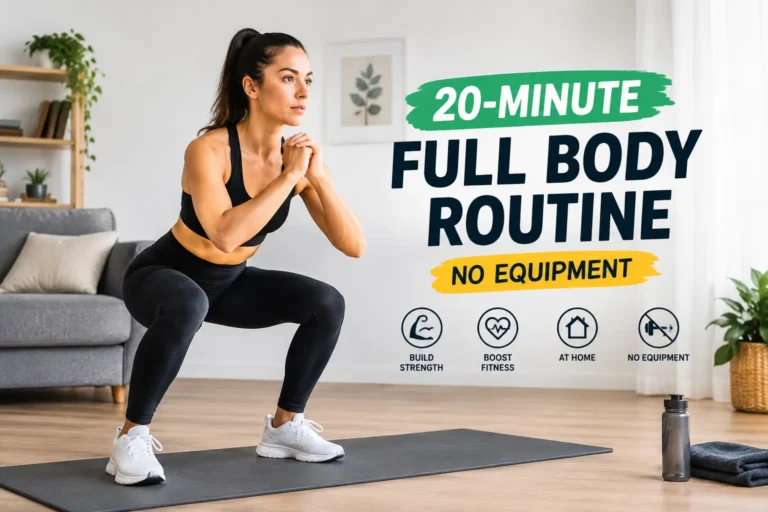
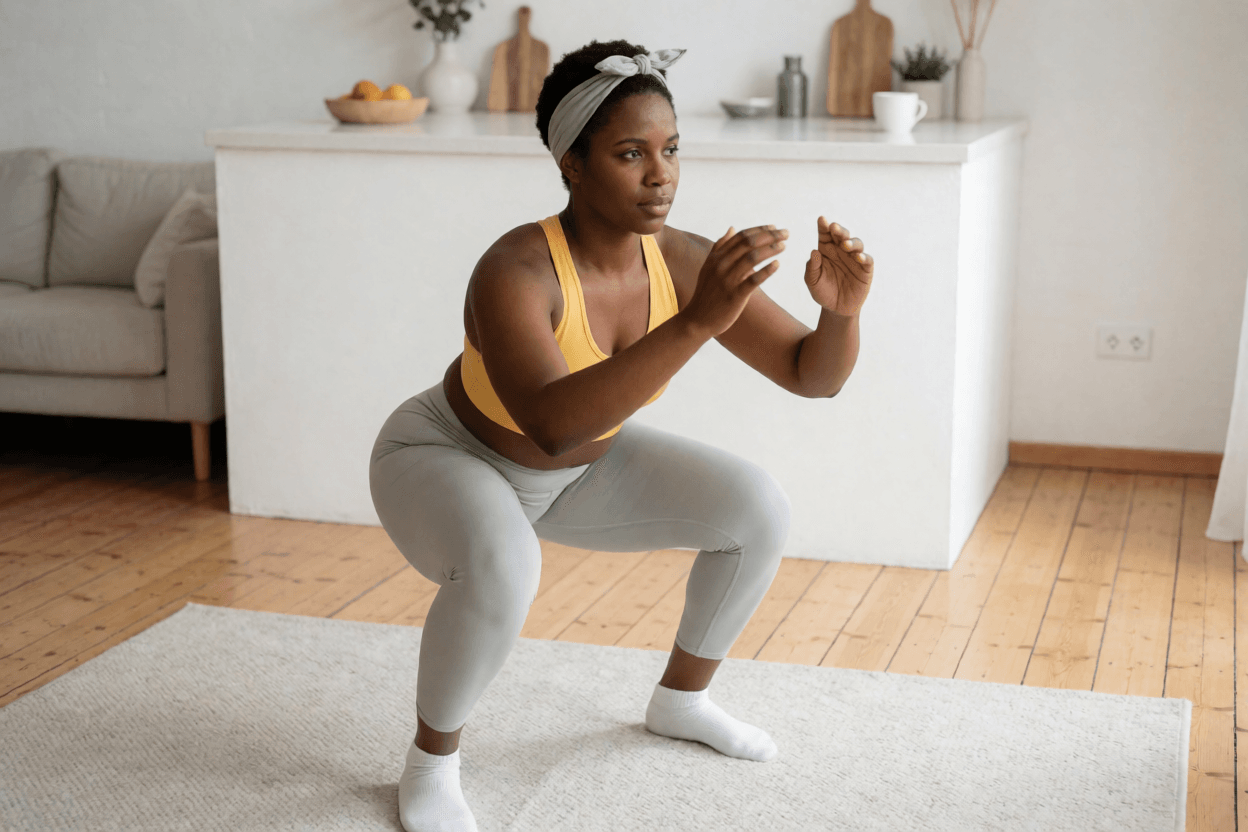
Start by standing with your feet about shoulder-width apart. Point your toes slightly outward if that feels more natural for your hips. Before you begin the movement, take a deep breath and tighten your abdominal muscles as if you are preparing for a gentle nudge.
Lower Your Hips with Control
Initiate the movement by pushing your hips back as if you are sitting into an invisible chair. Keep your weight distributed evenly across your entire foot, rather than shifting onto your toes. Lower yourself slowly to maintain bodyweight squat form throughout the descent.
Drive Through Your Feet to Stand Tall
Once you reach your comfortable depth, push firmly through your heels to return to the starting position. Squeeze your glutes at the top to complete the repetition with intention. Focus on a smooth, steady tempo rather than rushing through the motion.
Keep Your Knees Tracking Over Your Toes
As you move, ensure your knees stay aligned with your toes. Avoid letting them cave inward toward each other, as this can place unnecessary stress on your joints. Consistency in this alignment is key to a safe and effective session.
Maintain a Comfortable Spine and Head Position
Keep your chest lifted and your gaze fixed straight ahead or slightly upward. This helps you maintain a neutral spine, which is essential for balance. Avoid rounding your back or tucking your chin too deeply toward your chest.
Use a Chair Squat to Practice Depth
If you are unsure how far to lower your hips, a chair squat is an excellent training tool. Simply place a sturdy chair behind you and lower your hips until you feel your glutes lightly touch the seat. This method provides a clear target, builds your confidence, and ensures you reach the correct depth every time.
- Start with your feet shoulder-width apart.
- Brace your core to stabilize your spine.
- Lower your hips back and down with control.
- Drive through your heels to stand back up.
Fix the Most Common Squat Form Problems
Perfecting your technique is the best way to avoid common beginner squat mistakes. Even if you feel like you are doing everything right, small adjustments can significantly improve your Squats Home Workout experience. By focusing on these squat form tips, you will build strength safely and effectively.

Correct Knees That Collapse Inward
If your knees cave toward each other during the movement, it often signals weak glutes or poor alignment. Try to actively push your knees outward so they track directly over your toes. This simple adjustment keeps your joints stable and helps you engage the right muscles.
Improve Heels That Lift Off the Floor
When your heels rise, your weight shifts forward, which puts unnecessary pressure on your knees. Focus on keeping your entire foot planted firmly on the ground throughout the entire repetition. You can imagine you are trying to leave a full footprint in the floor to maintain your balance.
Adjust a Torso That Leans Too Far Forward
An excessive forward lean often happens when you try to go too low before your body is ready. Keep your chest proud and your gaze forward to help maintain a neutral spine. If you still struggle, try holding your arms out in front of you for a better counterbalance.
Replace Rushed Repetitions with Smooth Tempo
Rushing through your reps prevents you from learning the proper movement pattern. Aim for a slow, controlled descent followed by a steady rise. This tempo ensures you are working your muscles rather than relying on momentum.
Modify Depth When Your Mobility Feels Limited
Improving your squat mobility takes time, so do not feel pressured to reach the floor immediately. If you feel stuck or uncomfortable, you can easily adjust your range of motion.
Use a Higher Chair or Cushion
Place a sturdy chair or a firm cushion behind you to act as a target. This allows you to sit back safely without worrying about losing your balance. It provides a clear endpoint for your movement while you build confidence.
Build Depth Gradually Without Forcing It
Consistency is far more important than depth. It is better to perform a shallow, controlled squat than a deep one that compromises your form. Over time, your body will naturally allow you to go lower as your flexibility improves.
| Common Issue | Immediate Fix | Goal |
|---|---|---|
| Knees collapsing | Push knees outward | Joint stability |
| Heels lifting | Weight in mid-foot | Better balance |
| Excessive lean | Keep chest up | Neutral spine |
| Rushed tempo | Slow down movement | Muscle control |
Build Your First Squats Home Workout Routine
Creating a balanced routine is the best way to ensure you stay motivated and injury-free. By focusing on simple, effective movements, you can build a solid foundation for your fitness journey right in your living room.
Beginner Circuit for Strength and Confidence
This no equipment leg workout is designed to help you master fundamental patterns. Whether you are starting a squat challenge for beginners or just looking for a reliable beginner leg workout, this circuit covers all the bases.
Chair Squats
Use a sturdy chair to practice your depth and form. This movement helps you build confidence before moving to free-standing variations.
Bodyweight Squats
Once you feel steady, remove the chair. Focus on keeping your chest up and driving through your heels to engage your thighs effectively.
Glute Bridges
Lie on your back with your knees bent and feet flat. Lift your hips toward the ceiling to target your glutes and lower back, which provides a great balance to your Squats Home Workout.
Standing Calf Raises
Stand tall and rise onto your toes, then lower back down slowly. This simple move strengthens your lower legs and improves your overall stability.
How Many Sets, Repetitions, and Rest Periods to Use
Start with two sets of ten repetitions for each exercise. Rest for sixty seconds between each movement to allow your muscles to recover properly.
If you feel strong, you can increase to three sets. Consistency is more important than intensity when you are just starting out.
How to Finish the Workout Without Overdoing It
Always listen to your body during your session. If your form begins to break down or you feel excessive fatigue, it is time to stop.
Ending your routine while you still have a little energy left helps you recover faster. This approach ensures you stay excited to return for your next workout session.
Try Easy Squat Variations for a Complete Leg Workout
Once you master the basic movement, you can easily spice up your Squats Home Workout with new variations. Introducing different movement patterns keeps your muscles challenged and prevents your progress from stalling. By rotating through these squat variations, you ensure that your lower body receives a well-rounded stimulus.
Use Wide-Stance Squats for Variety
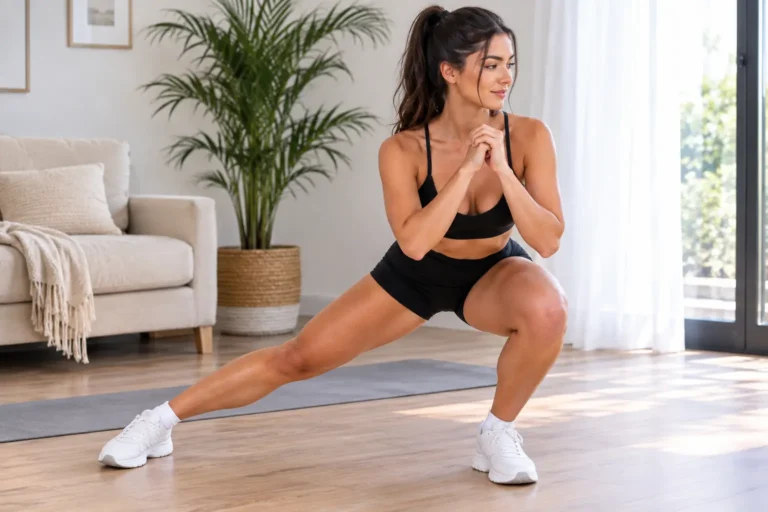
Widening your feet beyond shoulder-width shifts the focus toward your inner thighs and glutes. Keep your toes pointed slightly outward to maintain comfort in your hips. This simple adjustment creates a fresh challenge for your stability while you perform your complete leg workout.
Add Pulse Squats for a Controlled Burn
Pulse squats involve staying at the bottom of your squat and performing small, rhythmic movements. This technique increases the time your muscles spend under tension, which is excellent for a booty workout at home. You will feel a significant burn, helping you build endurance and strength in your glutes.
Practice Split Squats with a Wall or Chair Nearby
If you want to improve your balance, split squats are a fantastic choice. By placing one foot behind you on a chair or keeping a wall nearby for support, you isolate each leg individually. This method helps correct muscle imbalances and builds functional stability.
Use Sit-to-Stand Squats for Functional Strength
Sit-to-stand squats are perfect for those who want to focus on perfect form and depth. By using a chair as a target, you ensure that you reach the same depth every single time. This variation is highly effective for building confidence before moving to deeper, unassisted movements.
Choose the Right Variation for Your Current Ability
Selecting the right movement depends on your current comfort level and physical control. You should prioritize quality over quantity to avoid strain. Use the table below to decide which variation fits your goals today.
| Variation | Primary Benefit | Difficulty Level |
|---|---|---|
| Wide-Stance | Inner Thigh Focus | Beginner |
| Pulse Squats | Muscle Endurance | Intermediate |
| Split Squats | Balance & Stability | Intermediate |
| Sit-to-Stand | Form & Depth | Beginner |
Follow a Squat Challenge for Beginners
Starting a new exercise habit feels less daunting when you break it down into small, achievable steps. A squat challenge for beginners provides the structure you need to build confidence while protecting your joints. By focusing on steady progress, you ensure that your Squats Home Workout remains both safe and effective.
Start with a Manageable Weekly Schedule
Consistency is the foundation of any successful fitness routine. Aim to perform your squats three times per week, leaving at least one rest day between sessions to allow your muscles to recover. This approach to squat consistency helps your body adapt to the new movement patterns without causing unnecessary fatigue.
Progress from Chair Squats to Full Bodyweight Squats
Begin your journey by using a chair to guide your depth and provide support. Once you feel comfortable maintaining a neutral spine and balanced weight, you can gradually remove the chair. This transition ensures you master the mechanics before relying entirely on your own strength.
Increase Repetitions Before Adding More Difficult Variations
Many people rush to add weight or complex movements too quickly. Instead, focus on progressive overload by slowly increasing your total repetitions over time. Mastering the basic movement with higher volume builds the endurance necessary for more advanced variations later on.
Track Form, Energy, and Recovery Instead of Chasing a Number
It is easy to get caught up in hitting specific targets, but your body’s feedback is more important. Keep a simple log of how your form felt, your energy levels during the session, and how your muscles recovered the next day. If your form breaks down, prioritize quality over hitting a higher number of reps.
A Simple Four-Week Progression
| Week | Focus | Target Reps |
|---|---|---|
| Week 1 | Chair Squats | 3 sets of 8 |
| Week 2 | Chair Squats | 3 sets of 12 |
| Week 3 | Bodyweight Squats | 3 sets of 8 |
| Week 4 | Bodyweight Squats | 3 sets of 12 |
When to Repeat a Week
This four-week squat plan is a guide, not a rigid rulebook. If you feel excessive soreness or notice your form slipping, do not hesitate to repeat the current week. Repeating a week allows your body to catch up, ensuring you are truly ready for the next level of intensity.
Turn Squats into a Booty Workout at Home
Transforming your standard leg routine into a dedicated booty workout at home is easier than you think. By shifting your focus from simply moving up and down to feeling every muscle fiber, you can turn a basic Squats Home Workout into a highly effective training session.

Engage Your Glutes Before and During Each Rep
True glute activation starts before you even begin your first repetition. Stand tall and squeeze your glutes tightly to wake up the muscles, ensuring they are ready to handle the load.
As you descend, maintain that tension throughout the entire movement. When you reach the bottom of your squat, push through your heels and consciously squeeze your glutes to drive yourself back to a standing position.
Pair Squats with Glute Bridges and Donkey Kicks
To create a comprehensive glute workout, you should combine your squats with floor-based movements. These exercises isolate the glutes without putting extra stress on your lower back.
- Glute Bridges: Lie on your back and lift your hips toward the ceiling, squeezing at the top.
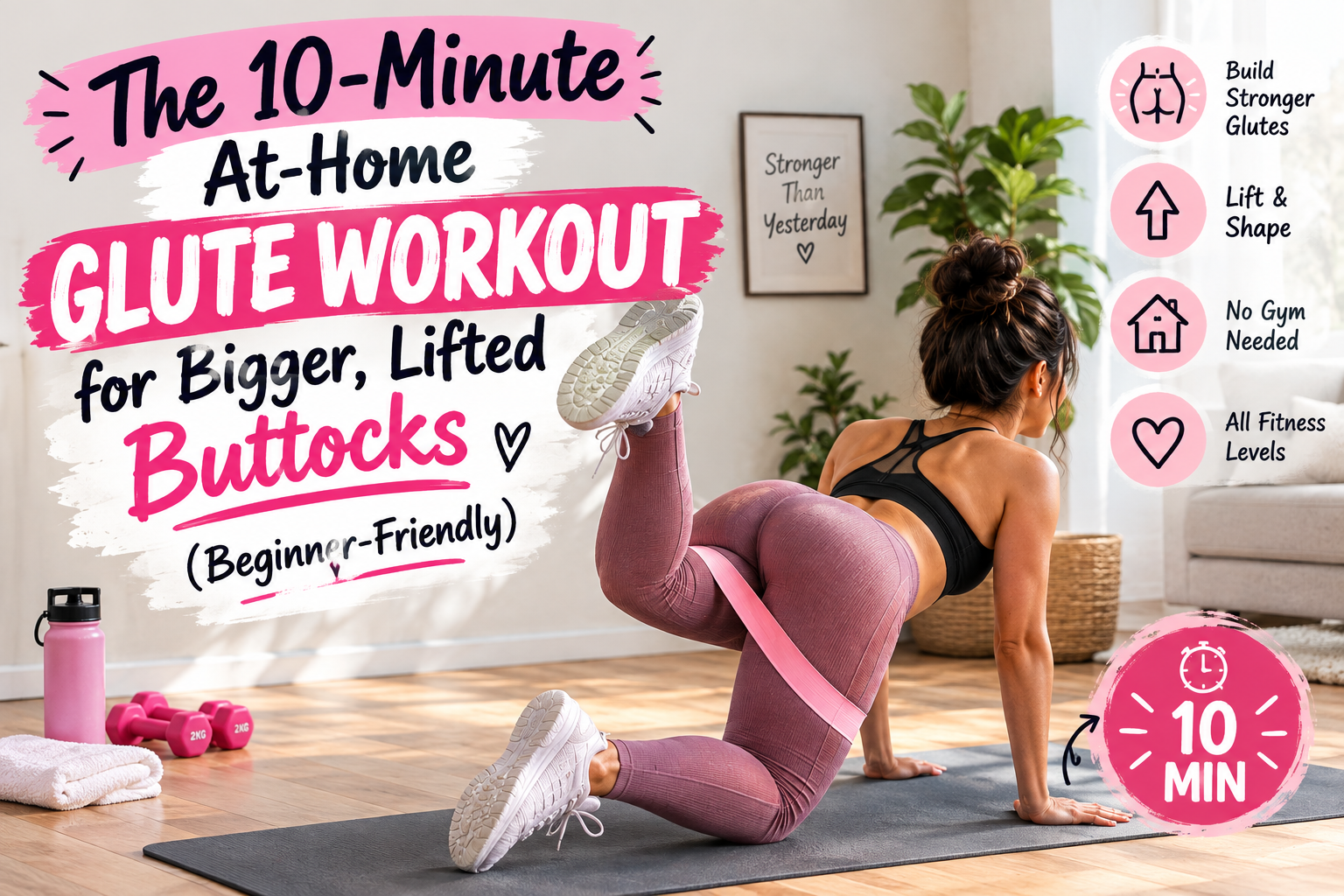
- Donkey Kicks: On all fours, kick one leg back and up while keeping your knee bent.
- Fire Hydrants: Lift your bent leg out to the side to target the outer glutes.
Use Pause Squats to Increase Glute Time Under Tension
If you want to make your routine harder without adding heavy weights, try pause squats. By holding the bottom position for two to three seconds, you force your muscles to work much harder to maintain stability.
This simple adjustment increases the time your glutes spend under tension. You will likely notice a significant difference in how your muscles feel after just a few repetitions.
Understand What Squats Can and Cannot Change
While squats are excellent for building strength and muscle tone, it is important to have realistic expectations. Squats will certainly help you develop your glutes, but visible changes depend on several factors.
Your results are influenced by your consistency, nutrition, genetics, and overall training volume. Stay patient with your progress and focus on the strength you gain rather than just the aesthetic outcome.
Make Your Routine Safer and More Effective
Your path to a stronger lower body relies on your ability to distinguish between productive fatigue and potential injury. Creating a safe squat workout requires you to stay mindful of how your body responds to each movement during your Squats Home Workout.
Recognize the Difference Between Muscle Effort and Joint Pain
Normal muscular effort often feels like a dull ache, a controlled burn, or a sense of warmth in your legs. This is a sign that your muscles are working hard to adapt and grow stronger.
In contrast, joint pain usually feels sharp, stabbing, or localized deep within the knee or hip. If you experience this type of sensation, it is your body’s way of signaling that you should stop immediately.
Stop and Adjust When You Feel Sharp or Increasing Pain
Never push through pain that feels wrong or continues to increase as you perform more repetitions. If a specific movement causes discomfort, try adjusting your stance width or reducing your depth.
Sometimes, a minor tweak in your form is all you need to remove the pressure from your joints. If the pain persists despite these changes, give yourself permission to end the session early.
Allow Recovery Between Challenging Lower-Body Sessions
Your muscles need time to repair the microscopic tears caused by your no equipment leg workout. Proper exercise recovery ensures that you can return to your routine feeling refreshed rather than depleted.
Aim for at least one full day of rest between intense sessions to prevent overtraining. This simple habit helps you maintain consistency without stressing your tissues beyond their current capacity.
Progress with Tempo, Range of Motion, or Repetitions
If you are following a squat challenge for beginners, focus on changing only one variable at a time. You might slow down your tempo to increase time under tension, or you could gradually increase your depth.
Avoid the temptation to increase everything at once. Small, steady improvements are the most reliable way to build long-term strength and confidence.
| Sensation Type | Description | Recommended Action |
|---|---|---|
| Muscle Burn | Warm, tired, or heavy feeling | Continue with good form |
| Joint Discomfort | Sharp, stabbing, or pinching | Stop and reassess |
| General Fatigue | Whole-body tiredness | Rest and hydrate |
Know When to Ask a Qualified Health Professional for Guidance
If you have pre-existing medical conditions or persistent pain that does not go away with rest, seek advice from a physical therapist or doctor. A professional can provide personalized feedback on your movement patterns.
Getting expert help is a sign of a smart athlete. It ensures that your training remains productive and keeps you moving toward your goals safely.
Conclusion
Building strength starts with a simple, stable surface and a short warm-up. You can master a Squats Home Workout by focusing on controlled movements and using a chair for support when your body needs it. Consistency remains the most important tool for your long-term success.
A no equipment leg workout provides a powerful way to improve your daily movement patterns. You will see the best results when you prioritize proper alignment and allow your muscles time to recover between sessions. Listen to your body as you increase your intensity over time.
You can choose a beginner squat routine that fits your current comfort level. Whether you prefer a structured squat challenge for beginners or a targeted booty workout at home, your progress depends on your dedication. Take the first step toward a stronger version of yourself by practicing these movements with care and focus.
FAQ
Do I need to buy any special gear to start a Squats Home Workout?
Not at all! This is a true no equipment leg workout that relies entirely on your body weight. If you feel like you need a bit of extra balance, you can simply use a sturdy household item, such as a West Elm dining chair or a solid countertop, to steady yourself as you lower your hips.
How can I tell if I am doing a squat correctly?
Focus on your foundation. Your feet should be about shoulder-width apart, and as you lower down, your knees should track over your toes rather than caving inward. A great trick for beginners is to practice a chair squat using an IKEA stool; once your glutes tap the seat, you know you’ve reached a functional depth before driving back up to a standing position.
Is this routine suitable if I want a booty workout at home?
Yes, squats are a cornerstone of any booty workout at home. To maximize the benefit for your glutes, ensure you are actively engaging them throughout the entire range of motion. You can also pair your squats with glute bridges and donkey kicks to specifically target the posterior chain and increase the intensity without adding weights.
How should I progress if I am a total beginner?
The best approach is to follow a structured squat challenge for beginners. Start by mastering the movement with a limited range of motion, then gradually increase your repetitions and sets over a four-week period. Focus on quality over quantity; it is much better to do ten perfect squats than twenty rushed ones with poor form.
What should I do if I feel pain in my joints during the workout?
It is vital to listen to your body and distinguish between the “burn” of muscle fatigue and sharp joint pain. If you experience discomfort in your knees or ankles, stop and check your alignment. You may need to reduce your depth or widen your stance. If the pain continues, it is a good idea to consult a specialist at a facility like Select Physical Therapy to ensure you aren’t aggravating an underlying issue.
Can I do this no equipment leg workout every single day?
While consistency is key, your muscles need time to repair and grow. Aiming for three to four days a week is usually ideal for a squat challenge for beginners. On your off days, you might focus on light stretching or mobility work to keep your hips and ankles limber for your next session.
How do I stop my heels from lifting off the floor when I squat?
Lifting heels often point to tight calves or limited ankle mobility. You can improve this by practicing ankle rocks during your warm-up. In the meantime, focus on driving your weight through your entire foot—mid-foot to heel—and only squat as deep as you can go while keeping your feet glued to the floor.