LAZY GIRL THIGH WORKOUT: STRONG RESULTS, ZERO EFFORT
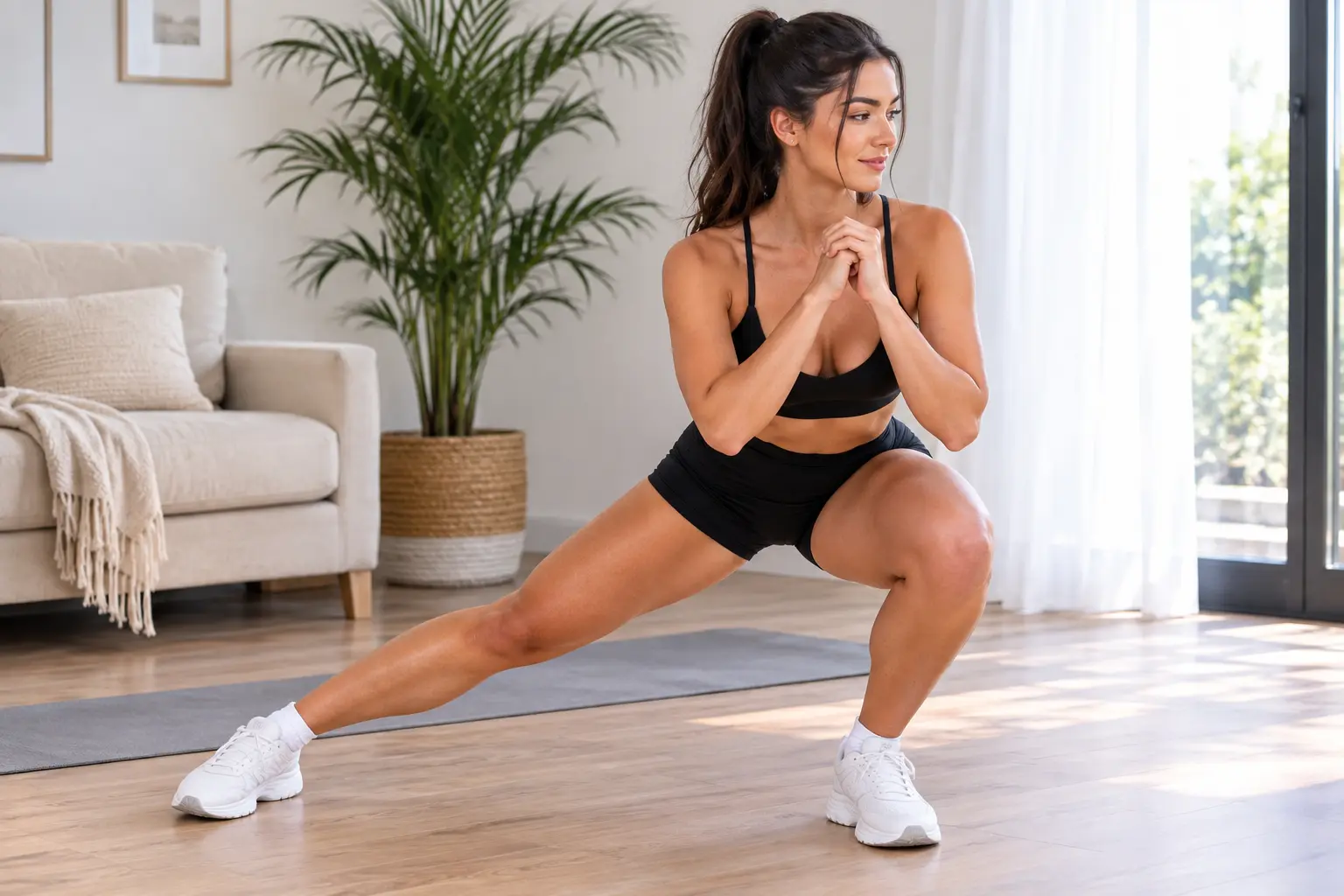
This lazy thigh workout strengthens and engages your thighs with little time, space, or equipment. It uses slow, controlled movements instead of jumping, hard cardio, or complex gym machines.
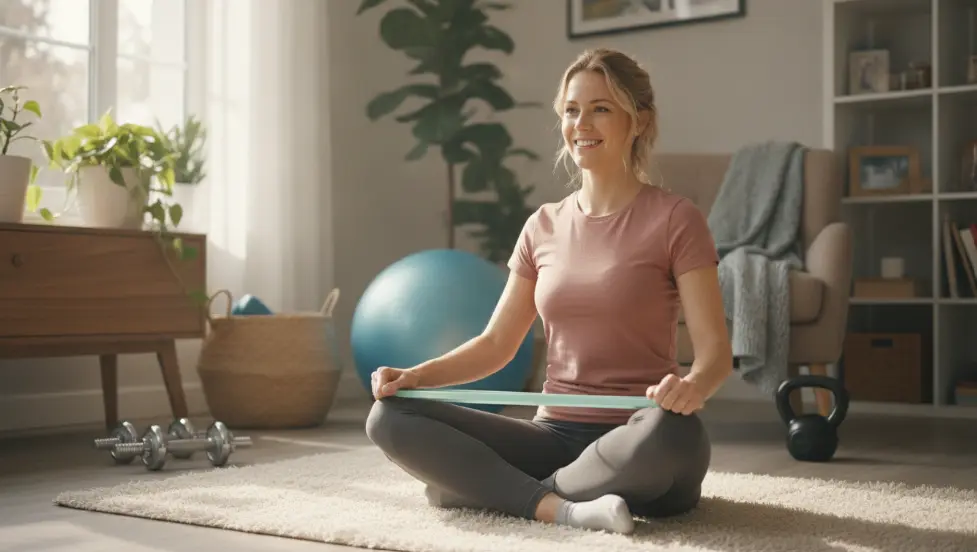
These at home thigh exercises can build muscle endurance, stability, and strength when practiced often. This easy thigh workout also works as a gentle low impact leg workout on busy days.
Keep each move within a comfortable range of motion. Stop if you feel sharp pain. Results may also depend on nutrition, rest, genetics, and your daily activity level.
Key Takeaways
- Use slow, controlled movements to engage your thighs.
- You need little space and no complex equipment.
- Low-impact training can support strength and stability.
- Practice the routine often for steady progress.
- Stop any move that causes sharp pain.
Lazy Girl Thigh Workout for Easy, Low-Effort Results
You do not need jumps, heavy weights, or long gym sessions to train your thighs. This lazy thigh workout uses slow, steady moves that fit into a busy day. Focus on control, comfort, and regular practice.
Why Low-Impact Thigh Exercises Can Still Be Effective
Low impact does not mean low results. Your muscles work harder when you slow each repetition, hold a position, or add a short pause. These methods increase time under tension without placing extra stress on your joints.
Controlled movement helps you feel the target muscles and protect your form. With regular practice, low impact thigh exercises can build strength and improve muscle endurance. Keep your pace steady instead of rushing through a high repetition count.
What You Need for This At-Home Workout
Gather a sturdy chair, an exercise mat, and comfortable clothing. The chair can support your balance during standing moves. A mat can make floor exercises more comfortable for your knees, hips, and back.
Optional resistance bands can add a gentle challenge as you gain strength. You can begin with body weight alone. This makes the routine useful for simple leg exercises at home, even with limited space or equipment.
How to Use the Workout Guide
Start with one set of each exercise if you are new to training. Rest briefly between movements, and breathe through every repetition. Do not hold your breath or sacrifice form to move faster.
As the routine feels easier, build toward two or three sets. A beginner thigh workout should feel challenging without causing sharp pain. Use smooth motions, keep your core lightly engaged, and stop when your form begins to slip.
Simple Leg Exercises at Home With No Jumping
Build strength without loud moves or a crowded gym. This quiet routine uses simple leg exercises at home for your quadriceps, hamstrings, inner thighs, and glutes. Move slowly and focus on smooth control.
- Supported squats: Stand behind a sturdy chair with your feet hip-width apart. Hold the chair lightly, bend your knees, and lower your hips comfortably. Keep your knees aligned with your toes, press through your feet, and stand.
- Seated knee extensions: Sit tall in a chair with both feet flat. Straighten one leg until your knee nearly reaches hip height, then pause and lower it slowly. Switch sides, keep your back steady, and breathe calmly.
- Glute bridges: Lie on your back with bent knees and flat feet. Tighten your glutes and lift your hips without arching your lower back. Lower slowly until your hips touch the floor.
- Standing leg curls: Face a chair and hold its back for balance. Bend one knee, bringing your heel toward your seat. Lower your foot slowly, keep your thighs close, and repeat on the other side.
This easy thigh workout works well in a bedroom or living room. Begin with 8 to 12 controlled repetitions of each move. Use fewer repetitions or a smaller range of motion when tired, making this no jumping leg workout challenging without stressing your joints.
Rest for 30 to 60 seconds between exercises. Keep breathing instead of holding your breath. For steady home leg strengthening, practice this sequence two or three times each week and stop if you feel sharp pain.
| Exercise | Main muscles | Starting target | Key form cue |
|---|---|---|---|
| Supported squats | Quadriceps, glutes, inner thighs | 8–12 reps | Keep knees aligned with toes |
| Seated knee extensions | Quadriceps | 8–12 reps per leg | Lift and lower slowly |
| Glute bridges | Glutes, hamstrings | 8–12 reps | Keep ribs relaxed |
| Standing leg curls | Hamstrings | 8–12 reps per leg | Hold the chair for balance |
Lazy Inner Thigh Workout for Gentle Muscle Activation
This lazy inner thigh workout uses slow, low-impact moves to wake your adductors and hip muscles. These simple leg exercises at home need little space and no jumping. Move with control, and stop if you feel sharp pain.
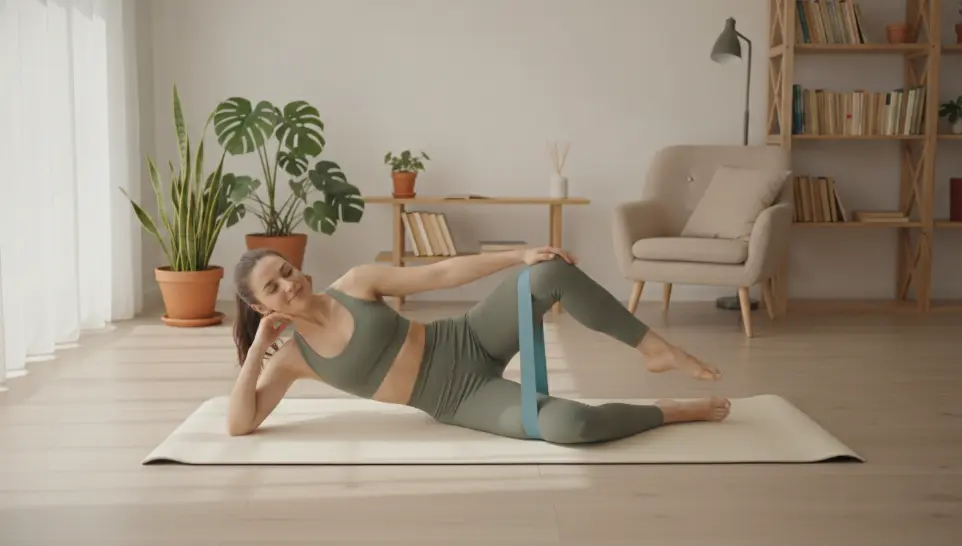
Seated inner-thigh squeezes
Sit near the edge of a firm chair with your feet flat on the floor. Place a pillow or soft ball between your knees. Sit tall, relax your shoulders, and gently press your knees inward.
Hold the squeeze for 20 to 30 seconds. Release with control, rest briefly, and repeat two to three times. Keep breathing smoothly as this small movement trains your inner thighs without stressing your knees or ankles.
Side-lying leg lifts
Lie on one side with your legs long and your hips stacked. Bend your top leg and place its foot on the floor before your lower knee. Brace your abdomen to keep your body steady.
Lift the lower leg a few inches, pause, and lower it slowly. Avoid rolling backward or lifting from your back; this move works the inner thigh while hip muscles control balance. Complete 10 to 15 repetitions on each side.
Supported sumo squats
Stand beside a sturdy chair or countertop. Hold the surface with one hand for support. Place your feet wider than hip width, with your toes slightly turned outward.
Bend your knees and lower only while keeping them aligned with your toes and your spine tall. Press through your feet to stand. Perform 10 to 15 repetitions at a calm pace.
Keep the range small if your hips feel tight. These inner thigh exercises fit a gentle thigh workout because they build muscle control without impact. Use support for balance, not to pull your body upward.
Easy Thigh Workout Moves You Can Do While Standing or Sitting
You can train your thighs without getting on the floor or using heavy equipment. This easy thigh workout fits into a quiet break at home. Move with control, breathe steadily, and stop if you feel sharp pain.
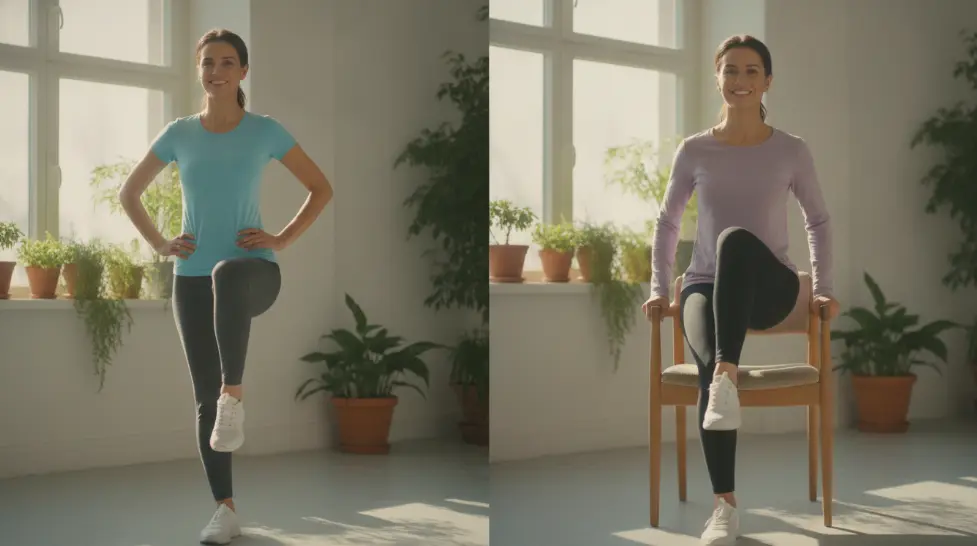
Chair-assisted wall sits
Place a sturdy chair near a wall for extra confidence and balance. Rest your back against the wall, and place your feet firmly on the floor. Keep your feet about hip-width apart.
Lower into a comfortable partial squat without forcing a deep position. Hold for 15 to 30 seconds, then rise carefully. This gentle move builds thigh endurance while supporting your posture.
Seated knee extensions
Sit tall in a firm chair with both feet under your knees. Lift one foot and slowly straighten your leg until it feels comfortable. Pause briefly, then lower it without swinging.
Repeat on the other side. These seated leg exercises target your front thighs with little joint stress. Keep your hips level, and use a smooth pace instead of rushing.
Standing hamstring curls
Stand behind a chair and hold its back for support. Keep your chest lifted as you bend one knee and bring your heel toward your glutes. Lower your foot with control, keeping your standing leg steady.
Complete the same number of repetitions on both sides. These standing thigh exercises work your rear thighs and support steady posture. Add this move to your lazy thigh workout for simple strength work without jumping.
How to Make Your Lazy Thigh Workout More Effective
Small changes can make your lazy thigh workout harder without making it feel difficult. Pause briefly at the hardest point of each move. Hold for one to two seconds while keeping your muscles steady.
Slow the lowering phase to three seconds. If the move still feels easy, add a few repetitions or one extra set. Make one change at a time to track progress and protect your form.
This approach supports progressive thigh training while keeping your routine simple. When bodyweight moves feel manageable, add a light loop band or small ankle weights. Stop if you feel sharp pain, joint pressure, or lose control.
Daily habits can support an easy thigh workout. Regular walking keeps you active between sessions. Protein supports muscle repair, while water, quality sleep, and rest help your body recover.
Remember that muscle toning exercises cannot reduce fat in one specific area. Thigh definition develops as your body composition changes and your leg muscles grow stronger. Focus on steady practice instead of quick results.
Lazy Thigh Workout Schedule, Form Tips, and Common Mistakes
A steady routine builds strength without making exercise feel like a chore. Use your simple leg exercises at home and adjust the pace to your fitness level. Quality movement matters more than many repetitions.
How often you should train your thighs
Perform this routine two or three nonconsecutive days each week. This gives your muscles time to repair and adapt. On other days, try light walking or gentle mobility work if comfortable.
Recovery matters more when you add resistance, repetitions, or workout time. A simple thigh workout schedule may include training on Monday, Wednesday, and Saturday. Rest or use easy movement between those sessions.
Form cues for safer, stronger results
Good alignment keeps your joints in a stronger position. During squats, wall sits, and leg lifts, keep your knees aligned with your toes. Gently brace your abdomen without tensing your neck.
Keep your chest lifted and shoulders relaxed. Move at a controlled pace instead of using momentum. These habits support safe leg exercise form and help target muscles work harder.
- Press through your feet with steady control.
- Keep your hips level during side-lying leg lifts.
- Breathe out during the hardest part of each movement.
- Stop if you feel sharp, sudden, or unusual pain.
Mistakes that can reduce workout benefits
Rushing repetitions can shift effort away from your thighs. Holding your breath may increase tension and make each move harder. Letting your knees collapse inward can place extra stress on the joints.
Use a chair for balance, not full support. Heavy reliance can reduce muscle engagement. Excessive resistance may cause poor alignment, especially during a lazy inner thigh workout.
Reduce the range of motion or pause if your form breaks down. Pain does not measure progress. If you have an injury, chronic condition, or concerning symptoms, check with a qualified health professional before exercising.
| Training focus | Recommended approach | Helpful reminder |
|---|---|---|
| Weekly frequency | Two or three nonconsecutive sessions | Allow recovery between workouts |
| Other activity | Light walking or mobility work | Choose an easy pace when comfortable |
| Movement speed | Slow, controlled repetitions | Avoid swinging or rushing |
| Knee position | Track knees in line with toes | Do not let the knees fall inward |
| Breathing | Steady breaths throughout each set | Never hold your breath |
| Resistance | Use a manageable load | Lower resistance when form suffers |
Conclusion
An effective easy thigh workout needs no gym, jumping, or long sessions. Controlled squats, inner-thigh squeezes, and leg lifts build strength quietly at home.
Your lazy thigh workout can include knee extensions, wall sits, and hamstring curls. Start with manageable repetitions and steady form. Add work only when the exercises become easier.
Simple leg exercises at home work best as part of a consistent home workout. Sustainable habits often bring better results than rare, intense sessions that are hard to maintain.
Pair your routine with regular daily movement and enough recovery. With patience and consistency, a short thigh workout can support stronger legs. It can also make healthy training easier to maintain.
FAQ
Can a lazy girl thigh workout really strengthen your legs?
Yes. A low-effort routine can strengthen your thighs through controlled movements, steady breathing, and regular practice. Pauses, slow repetitions, and longer time under tension challenge muscles without jumping or intense cardio.
What exercises are included in this lazy thigh workout?
Use supported squats, seated knee extensions, glute bridges, standing hamstring curls, inner-thigh squeezes, side-lying leg lifts, and partial wall sits. These exercises engage the quadriceps, hamstrings, inner thighs, glutes, and hip muscles.
Can you do these simple leg exercises at home without equipment?
Yes. Complete most of the routine with a sturdy chair and comfortable floor space. A mat, pillow, soft ball, resistance band, or light ankle weights are optional for support or added resistance.
How often should you do an easy thigh workout?
Aim for two or three nonconsecutive days each week. This schedule gives your muscles time to recover. On other days, light walking or gentle mobility work can support activity if comfortable.
What is a good lazy inner thigh workout for beginners?
Begin with seated inner-thigh squeezes, side-lying leg lifts, and supported sumo squats. Complete 8 to 12 controlled repetitions, or hold each squeeze for 20 to 30 seconds. Start with one set, then increase gradually as the movements become easier.
How many repetitions should you perform?
Start with 8 to 12 repetitions for most exercises. Use 20 to 30-second holds for inner-thigh squeezes and other static movements. Reduce your range of motion or repetitions when form becomes difficult to control.
Can this workout reduce inner-thigh fat?
Strength training can build and tone your thigh muscles, but exercise cannot reduce fat in one area alone. Thigh definition also depends on activity, nutrition, recovery, genetics, and body composition.
How can you make a lazy thigh workout more challenging?
Add a brief pause, slow the lowering phase, increase repetitions gradually, or complete an extra set. Later, add a light resistance band or small ankle weights. Change only one factor at a time to maintain safe, controlled form.
Are these exercises safe if you have knee or hip pain?
Work only within a comfortable range of motion. Stop if you feel sharp pain, unusual swelling, or worsening symptoms. If you have an injury, chronic condition, or ongoing joint pain, speak with a qualified health professional first.
What mistakes should you avoid during this workout?
Avoid rushing, holding your breath, letting your knees collapse inward, or relying heavily on a chair. Do not use more resistance than you can control. Keep your knees aligned with your toes, and stop before pain changes your movement.