A 20-Minute Full Body Routine, No Equipment
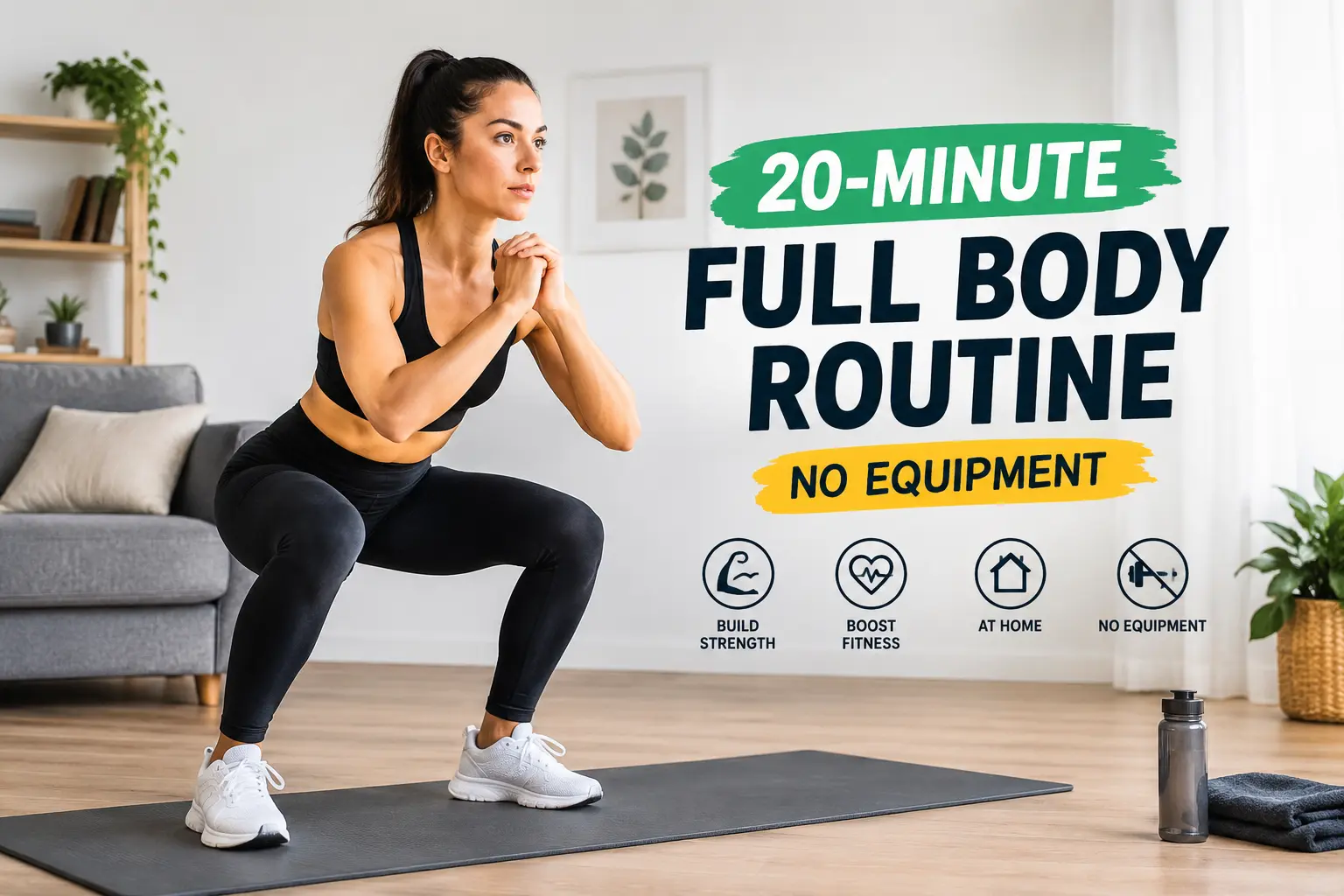
You can build strength, improve mobility, and raise your heart rate with this 20-minute full body routine. It doesn’t need dumbbells, resistance bands, machines, or other equipment. So, you can do it in your living room, bedroom, or any open space.
This quick fitness routine includes a warm-up, lower-body exercises, upper-body and core work, and short cardio intervals. You can adjust the pace, reduce the range of motion, or choose easier exercise variations to match your current fitness level.
Use this home workout to improve movement quality and cardiovascular fitness without spending hours at the gym. Focus on steady breathing, controlled form, and safe progress during each session.

Key Takeaways
- Complete a full-body workout in 20 minutes.
- Use no equipment or gym machines.
- Train mobility, strength, core control, and cardio.
- Adjust the pace and exercise options to suit your fitness level.
- Focus on smooth movement and proper form.
How to Start a 20-minute full body routine at Home
This home workout focuses on bodyweight exercises for your legs, upper body, and core. Aim for 20 minutes. Start with a warmup, do short work intervals, rest, and end with a cooldown.
Focus on controlled movements and steady breathing. You don’t need any special equipment for this no gym workout. A clear plan helps you stay focused.

What to Expect From This No-Equipment Workout
Each exercise uses your body weight for resistance. You’ll work for a set time, rest, and repeat. Try to maintain steady effort in each move.
A short warmup gets your joints ready and warms you up. Work intervals build strength and fitness. Rest periods help you maintain good form. A brief cooldown lets your breathing return to normal.
How to Prepare Your Workout Space
Find a stable floor area with enough room to stretch. Move away small tables, loose rugs, cords, and other hazards before starting.
Wear supportive shoes if the floor is hard or slippery. Bare feet might be okay on a clean, firm surface. Keep water nearby and a towel within reach if you sweat.
How to Modify the Routine for Your Fitness Level
If you’re new to exercise, see this as a beginner workout. Shorten work intervals, take longer rests, and use slower reps. Choose low-impact options to ease stress on your knees and ankles.
As you get fitter, add more controlled reps or extend work intervals. Keep your posture steady and stop if your form breaks down. A safe no gym workout should challenge you without causing sharp pain.
Warm Up Your Body for a Safe Home Workout
Begin your mobility warmup slowly. Spend three to four minutes getting your body ready. You should feel more awake, not sleepy.
Here’s a simple routine for your quick fitness routine:
- March in place for 45 seconds. Swing your arms with each step.
- Make small arm circles for 20 seconds in each direction.
- Rotate your torso gently from side to side for 30 seconds.
- Perform 10 slow hip hinges. Keep your back long as you push your hips behind you.
- Complete six alternating reverse lunges. Step back with control and keep your front foot steady.
- Move your ankles through gentle circles for 20 seconds per side.
If your joints are stiff, use a smaller range of motion. Keep your breathing steady. Let each movement grow as you warm up.
Stop or change an exercise if you feel sharp pain, dizziness, or unusual discomfort. A safe home workout starts with control, not speed.

Build Strength With Bodyweight Lower-Body Exercises
This lower-body sequence trains your quads, hamstrings, glutes, and support muscles. Use it as the strength block in your bodyweight workout. Move with control and keep each rep smooth.
Complete 8 to 12 reps per exercise. Rest for 30 to 45 seconds between moves. Keep your ribs stacked over your hips and stop if you feel sharp pain.
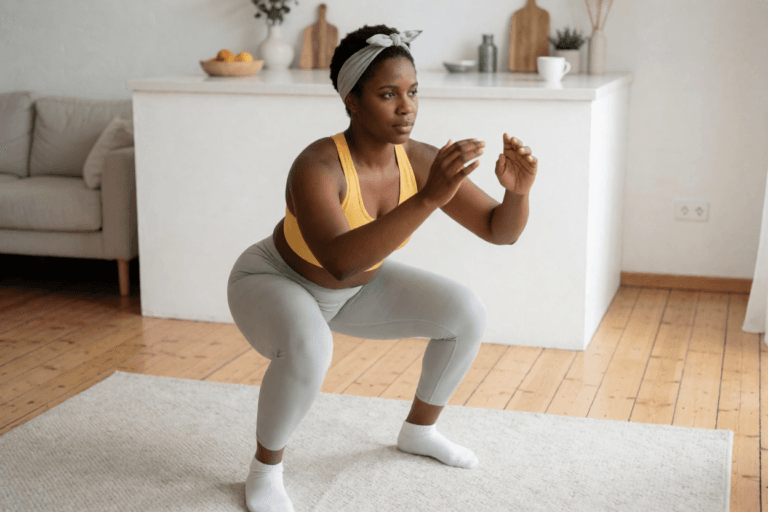
Bodyweight Squats for Your Legs and Glutes
Stand with your feet about shoulder-width apart. Brace your midsection, send your hips back, and bend your knees. Lower until you feel steady, with your chest lifted.
Press through your feet to stand tall. Keep your knees in line with your toes. Use a three-second lowering phase to build more control and lower-body strength.
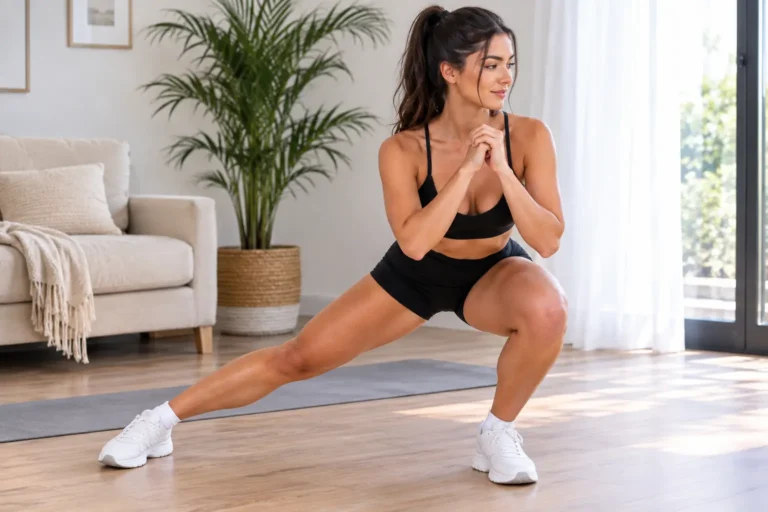
Reverse Lunges for Balance and Stability
Stand tall with your feet under your hips. Step one foot backward and lower your body with control. Keep the front knee aligned with the foot and your front heel grounded.
Push through the front foot to return to standing. Switch sides with each rep, or complete 8 to 12 reps per leg. Hold a wall for balance if needed.
Glute Bridges for Hip Strength
Lie on your back with your knees bent and feet flat. Place your feet about hip-width apart. Drive through your heels to lift your hips.
Squeeze your glutes at the top without arching your lower back. Lower with control and repeat for 10 to 15 reps. This no equipment leg workout move helps strengthen your hips and hamstrings.>
Target Your Upper Body and Core Without Equipment
These moves add to your bodyweight workout with steady effort. Focus on clean form, not speed. Stop when your technique starts to fade.
Push-Ups for Your Chest, Shoulders, and Arms
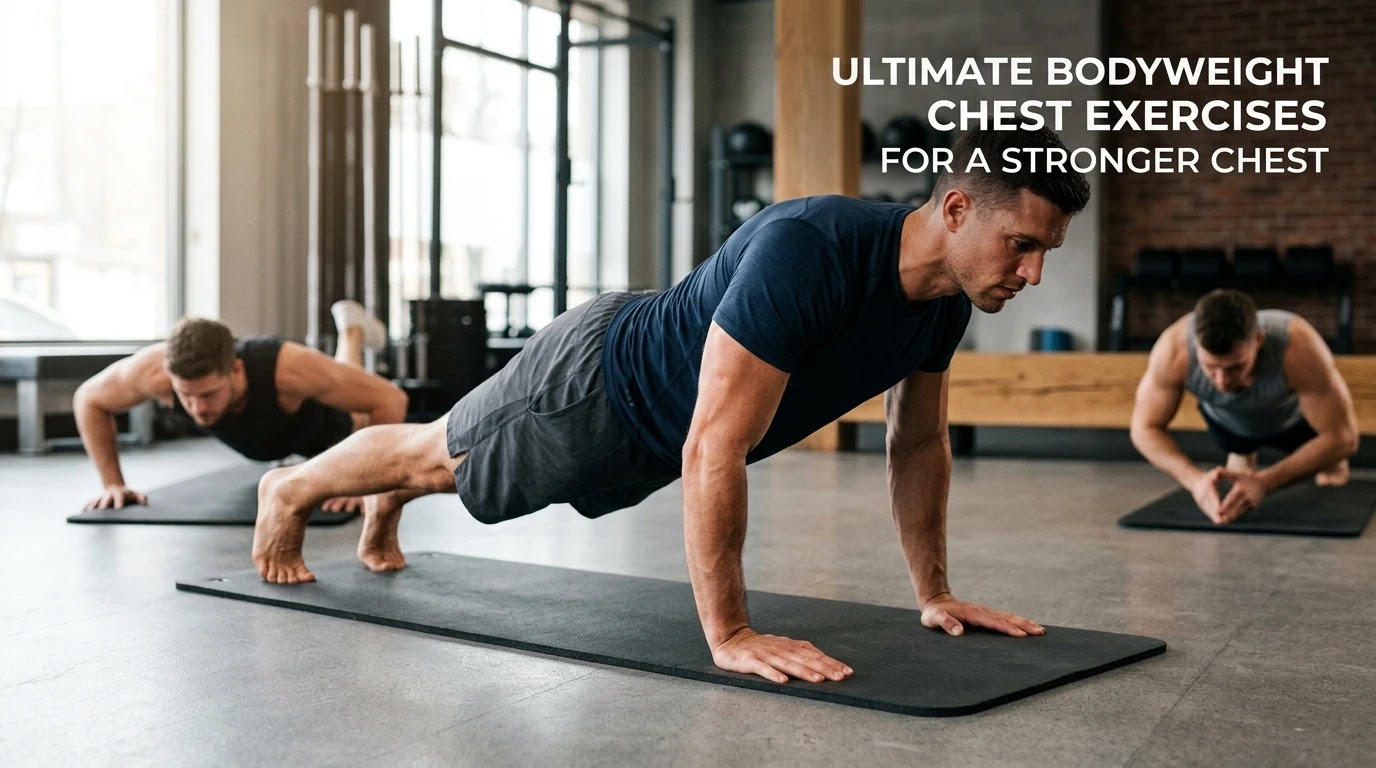
Start in a high plank with your hands just outside your shoulders. Keep a straight line from your head to your hips as you lower your chest. Let your elbows angle slightly away from your body.
Use a range of motion you can control. If a full push-up feels too difficult, place your knees on the floor or use an incline, such as a sturdy countertop. Each option can build upper-body strength when you keep your body stable.
Plank Shoulder Taps for Core Control
Begin in a high plank with your feet set wide for balance. Brace your core, lift one hand, and tap the opposite shoulder. Place your hand down with control, and switch sides.
Try to keep your hips as still as possible. Widen your feet more if your hips shift from side to side. This core workout move trains your trunk while your shoulders support your body.
Bird Dogs for Stability and Mobility
Start on your hands and knees with your back flat. Slowly extend one arm and the opposite leg. Keep your hips level and avoid lifting your leg too high.
Pause for a breath, return to the starting position, and switch sides. Move slowly to improve balance, spinal control, and hip mobility.
Complete the Quick Fitness Routine With Cardio Moves
These short bursts of movement raise your heart rate without much space. They’re great for cardio at home and keep your workout simple. Focus on steady breathing, soft landings, and smooth control.
Mountain Climbers to Raise Your Heart Rate
Start in a strong plank with your hands under your shoulders. Keep your back flat and bring one knee toward your chest at a time. Begin at a steady pace so you can protect your form.
As your control improves, increase the speed for a short cardio burst. Keep your hips level and breathe in a smooth rhythm. Slow down if your shoulders or lower back begin to tire.
High Knees for a Low-Space Cardio Challenge
Stand tall with your feet under your hips. Drive one knee upward, switch sides, and keep your arms moving in a natural pattern. Land softly on the balls of your feet.
Keep the motion light and quick. Lift your knees only as high as you can without losing balance. This move fits well into a quick fitness routine when you have little room to train.
Modified Jumping Jacks for Beginner-Friendly Conditioning
Step one foot out to the side while reaching both arms overhead. Bring the foot back in and repeat on the other side. Keep alternating without jumping.
This low-impact option lets you train continuously while reducing stress on your knees and ankles. It works well in a beginner workout, helping you build stamina. Keep your chest lifted and your breathing calm.
Follow the Workout Structure and Timing
Set aside about 20 minutes for this plan. Start with three to four minutes of easy movement. Then, complete the main circuit, and finish with a short cooldown. This structure keeps your quick fitness routine focused without making it feel rushed.
How to Use Work and Rest Intervals
Use 40 seconds of work followed by 20 seconds of rest for each exercise. This simple interval workout gives you time to move with control while keeping your heart rate up.
If you are new to exercise, use 30 seconds of work and 30 seconds of rest. During each break, shake out your arms, take slow breaths, and prepare for the next move.
How Many Rounds to Complete
Complete each exercise in order before starting the next round. Aim for two rounds if you are a beginner. Try three rounds when you can keep steady form and recover well between sets.
Rest for one to two minutes between rounds. Use this time to sip water and check how your body feels.
How to Control Your Pace and Form
Choose a pace you can maintain from the first exercise to the last. Your effort should feel challenging but sustainable. Breathe throughout each movement, and never hold your breath.
Stop or slow down when your form starts to break down. Smooth repetitions matter more than speed in a 20-minute full body routine. Quality movement helps you build strength while lowering the risk of injury.
Make This Beginner Workout Easier or More Challenging
You can adjust this routine to match your current fitness level. Choose smooth, controlled movements over speed. A few simple changes can make this beginner workout feel safer and more useful.
Low-Impact Modifications for Beginners
Use a sturdy chair for support during squats. Step one foot back for lunges, and keep the range of motion small. Glute bridges offer a gentle way to build hip strength.
For upper-body work, place your hands on a sturdy counter for incline push-ups. Lift your hands higher to reduce the load. Try elevated mountain climbers with your hands on a chair or bench. March in place for high knees, and step one foot out at a time for jumping jacks.
Progressions to Increase Strength and Endurance
Make your bodyweight workout harder in small steps. Increase the work interval by five to ten seconds. You can reduce rest by a few seconds, add one round, or slow the lowering phase of each movement.
When your form stays strong, choose a harder variation. Try floor push-ups, deeper lunges, faster mountain climbers, or regular jumping jacks. Stop or reduce the pace if your technique breaks down.
How to Build a Consistent No Gym Workout Schedule
Schedule this no gym workout two or three days per week. Leave a recovery day between harder sessions. This plan gives your muscles time to repair and helps you train with better form.
- Track completed rounds.
- Note how each exercise feels.
- Watch for steady improvements in control and stamina.
Support your routine with enough sleep, regular hydration, and balanced meals. Consistent habits help your body handle training and keep your progress moving.
Conclusion
This 20-minute full body routine is a great way to train at home. It starts with a warmup and then targets your lower and upper body, core, and cardiovascular fitness. All in one focused session.
Choose exercises that let you maintain control and proper form. In this home workout, slow down or rest when needed. Increase the intensity only as your strength and endurance grow.
A no gym workout can help you make lasting progress if you stick to it. Try to keep a regular schedule and track how you feel. Gradually increase your effort over time, avoiding rushing each session.
Stop immediately if you experience sharp pain, dizziness, chest pain, or any other concerning symptoms. If you have an injury, chronic condition, or health concern that might affect your training, get medical advice before exercising.
FAQ
Can you complete this 20-minute full body routine without equipment?
Yes. This bodyweight workout includes squats, lunges, and glute bridges. It also has push-ups, planks, bird dogs, and cardio exercises. You don’t need any equipment.
How should you structure this home workout?
Start with a three to four minute warmup. Then do two or three rounds. Each round has 40 seconds of work and 20 seconds of rest. Beginners can start with 30 seconds of work and 30 seconds of rest.
Is this beginner workout suitable for new exercisers?
Yes. You can adjust the workout to fit your level. Try chair-assisted squats and step-back lunges. Use incline push-ups and marching high knees for a lower impact.
How often should you perform this no gym workout?
Aim for two or three sessions a week. Take rest days between harder workouts. As you get stronger, you can add more rounds or try harder exercises.
What exercises strengthen your legs and glutes?
Squats, reverse lunges, and glute bridges work your legs and glutes. Keep your knees in line with your feet. Move slowly and control your body.
How can you make push-ups easier?
Do push-ups against a wall or from your knees. Keep your body in a straight line. Lower yourself slowly without losing form.
What can you do if plank shoulder taps cause your hips to rotate?
Widen your stance and slow down. Tap your shoulders without moving your hips. You can also use a wall for support.
Which cardio exercises fit a quick fitness routine?
Mountain climbers, high knees, and jumping jacks are good for small spaces. Choose a pace that lets you breathe smoothly and control your movements.
How do you warm up before this workout?
Start with marching in place and arm circles. Do torso rotations and hip hinges. Alternate reverse lunges and move your ankles. Keep the warmup gentle and controlled.
How can you make this workout more challenging?
Increase the work time and shorten rest periods. Add another round or slow down the lowering phase. Only progress if you can maintain form and breathing.
What should you do if you feel pain during the routine?
Stop if you feel sharp pain or discomfort. Switch to an easier version or stop the workout. If you have an injury, get medical advice before exercising.