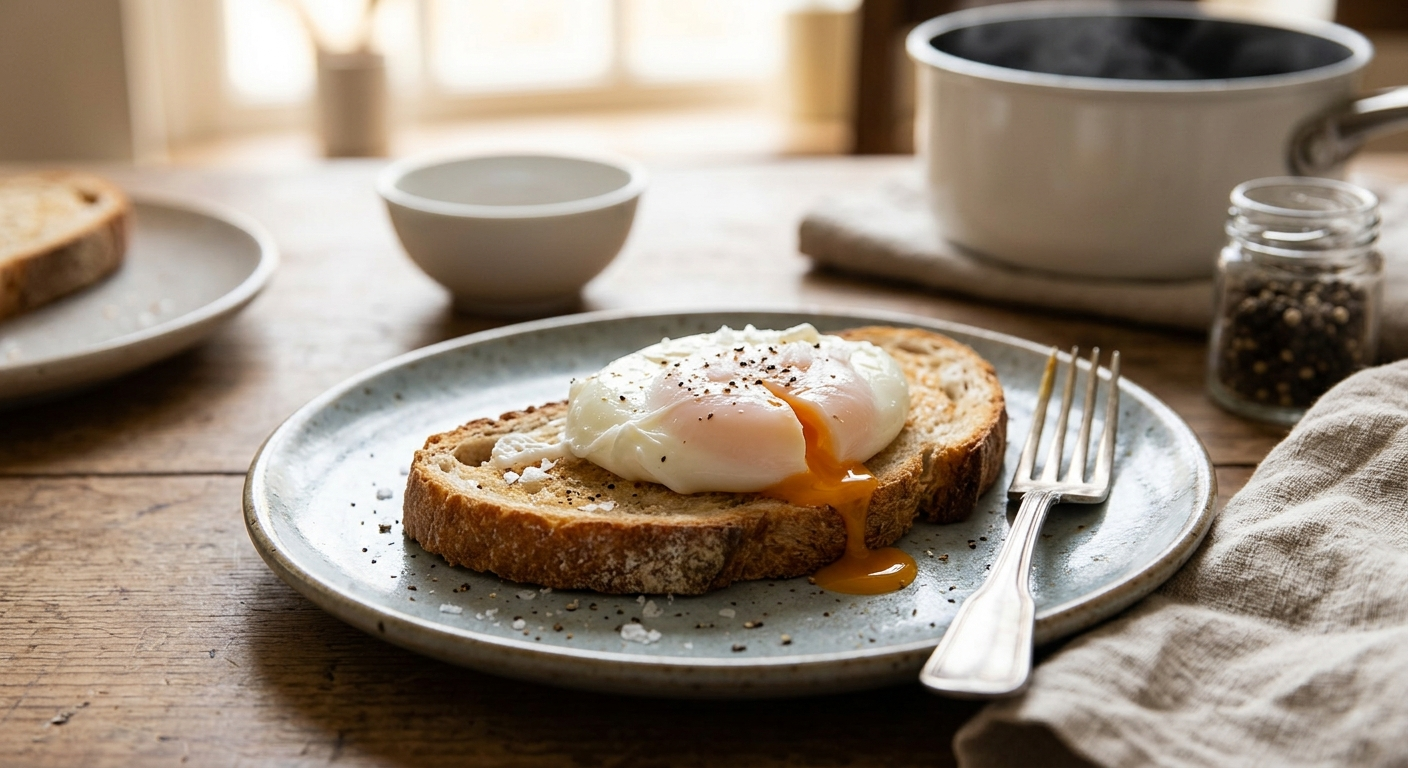
Perfect Poached Eggs in 10 Minutes

Poached Eggs
Equipment
- 1 Wide saucepan or pot
- 1 small bowl
- 1 slotted spoon
- 1 Paper Towels
- 1 knife
Ingredients
Fresh eggs, water, white vinegar (optional), salt, black pepper
You can make perfect poached eggs in about 10 minutes with a few simple steps. The goal is tender whites and rich, runny yolks. These are great for toast, salads, or breakfast bowls.
Fresh eggs give you the best shape because their whites stay together in the water. You will also need gently simmering water, careful timing, and a slotted spoon. This method makes easy poached eggs without special equipment.
Follow the process at a steady pace, and you will get reliable results. It works well for beginners and home cooks who want a quick, polished breakfast.

Key Takeaways
- Use fresh eggs for firmer whites.
- Keep the water at a gentle simmer.
- Cook the eggs until the whites set.
- Use a slotted spoon to lift each egg.
- Serve easy poached eggs right away for the best texture.
Poached Eggs: What You Need for Perfect Results
Choosing the right ingredients and tools makes poaching eggs easier. Start with quality eggs and gather your tools. Keep everything close to the stove for a smooth process.

Fresh Eggs and Why They Matter
Fresh eggs have thicker whites that hold up well in hot water. The yolk stays in the center, making a neat egg shape. Older eggs spread out, leading to a messy result.
Large eggs are best for even cooking and a big yolk. Try to use fresh eggs from the fridge or a local market. Crack each egg into a small bowl before adding it to the pan. This lets you check the egg and slide it into the water carefully.
Essential Ingredients and Kitchen Tools
You only need large eggs, water, and a bit of vinegar if you like. Vinegar helps the whites set faster, but too much can change the taste. Use about one teaspoon for a medium saucepan of water.
- A saucepan gives you enough room to cook one or two eggs.
- A small bowl helps you add each egg with control.
- A slotted spoon lifts the egg while draining excess water.
- Paper towels remove moisture before serving.
- An instant-read thermometer offers precise temperature control when needed.
These tools help you handle the eggs gently from start to finish. Keep the water below a hard boil. Use a wide saucepan for several eggs. A calm setup lets the whites set properly without movement.
How to Make Poached Eggs in 10 Minutes
Learning to poach eggs starts with steady heat and careful handling. Keep your tools ready, as the eggs cook fast once in the pan.

Prepare the Water
Fill a wide saucepan with enough water to cover the eggs. Leave a few inches of water above the pan’s base. Heat it until small bubbles rise and the surface moves gently.
Avoid a vigorous boil. Strong bubbles can break the whites and spread them across the pan. Add a small splash of white vinegar if you prefer. The acid helps the whites set with a neater shape.
Crack each egg into a small bowl. This step lets you check the egg and lower it with control. Hold the bowl close to the simmering water, and slide the egg in near the surface.
Cook Until the Whites Set
Cook the eggs for 3 to 4 minutes. This poaching time gives you firm whites and soft, runny yolks. Add another minute if you want firmer whites or a more set yolk.
Use a slotted spoon to lift each egg from the simmering water. Let the water drain through the spoon, and place the egg on a paper towel. Trim loose strands of white with a clean knife if needed.
| Preferred texture | Cooking time | What to expect |
|---|---|---|
| Very soft yolk | 3 minutes | Set whites with a liquid center |
| Classic poached egg | 3½ to 4 minutes | Firm whites with a warm, runny yolk |
| Firmer yolk | 4½ to 5 minutes | Set whites with a soft, thicker center |
Easy Poached Eggs Recipe for Beginners
With a few calm steps, you can make tender eggs in minutes. This easy poached egg recipe is perfect for beginners. It only needs a pot, a spoon, and fresh eggs.
Simple Step-by-Step Cooking Method
- Bring a pot of water to a gentle simmer. Small bubbles should rise from the bottom, but the water should not boil hard.
- Crack one egg into a small bowl. This makes it easier to guide the egg into the water without breaking the yolk.
- Use a spoon to create a slow, gentle movement in the water if you wish. Slide the egg into the center of the pot.
- Leave the egg alone as it cooks. Wait until the white looks opaque and feels firm around the edges.
- Lift the egg with a slotted spoon. Let extra water drain for a few seconds.
- Place it on toast or a warm plate. Season with salt and black pepper before serving.
For beginner poached eggs, cook one egg at a time until you feel comfortable. A gentle simmer protects the white and helps the egg keep its shape.
How to Check for Doneness
Press the thickest part of the white with the back of a spoon. It should feel set, while the center should still give slightly. This balance creates soft, runny yolks.
Remove the egg promptly when it reaches your preferred texture. Residual heat will keep cooking the egg after it leaves the water. Serve it at once for the best texture.
| What to Check | What You Should See | What It Means |
|---|---|---|
| Water | Small, steady bubbles | The heat is gentle enough for poaching. |
| Egg white | Opaque and firm | The egg is ready to lift from the pot. |
| Egg center | Soft with a slight give | You will have runny yolks. |
| Seasoning | Salt and black pepper | The egg is ready to serve. |
Expert Tips for Tender Whites and Runny Yolks
Small details can shape the texture of your eggs. Use very fresh eggs, keep the water calm, and give each egg enough space. These steps help you make perfect poached eggs with tender egg whites and runny egg yolks.
How to Prevent Egg Whites from Spreading
Crack each egg into a small bowl first. Hold a fine mesh strainer over another bowl and pour in the egg. Let it drain for a few seconds. This removes loose whites that can spread through the water.
Lower the egg close to the surface of the water. Do not drop it from high above the pan. A gentle release helps the white wrap around the yolk and keeps the shape neat.
Common Poaching Mistakes to Avoid
Boiling water can tear the whites and make the yolk cook too fast. Keep the water at a gentle simmer, with only small bubbles rising from the bottom. Avoid overcrowding the pan, since several eggs can lower the water temperature.
Cooking for too long can turn soft yolks firm. Skipping the draining step may leave thin strands around the egg. Fresh eggs give you a stronger white and a cleaner shape.
How to Keep Poached Eggs Warm
If you need a short pause before serving, place the cooked eggs in a bowl of warm water. Keep them there briefly so the tender egg whites stay soft without cooking the yolks through. Drain each egg just before serving.
| Tip | What to Do | Why It Helps |
|---|---|---|
| Strain the egg | Use a fine mesh strainer for a few seconds | Removes loose whites and improves the shape |
| Control the water | Keep it at a gentle simmer | Protects the whites and keeps the yolk soft |
| Use fresh eggs | Choose eggs with firm whites | Creates a neater poach |
| Warm cooked eggs | Place them briefly in warm water | Holds the texture before serving |
Easy Ways to Serve Perfect Poached Eggs
Serve your easy poached eggs right away for the best texture. The soft yolk pairs well with crisp bread, warm vegetables, and fresh herbs.
Classic Toast and Breakfast Pairings
Place a poached egg over buttered toast, an English muffin, or avocado toast. Add sautéed spinach for color and a mild flavor. Season with flaky salt and black pepper.
For a special brunch, try Eggs Benedict with Canadian bacon and hollandaise sauce. Roasted tomatoes, breakfast potatoes, and chopped chives make a simple, balanced plate.
Creative Meal Ideas
Use poached eggs in dishes beyond breakfast. Add one to a grain bowl with rice, quinoa, roasted vegetables, and a light dressing. Top a green salad with an egg for extra richness.
A poached egg adds comfort to ramen and creamy polenta. Add smoked paprika, hot sauce, fresh herbs, and cracked black pepper for new flavors.
Conclusion
Fresh eggs, a gentle simmer, and careful timing are key to perfect poached eggs. Keep the water calm. Then, cook the eggs for about 3 to 4 minutes. Remove them as soon as the whites are set.
Small changes in cooking time let you control the yolk. Cook slightly less for a soft, flowing center. Or add a little time for a thicker yolk. This simple step helps you adjust the texture to your taste.
With this poached eggs recipe, you can build a reliable breakfast routine. Serve your eggs over toast, vegetables, or a warm grain bowl. This makes for a quick and satisfying meal.
These easy poached eggs come together in about 10 minutes. Once you learn the method, you can prepare them with confidence. Enjoy them for breakfast, brunch, or any fast meal.
FAQ
How do you make poached eggs?
Start by bringing a saucepan of water to a gentle simmer. Crack each egg into a small bowl. Then, slide it carefully into the water.Cook for 3 to 4 minutes, until the white is set and the yolk remains soft. Lift the egg with a slotted spoon and drain it on a paper towel.
What makes this an easy poached egg recipe?
This recipe is easy because it uses simple steps and basic tools. You need fresh eggs, water, a saucepan, a small bowl, and a slotted spoon.Gentle simmering and careful timing help you get tender whites and runny yolks. You don’t need complicated techniques.
How can you make easy poached eggs without the whites spreading?
Use very fresh eggs because their whites are thicker and hold better. Strain each egg through a fine mesh strainer for a few seconds to remove loose whites.Slide the egg into gently simmering water from close to the surface.
How long should you cook poached eggs?
Cook poached eggs for about 3 to 4 minutes. Three minutes gives you a soft white and runny yolk. Four minutes makes the white firmer with a slightly thicker yolk.Remove the egg as soon as it reaches your preferred texture to prevent overcooking.
Should you add vinegar to the poaching water?
Adding a small splash of white vinegar can help the egg whites set faster. But use it sparingly because too much can affect the flavor. Fresh eggs often hold together well without vinegar, so it’s optional.
How do you know when poached eggs are done?
The egg white should look opaque and feel set when gently pressed with a spoon. The yolk should still move slightly beneath the white if you want a runny center.Remove the egg with a slotted spoon and drain it promptly because residual heat will continue cooking it.
What are the best ways to serve perfect poached eggs?
Serve perfect poached eggs over buttered toast, avocado toast, an English muffin, or sautéed spinach. You can also pair them with Canadian bacon and hollandaise sauce for Eggs Benedict.Flaky salt, black pepper, chives, smoked paprika, and hot sauce add extra flavor.
Can you keep poached eggs warm before serving?
Yes. Place cooked eggs in a bowl of warm water for a short time, then drain them on paper towels just before serving. Do not leave them in hot water for too long, or the yolks may become firm.
What is the easiest way to poach several eggs?
Use a wide saucepan and keep the water at a gentle simmer. Add the eggs one at a time, leaving enough space between them so they do not merge. Avoid overcrowding the pan, and remove each egg when its white is set.
Can you prepare poached eggs ahead of time?
You can poach the eggs slightly under your preferred doneness, chill them in ice water, and store them in the refrigerator for up to one day. Reheat them in warm water for about 30 to 60 seconds before serving. This method works well when you need an easy breakfast for several people.