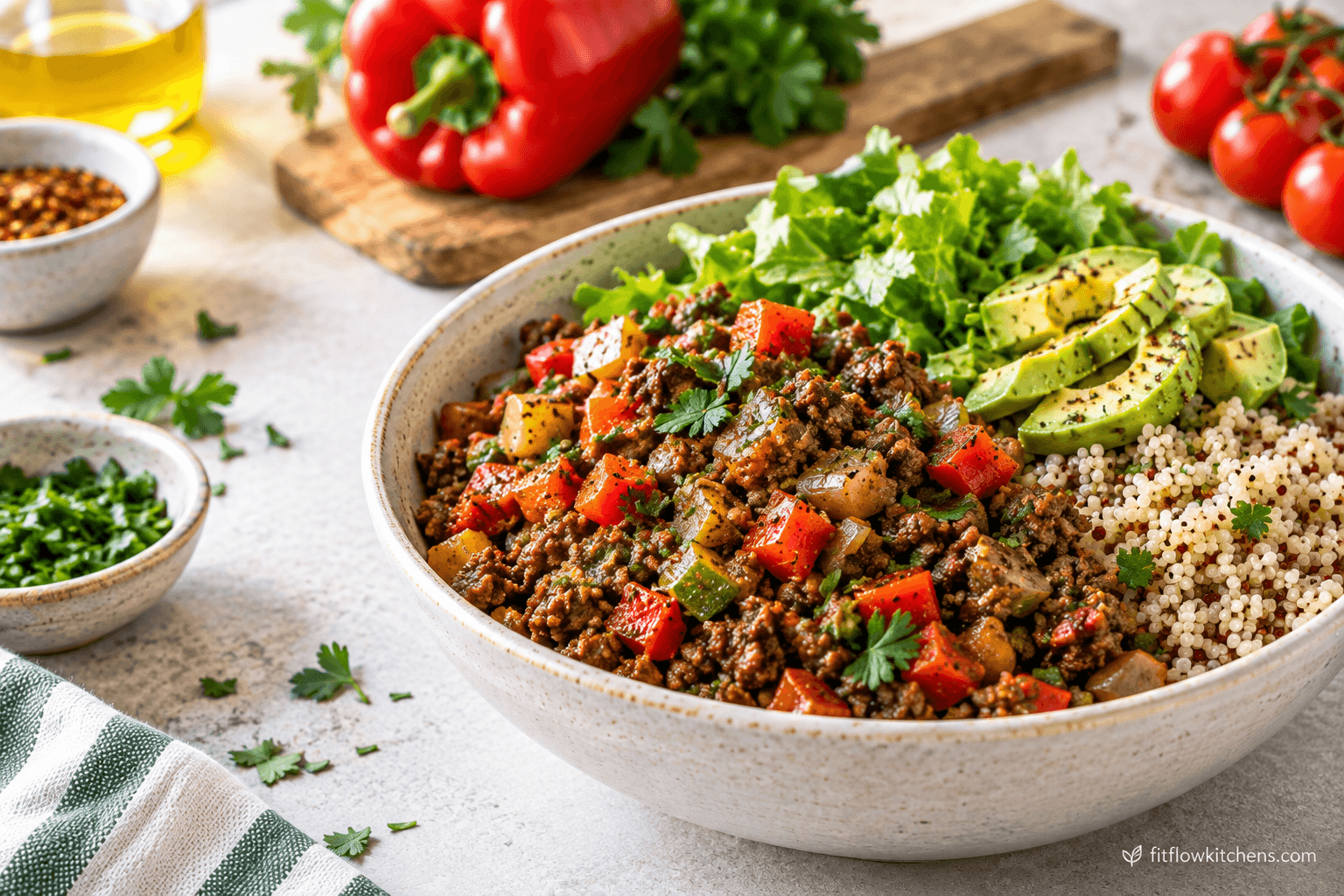
Healthy Ground Beef Recipes: Flavorful, Wholesome & Easy to Make
Cooking nutritious meals at home does not have to feel like a chore. Turn simple protein into a tasty dinner with fresh vegetables, hearty grains, and fiber-rich beans. Our guide offers a practical approach to making Healthy Ground Beef Recipes that support your wellness goals.
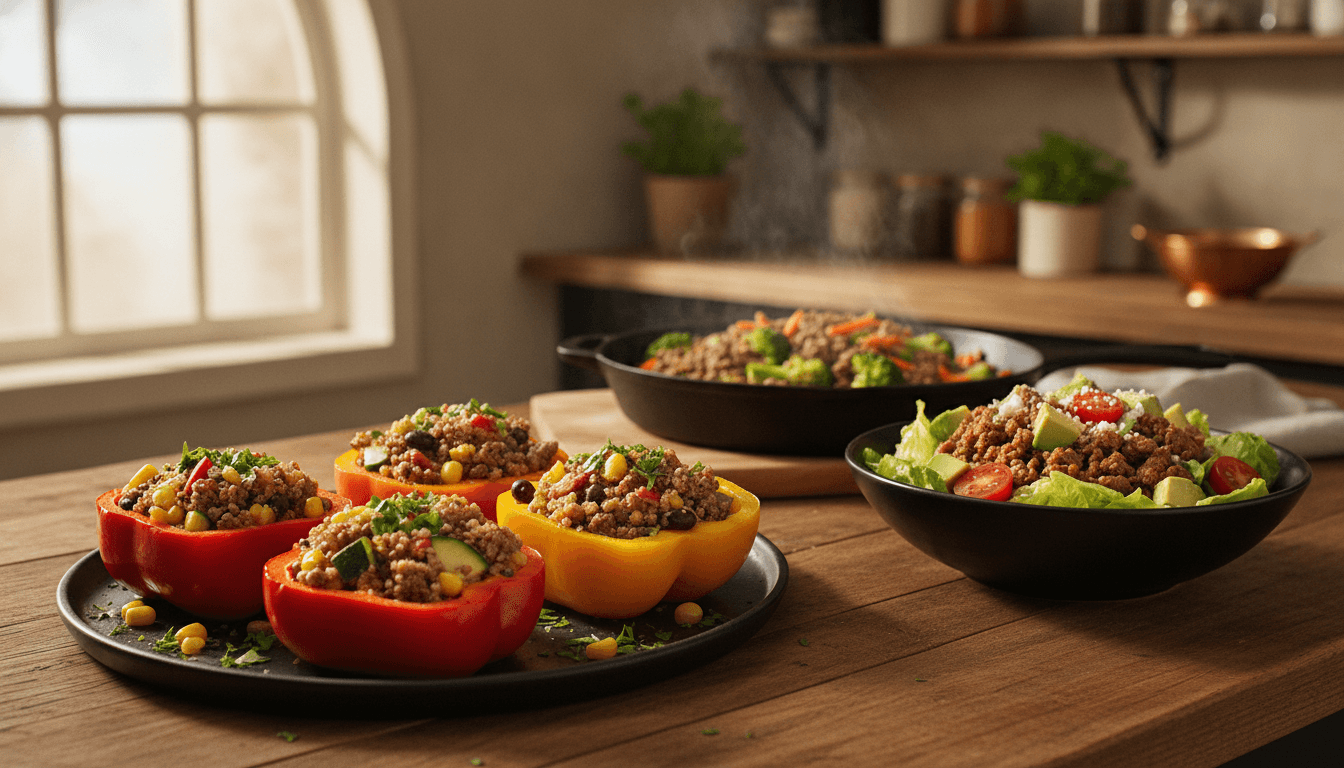
Whether you need a quick weeknight meal or a plan for weekly prep, these methods offer variety. You will learn to balance your plate with flavorful sauces and wholesome ingredients. Each healthy ground beef recipe uses simple techniques that save kitchen time.
Safety comes first when you cook. Always heat your meat to an internal temperature of 160°F so it is safe to eat. Refrigerate leftovers within two hours to preserve quality and freshness for your next meal.
Key Takeaways
- Focus on combining protein with fiber-rich vegetables and whole grains.
- Utilize one-pan cooking methods to simplify your cleanup process.
- Always verify that your meat reaches an internal temperature of 160°F.
- Store cooked portions in the refrigerator within two hours of preparation.
- Customize your meals with fresh herbs and homemade sauces for extra flavor.
Plan Balanced Ground Beef Meals for Busy Weeknights
Creating high protein meals with ground beef helps you stay satisfied after a long day. An organized kitchen routine removes dinner guesswork and keeps a nutritious option ready.
Build Each Meal Around Protein, Vegetables, and High-Fiber Carbohydrates
A balanced plate uses lean protein, colorful vegetables, and complex carbohydrates. This mix creates nutritionally dense dishes that help steady your energy.
Pair seasoned beef with brown rice and steamed broccoli for a classic, filling combination. You can also mix quinoa with sautéed bell peppers or serve taco-seasoned beef over black beans. These pairings provide fiber for digestion and help control hunger.
“The secret of success is to be ready when your opportunity comes.” Benjamin Disraeli
Choose Lean Ground Beef Without Sacrificing Flavor
Choosing lean ground beef keeps dinner light while providing high-quality protein. You can make delicious Healthy Ground Beef Recipes without high fat content.
Use onions, garlic, and ginger, plus fresh herbs and dried spices, to build deep flavor. Low-sodium soy sauce or vinegar can turn a simple skillet meal into a gourmet dish. These ingredients add depth and complexity without unnecessary calories.
Set Realistic Cooking Goals for Your Weeknight Schedule
Many people feel pressured to cook elaborate, time-consuming meals every night. However, consistency matters more than complexity for a healthy lifestyle.
Choose recipes that fit your available time instead of seeking perfection. If you have only twenty minutes, choose a quick stir-fry or simple taco bowl. With achievable goals, you are more likely to maintain healthy eating habits during the busy work week.
Stock Your Kitchen with Wholesome Ingredients and Essential Tools
A reliable kitchen setup helps you master Healthy Ground Beef Recipes. Stock versatile foods so you can make nutritious dinners without last-minute grocery trips.
Keep Lean Beef, Beans, Whole Grains, and Frozen Vegetables on Hand
Keep lean ground beef in your freezer for quick meals. Pair this protein with shelf-stable beans and whole grains, such as quinoa or brown rice, for balanced meals. Frozen vegetables add instant nutrition and color without chopping.
Use Flavor-Building Staples Such as Garlic, Ginger, Herbs, and Spices
Keep fresh garlic and ginger nearby to build rich flavor. Dried herbs and spices, such as cumin, paprika, and chili powder, let you adjust each meal. These staples support Healthy Ground Beef Recipes that stay flavorful and varied.
Prepare a Skillet, Sheet Pan, Dutch Oven, and Meal-Prep Containers
The right equipment makes cooking easier. Use a heavy-duty skillet to brown meat and a sheet pan to roast vegetables beside it. A Dutch oven suits slow-simmered stews, while quality meal-prep containers organize your ground beef meal prep high protein portions for the week.
| Category | Essential Item | Primary Benefit |
|---|---|---|
| Pantry | Whole Grains | Provides lasting energy |
| Equipment | Cast Iron Skillet | Superior heat retention |
| Storage | Glass Containers | Keeps food fresh longer |
| Flavor | Dried Spices | Adds depth to meals |
Follow Safe Ground Beef Handling and Cooking Practices
Safety matters as much as flavor when you handle meat. Cook ground beef to an internal temperature of 160°F to kill harmful bacteria. Refrigerate leftovers within two hours to protect the quality of your ground beef meal prep high protein dishes.
Healthy Ground Beef Recipes for Flavorful, High-Protein Meals
Simple ingredients turn ground beef into high protein meals with ground beef for the whole family. These flexible dishes let you try new flavors while supporting your nutrition goals.
Turkey-Style Ground Beef and Vegetable Skillet with Brown Rice
Ingredients That Add Protein, Fiber, and Color
Replacing heavy sides with brown rice adds fiber and complex carbohydrates to your plate. Colorful bell peppers, carrots, and peas add vitamins to your meal. This healthy ground beef recipe keeps you full longer and creates a bright, nutrient-rich dinner.
Simple Stovetop Cooking Method
The skillet saves time and uses one pan. Brown lean beef, add chopped vegetables, then stir in pre-cooked brown rice. Everything cooks together, blending flavors with little cleanup afterward.
Beef with Broccoli Recipe Healthy Enough for a Weeknight Dinner
Light Homemade Sauce with Reduced Sodium
A beef with broccoli recipe healthy enough for busy nights needs a smart sauce. Whisk low-sodium soy sauce, fresh ginger, and a little honey instead of salty store-bought sauce. This savory, umami-rich glaze helps control your sodium intake.
How to Keep the Broccoli Crisp-Tender
Add broccoli florets during the final minutes of cooking. Briefly steam them in the sauce to keep them bright green and crisp-tender. Watch the pan closely, because overcooking makes vegetables mushy.
Lean Ground Beef Taco Bowls with Black Beans and Avocado
Whole-Grain and Vegetable Toppings
Taco bowls are flexible high protein meals with ground beef for many tastes. Black beans add plant-based protein and extra fiber. Top the bowl with fresh avocado for healthy fats and a creamy texture.
Ways to Adjust Spice and Portion Size
Control the heat by changing the amount of chili powder or fresh jalapeños. For smaller portions, use less beef and add leafy greens or roasted vegetables. This flexibility makes it a staple healthy ground beef recipe for any household.
Stuffed Bell Peppers with Ground Beef, Quinoa, and Tomatoes
Stuffed peppers offer an appealing way to serve a balanced meal. Ground beef, protein-rich quinoa, and diced tomatoes create a hearty filling that holds its shape. These peppers suit meal prep because they keep well in the refrigerator for several days.
“The secret to a balanced diet is not restriction, but rather the intentional inclusion of fiber, lean protein, and colorful vegetables in every single meal.”
Registered Dietitian
| Recipe Type | Key Protein Source | Fiber Component | Best For |
|---|---|---|---|
| Vegetable Skillet | Lean Ground Beef | Brown Rice | Quick Weeknights |
| Beef & Broccoli | Lean Ground Beef | Broccoli Florets | Umami Cravings |
| Taco Bowls | Beef & Black Beans | Avocado & Greens | Customizable Portions |
| Stuffed Peppers | Beef & Quinoa | Bell Peppers | Meal Prep |
These Healthy Ground Beef Recipes show that eating well does not require giving up flavor. Fresh ingredients and smart cooking methods help you enjoy wholesome, delicious dinners every night of the week.
Step 1: Brown the Ground Beef for Maximum Flavor
A proper sear unlocks deep, savory flavors in the best Healthy Ground Beef Recipes. This step builds a flavorful base for vegetables, grains, and sauces. It helps every bite of your healthy ground beef recipe taste rich and complex.
Preheat the Skillet and Add the Beef in an Even Layer
Preheat your skillet over medium-high heat before adding the meat. A hot pan creates a golden-brown crust instead of steaming the beef in its juices. Spread the meat evenly across the pan for better heat contact.
Break the Meat into Small Pieces Without Overworking It
After the bottom sears, use a wooden spoon or spatula to break the meat into small pieces. Avoid constant stirring, which can stop the beef from forming a crust. Keep a consistent texture that blends well with other ingredients.
Drain Excess Fat While Preserving the Browning
Once the beef browns, you may see rendered fat in the pan. Drain the excess liquid carefully to keep your meal light. Leave the browned bits, called fond, because they add rich flavor to your final dish.
When to Use Extra-Lean, Lean, or Regular Ground Beef
Choose the fat content based on your goals for moisture and richness. Use this guide to select the best option for your needs:
| Beef Type | Fat Content | Best Use Case |
|---|---|---|
| Extra-Lean | 95% Lean / 5% Fat | Best for light, high-protein bowls. |
| Lean | 90% Lean / 10% Fat | Ideal for versatile, everyday cooking. |
| Regular | 80% Lean / 20% Fat | Best for juicy burgers or rich sauces. |
Step 2: Layer Aromatics, Spices, and Umami Ingredients
Great flavor starts with layers of aromatics and spices. This method helps ensure that your Healthy Ground Beef Recipes stay vibrant and tasty after refrigeration.
Sauté Onion, Garlic, Carrots, or Celery Before Adding Liquid
Start by sautéing finely diced onions, garlic, carrots, or celery in your skillet. These vegetables release natural sugars and essential oils that create a savory base. Always cook them until soft and translucent before adding liquid.
Bloom Chili Powder, Paprika, Cumin, and Italian Seasoning
When the vegetables are tender, add dry spices to the warm fat. Briefly cook chili powder, paprika, cumin, or Italian seasoning to release their full aroma. This technique spreads flavor through the meat instead of leaving it on top.
Use Tomato Paste, Low-Sodium Soy Sauce, or Worcestershire Sauce Carefully
Add tomato paste, low-sodium soy sauce, or Worcestershire sauce for a deep, savory taste. These ingredients work well in ground beef meal prep high protein dishes because their complex flavor lasts through reheating. Use them sparingly, because too much can overpower the beef’s natural flavor.
Balance Salt, Acidity, Heat, and Sweetness
Build the right flavor by balancing salt, acidity, heat, and sweetness. Taste the mixture often to keep these flavors in harmony. If it tastes flat, add a small splash of vinegar or a pinch of sugar.
| Flavor Element | Common Source | Purpose |
|---|---|---|
| Umami | Tomato Paste | Adds depth and richness |
| Acidity | Apple Cider Vinegar | Brightens heavy flavors |
| Heat | Chili Powder | Provides a subtle kick |
| Sweetness | Carrots | Balances savory notes |
Step 3: Add Vegetables and Fiber-Rich Ingredients
Creating high-fiber ground beef meals is simple when you know what to add and when. Adding plants turns basic Healthy Ground Beef Recipes into complete dinners that keep you full longer.
Fold in Fresh or Frozen Vegetables at the Right Time
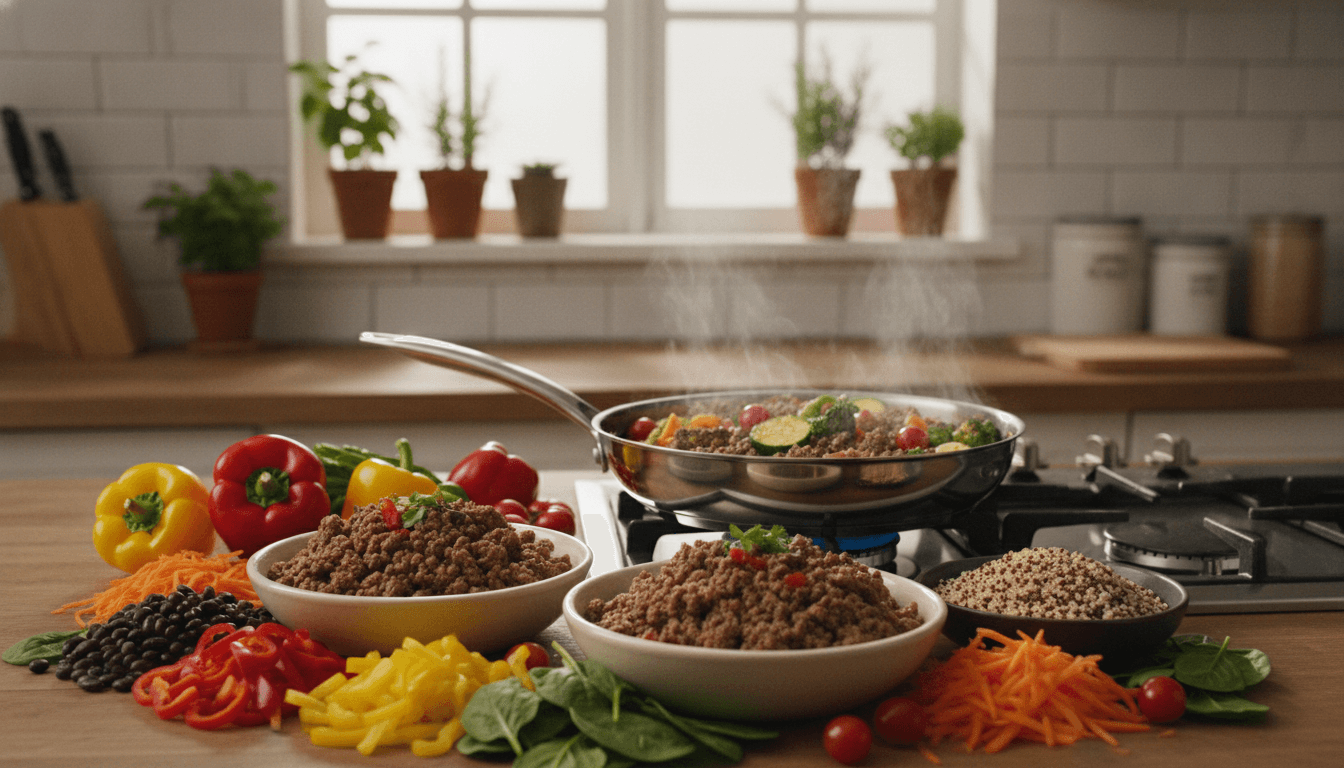
To protect texture and color, add vegetables based on their density. Add carrots or bell peppers early so they soften properly.
Add frozen vegetables during the last few minutes of cooking. This keeps them from becoming mushy and helps them retain their vibrant color and nutritional value.
Combine Ground Beef with Lentils, Black Beans, or Chickpeas
Legumes help stretch your protein while adding significant fiber. Stir canned black beans or chickpeas into browned meat to absorb savory juices.
Lentils suit saucy dishes because they absorb flavors and add a pleasant, meaty texture. This smart choice increases meal size without using more meat.
Choose Whole-Grain Bases Such as Brown Rice, Quinoa, or Whole-Wheat Pasta
The right base shapes your dish’s overall satisfaction. Each grain pairs differently with various seasonings and sauces.
| Grain Type | Cooking Time | Texture | Best Pairing |
|---|---|---|---|
| Brown Rice | 40-45 min | Chewy | Stir-fries |
| Quinoa | 15-20 min | Light/Fluffy | Taco Bowls |
| Whole-Wheat Pasta | 8-10 min | Firm | Tomato Sauces |
Prevent Watery Skillets by Controlling Moisture
Extra liquid can dilute seasoning and spoil your dish’s texture. Drain vegetables well before adding them to the skillet.
If liquid builds up, turn up the heat to evaporate the excess moisture before serving. This keeps flavors concentrated and bold.
Step 4: Finish Each Healthy Ground Beef Recipe with a Balanced Sauce
A well-made sauce links protein and vegetables into one cohesive meal. For Healthy Ground Beef Recipes, the right finish can make simple ingredients taste restaurant-quality without extra calories or excess sodium.
Make a Tomato-Based Sauce for Skillets, Stuffed Peppers, and Pasta
Tomato-based sauces create a strong foundation for many dishes. Crushed tomatoes or tomato paste add deep, savory flavor that pairs well with lean beef.
For a healthy ground beef recipe, simmer your mixture with fire-roasted tomatoes and fresh herbs. This adds natural sweetness and acidity, balancing the meat’s richness.
Whisk a Light Ginger-Garlic Sauce for Beef and Broccoli
For Asian-inspired flavor, choose a light ginger-garlic sauce. This sauce suits a beef with broccoli recipe healthy enough for regular weeknight meals.
“The secret to a great sauce is balance; it should enhance the ingredients, not mask them.”
Whisk together low-sodium soy sauce, fresh grated ginger, minced garlic, and a touch of rice vinegar. This blend adds a bright, umami-packed finish while keeping the dish light and fresh.
Use Greek Yogurt, Lime, or Avocado for Creamy Finishes
You do not need heavy cream or butter for a luxurious texture. Instead, use ingredients that provide creaminess and nutritional value.
- Greek Yogurt: Stir in a dollop at the end for a tangy, protein-rich creaminess.
- Lime Juice: A squeeze of fresh lime adds a necessary pop of brightness to heavy dishes.
- Avocado: Mash or slice avocado over your bowl to provide healthy fats and a smooth mouthfeel.
Thicken Sauces Without Heavy Cream
If your sauce needs more body, avoid heavy dairy products. Thicken pan sauces with these simple, wholesome methods:
| Method | Best For | Benefit |
|---|---|---|
| Cornstarch Slurry | Stir-fries | Glossy finish |
| Vegetable Purée | Stews | Added fiber |
| Reduced Broth | Skillets | Concentrated flavor |
Adjust the Final Seasoning Before Serving
Always taste your dish before removing it from the heat. A small pinch of salt or dash of vinegar may make the flavors pop.
Balance the four pillars of taste: salt, acidity, heat, and sweetness. Small adjustments help every bite taste perfectly seasoned and satisfying.
Step 5: Cook and Assemble Complete One-Pan and One-Pot Meals
When making one-pan ground beef meals, layer ingredients carefully and cook them in the right order. Match cooking times for proteins, grains, and vegetables so they finish together. This method helps create Healthy Ground Beef Recipes that are nutritious and satisfying.
Simmer Ground Beef Skillets Until the Grains and Vegetables Are Tender
For best results, brown the beef before adding liquid and grains. Simmer gently so grains absorb savory juices without becoming mushy. Watch vegetables closely because they may cook faster than brown rice or quinoa.
Layer Stuffed Peppers and Casseroles for Even Cooking
When making stuffed peppers or layered casseroles, arrange each part carefully for even cooking. Leave enough space for heat and steam to move through the dish. This helps prevent a burned bottom while the top stays undercooked.
Arrange Sheet-Pan Beef Meatballs with Roasted Vegetables
For a quick dinner, adapt a beef with broccoli recipe healthy enough for any busy night using a sheet pan. Spread meatballs and chopped vegetables in one layer so they roast instead of steam. This creates a delicious, caramelized finish that brings out their natural flavors.
Check Ground Beef for a Safe Internal Temperature of 160°F
Whatever method you use, food safety comes first. Use a meat thermometer to confirm that ground beef reaches an internal temperature of 160°F. This keeps the meal safe while preserving the meat’s moisture and quality.
| Cooking Method | Primary Benefit | Best Ingredient Pairings |
|---|---|---|
| Skillet Simmering | Deep flavor infusion | Rice, beans, and leafy greens |
| Sheet Pan Roasting | Crispy textures | Broccoli, carrots, and onions |
| Layered Casserole | Even heat distribution | Quinoa, peppers, and tomatoes |
Step 6: Portion High-Protein Ground Beef Meals for Meal Prep
When you prepare high protein meals with ground beef, storage matters as much as cooking. Good organization keeps your Healthy Ground Beef Recipes fresh and tasty throughout the work week. Take a few extra minutes to fill containers, and you can enjoy steady meal prep success.
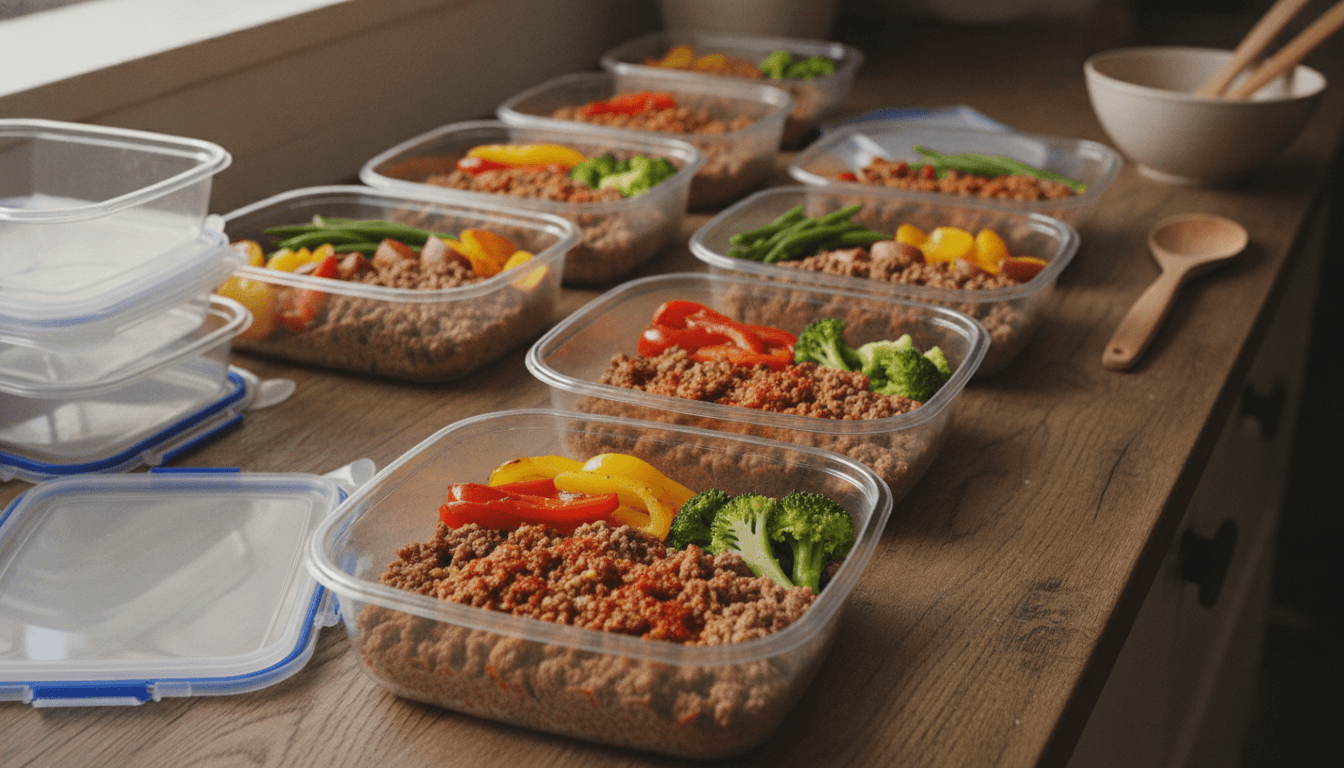
Divide Beef, Vegetables, and Grains into Balanced Containers
Choose high-quality, airtight containers for easy portion control. Fill each one with lean protein, fiber-rich vegetables, and complex carbohydrates, such as brown rice or quinoa. This balance supports steady energy and helps prevent overeating during busy lunch hours.
Prepare Ground Beef Meal Prep High Protein Bowls with Flexible Toppings
A ground beef meal prep high protein bowl adds variety to your diet. Change the flavor each day with different toppings. Try avocado slices, Greek yogurt, zesty salsa, or fresh herbs.
Keep Sauces, Greens, and Crunchy Garnishes Separate
For the best texture, keep sauces and delicate greens in small containers. Early sauce can make grains soggy, while heat can wilt spinach or arugula. Add them just before eating for a fresh and crunchy experience.
Refrigerate Cooked Beef Within Two Hours
Food safety is a key part of every meal prep routine. Refrigerate cooked beef within two hours after cooking to help prevent bacterial growth. Shallow containers help it cool faster and more evenly in the fridge.
Reheat Portions Thoroughly Without Drying Out the Meat
Reheat your meal until it is steaming hot throughout. Add a small splash of water or broth before microwaving to keep the meat moist. Cover the container loosely with a lid or paper towel to trap moisture and keep beef tender.
Step 7: Customize Portions, Substitutions, and Nutrition
A few simple changes can turn standard dishes into personal nutrition powerhouses. Adjust ingredients so your Healthy Ground Beef Recipes match your wellness goals and taste.
Increase Protein with Greek Yogurt, Cottage Cheese, Beans, or Eggs
To make high protein meals with ground beef, add nutrient-rich foods that help you feel full. A dollop of plain Greek yogurt or cottage cheese makes sauce creamy and adds a big protein boost.
Black beans and lentils add plant-based protein and essential fiber. You can also crack an egg into the skillet during the final cooking minutes, creating a rich, protein-packed texture.
Lower Sodium by Using Unsalted Broth and Homemade Seasoning Blends
To manage salt intake, choose lower-sodium ground beef recipes. Use unsalted beef or vegetable broth instead of store-bought stocks to control your meal’s base flavor.
Make your own seasoning blends to avoid hidden additives and excess sodium. Combine chili powder, cumin, garlic powder, and smoked paprika for bold flavor from herbs and spices, not salt.
Reduce Carbohydrates by Replacing Some Grains with Cauliflower Rice
Cauliflower rice lowers carbs and works well instead of traditional grains. It mimics rice texture and adds vitamins and minerals to your plate.
You can also use zucchini noodles or shredded cabbage with your beef mixtures. These vegetable swaps keep meals light and satisfying while supporting your daily carbohydrate targets.
Make Recipes Gluten-Free, Dairy-Free, or Vegetarian-Friendly
Adapting recipes for dietary restrictions is simpler than you might think. For gluten-free meals, replace soy sauce with tamari or coconut aminos, and check that spice blends are certified gluten-free.
If you avoid dairy, skip cheese toppings and use avocado or coconut milk for richness. For vegetarian options, replace beef with mushrooms, walnuts, and lentils for a hearty, meaty texture.
“Cooking is a craft that thrives on flexibility; when you learn to substitute ingredients based on your body’s needs, you turn every meal into a tool for better health.”
Use Nutrition Labels and Portion Sizes to Match Your Goals
Read nutrition labels on packaged foods before adding them to your skillet. Healthy ingredients can still vary in calories and sodium across brands.
Portion control also helps you reach your health goals. Use this table to make informed choices when swapping ingredients in favorite dishes.
| Ingredient Category | Standard Option | Healthier Swap | Primary Benefit |
|---|---|---|---|
| Carbohydrates | White Rice | Cauliflower Rice | Lower Calories |
| Protein Boost | Extra Beef | Black Beans | Added Fiber |
| Creaminess | Heavy Cream | Greek Yogurt | Higher Protein |
| Seasoning | Table Salt | Herb Blends | Lower Sodium |
Serve and Store Your Ground Beef Meals for the Best Texture
You can preserve flavor and texture by following simple serving and storage guidelines. Proper handling keeps your Healthy Ground Beef Recipes just as appetizing on the second day as when first prepared.
Pair Skillet Meals with Fresh Salads, Steamed Vegetables, or Fruit
Adding fresh foods creates a pleasant contrast to savory ground beef. A crisp salad or lightly steamed seasonal vegetables provides a refreshing crunch that balances the main dish.
For a weeknight meal, serve your beef with broccoli recipe healthy dish with fresh pineapple or orange. Fruit’s natural acidity and sweetness cut through umami flavors, brightening the meal.
Store Leftovers in Shallow, Airtight Containers
Efficient storage supports successful ground beef meal prep high protein planning. Shallow, airtight containers help food cool much faster in the refrigerator.
This rapid cooling is essential for preserving ingredient texture. It keeps meat and vegetables firm and flavorful instead of mushy for your next lunch or dinner.
Freeze Chili, Meatballs, and Casserole Portions for Future Meals
Stocking your freezer with freezer-friendly ground beef meals saves time during busy weeks. Chili, meatballs, and hearty casseroles freeze especially well when portioned correctly.
Always use freezer-safe bags or containers and label them with the contents and date. This habit helps track inventory and keeps a nutritious, homemade option ready to reheat.
Know When Refrigerated or Frozen Beef Should Be Discarded
Food safety is non-negotiable when managing leftovers. Discard beef immediately if you notice an off odor, unusual color, or slimy texture.
Never use a taste test to decide whether food is safe to eat. When in doubt, throw it away to protect your health and well-being.
Conclusion
Build flavor with simple, repeatable steps to improve your dinner routine. Browning meat, adding aromatics, and using fiber-rich vegetables creates Healthy Ground Beef Recipes that support hunger and health goals.
Each healthy ground beef recipe can support long-term success. Pair these high-protein meals with brown rice, quinoa, beans, or fresh avocado for steady evening energy. These simple combinations require no complex cooking skills.
Kitchen safety remains important. Cook your beef to an internal temperature of 160°F to ensure quality. Store leftovers in airtight containers and refrigerate them within two hours to keep them fresh.
Try different spices and seasonal produce to keep your menu exciting. Adjust portions and swap ingredients to fit your specific needs. This flexible approach makes a wholesome diet easier during a busy lifestyle.
FAQ
What is the safe internal temperature for cooking a healthy ground beef recipe?
For a healthy ground beef recipe, cook the meat to at least 160°F, as the USDA recommends. Use a ThermoPro digital meat thermometer to confirm the temperature without overcooking the beef.
How can I make my high protein meals with ground beef even more filling?
Add fiber-rich ingredients to high protein meals with ground beef for more fullness and nutrition. Try Bush’s black beans, lentils, or Lundberg Family Farms brown rice in your skillet. These complex carbohydrates keep you full longer and complement beef’s amino acid profile.
What are the best tips for a ground beef meal prep high protein routine?
For a ground beef meal prep high protein routine, divide cooked beef, vegetables, and grains among airtight Pyrex glass containers. For variety throughout the week, store sauces and crunchy garnishes separately. Add Mission tortilla strips or fresh cilantro before serving to preserve their texture.
How do I keep the vegetables crisp in a beef with broccoli recipe healthy enough for weeknights?
Timing keeps a beef with broccoli recipe healthy and restaurant-quality. Sauté broccoli florets for only 3 to 4 minutes, until bright green and crisp-tender. Use low-sodium Kikkoman soy sauce, ginger, and garlic for flavor without excess salt or calories.
Can I reduce the fat content in my ground beef recipes without losing flavor?
Choose lean or extra-lean ground beef (90% to 93% lean) to reduce calories. For moisture and flavor, use “umami” boosters such as Lea & Perrins Worcestershire sauce, tomato paste, or sautéed mushrooms. Brown the meat thoroughly in a Lodge Cast Iron skillet before draining excess fat to create a deep, savory crust.
How should I store and reheat my healthy ground beef meals?
Refrigerate cooked ground beef within two hours of preparation to prevent bacterial growth. Store leftovers in shallow containers for rapid cooling. Reheat until steaming hot throughout; add a splash of Swanson beef broth before microwaving to prevent dryness.
What are some low-carb substitutions for healthy ground beef recipes?
To reduce carbohydrates in healthy ground beef recipes, replace pasta or rice with Green Giant Riced Cauliflower or zoodles (zucchini noodles). Serve taco-seasoned beef in large romaine lettuce leaves or hollowed-out bell peppers for a nutrient-dense, lower-calorie flour-tortilla alternative.