Standing Abs Workout at Home: 6 Easy No-Floor Core Moves
A standing abs workout at home lets you train your core without getting down on the floor. This no floor ab workout uses 6 upright moves that work your abs, obliques and the deeper muscles that keep you steady. It’s easy on your knees, wrists and neck, it needs no equipment, and you can do it in a small space.
Why Train Your Core Standing Up?
When you stand, your core has to stabilize your whole body, so your abs work together with your hips, back and legs. That mirrors everyday movements like carrying, twisting and reaching. A few practical benefits:
- No getting up and down from the floor.
- Less pressure on your knees, wrists and neck than many floor exercises.
- Small-space friendly: no mat needed.
Two honest points: exercise can’t remove fat from one area, and how your midsection looks depends on overall body composition, nutrition and genetics. A strong core mostly helps with balance, posture and everyday movement.
Before You Start
Clear a flat area where you can extend your arms and legs, and remove loose rugs. Wear supportive shoes for balance, and keep a wall or sturdy chair close if you feel unsteady. Use the talk test: you should be able to speak in short sentences but not sing. If you can’t speak, slow down.
If you have a back, neck, hip or balance condition, an injury or ongoing pain, check with a doctor or physical therapist first. This post is general information, not medical advice.
Warm Up (3 to 4 Minutes)
| Move | Time |
|---|---|
| March in place with arm swings | 2 minutes |
| Shoulder circles | 30 seconds |
| Gentle torso rotations | 30 seconds |
| Core bracing practice | 30 seconds |
To brace, tighten your stomach as if you were about to be lightly tapped, and keep breathing normally.
The Standing Abs Workout at Home: 6 Moves
Do each move for 40 seconds, rest for 20 seconds, then go on to the next. Complete 2 to 4 rounds. Beginners can start with 1 or 2 rounds. Breathe out on the hardest part of each rep, and keep your movements slow.
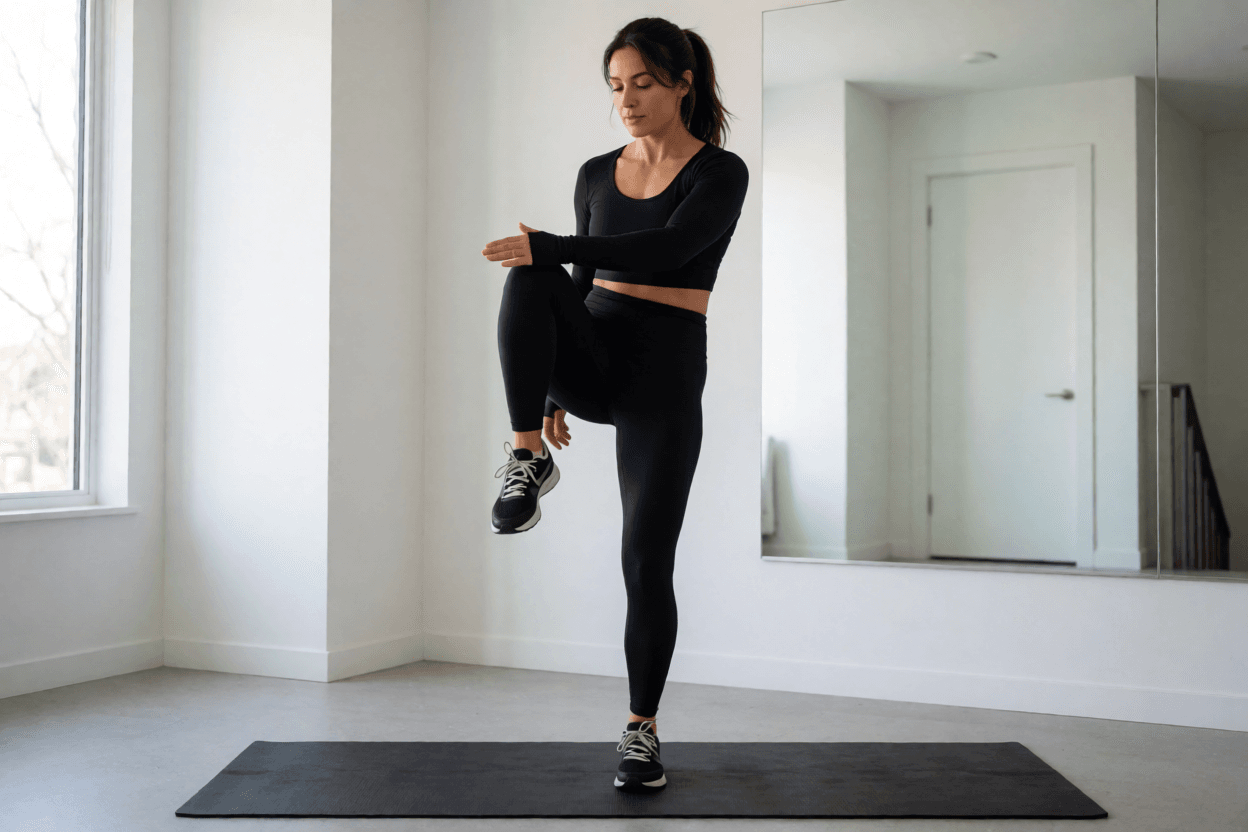
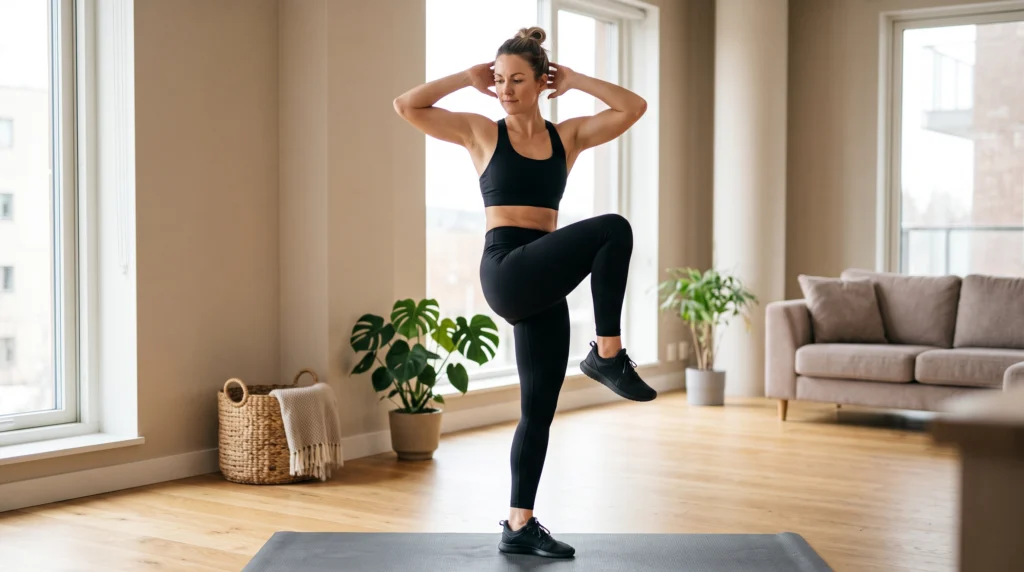
1. Standing knee-to-elbow crunch
Stand with your feet hip-width apart and your hands behind your head, elbows wide. Lift your right knee and twist to bring your left elbow toward it, then switch sides. Use your obliques to start the twist, and don’t pull on your neck.
2. Standing cross-body knee drive
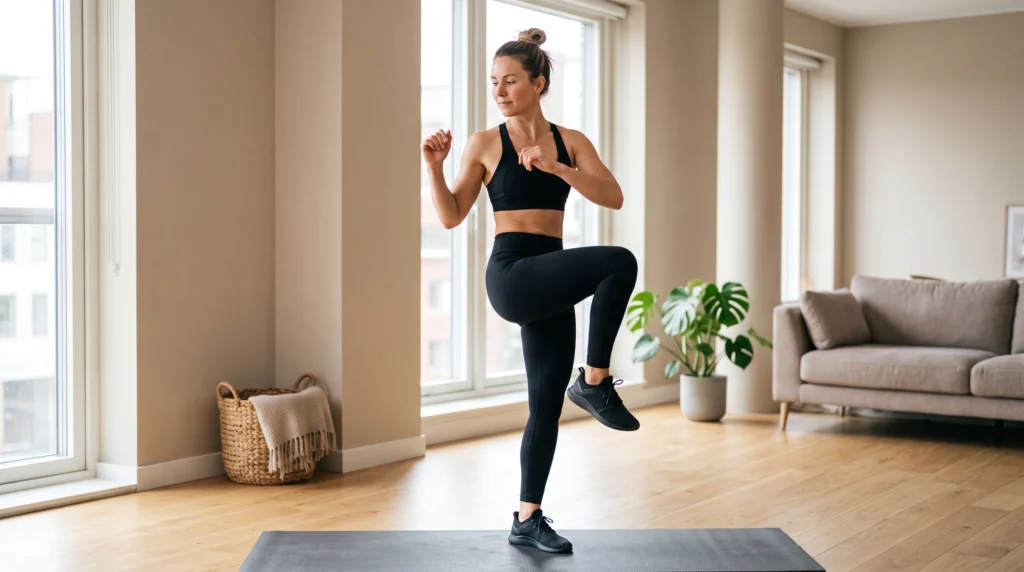
Bring one knee across your body toward the opposite shoulder, rotating through your upper back while keeping your hips steady. For a beginner-friendly version, lift your knee only to a comfortable height.
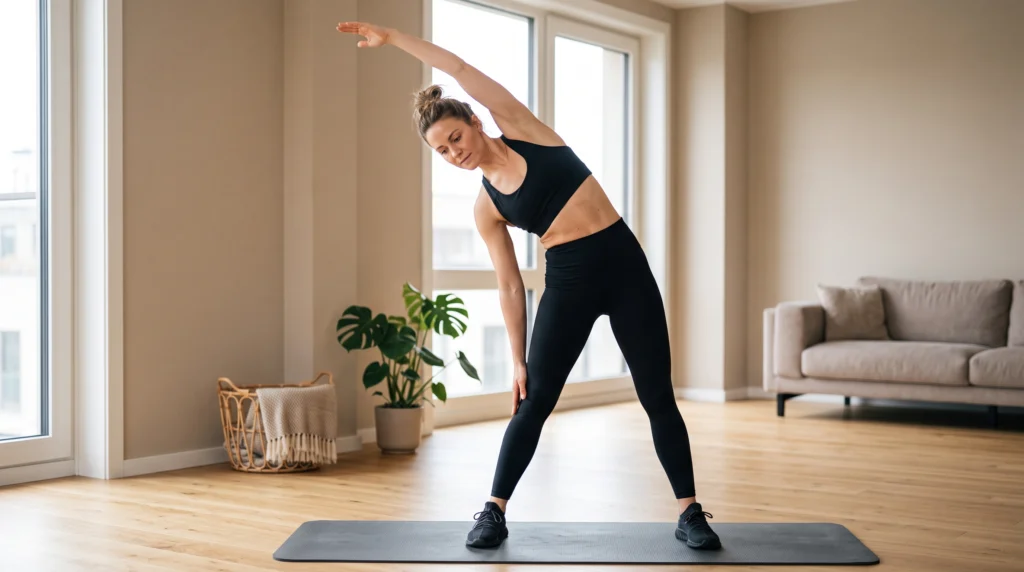
3. Standing side crunch
Stand with your feet wide and reach one arm overhead. Bend sideways, bringing your rib cage toward the hip on the same side, then return to the middle. Keep both feet planted if your balance feels shaky.
4. Standing side leg lift
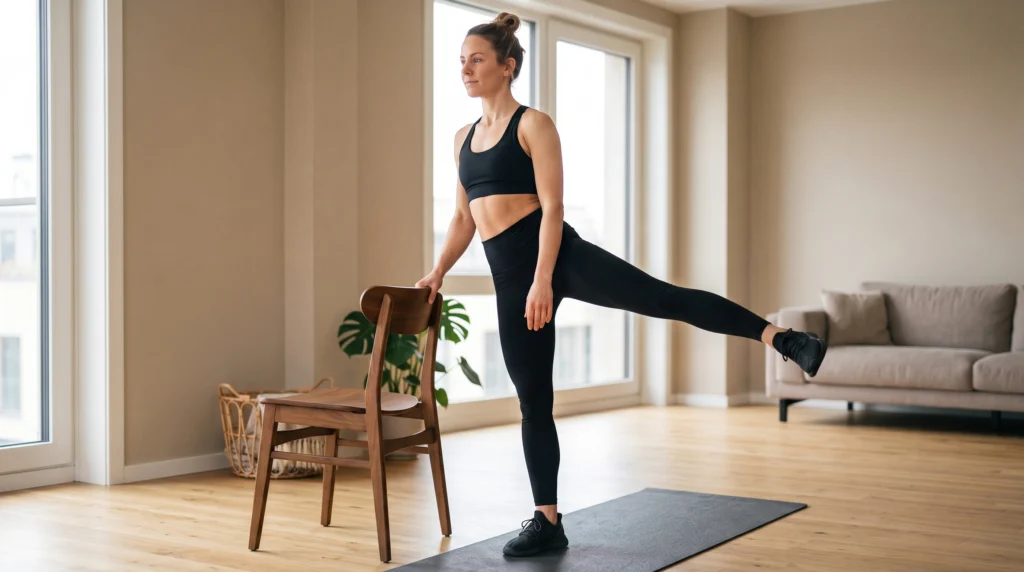
Hold a wall or sturdy chair with one hand. Lift your outside leg straight out to the side while keeping your torso upright, and lower it slowly. Lift only as high as you can without leaning or arching your lower back.
5. Standing wood chop
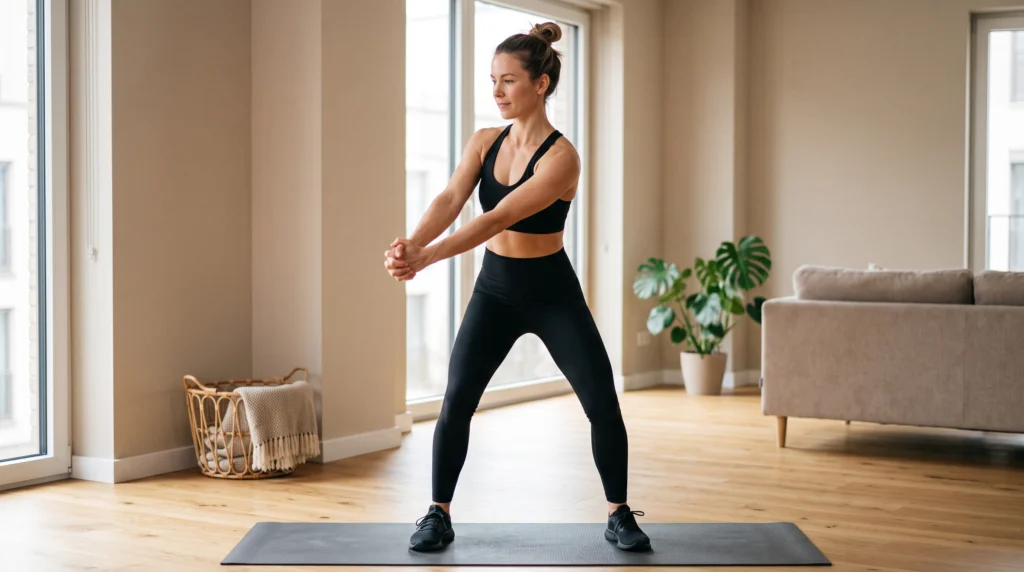
Start with your hands clasped above one shoulder. Bring them down in a diagonal “chopping” motion toward the opposite hip, rotating through your torso, then reverse the path. Keep the movement smooth, as if you’re pulling a heavy rope, and don’t swing your arms.
6. Standing high-knee drive
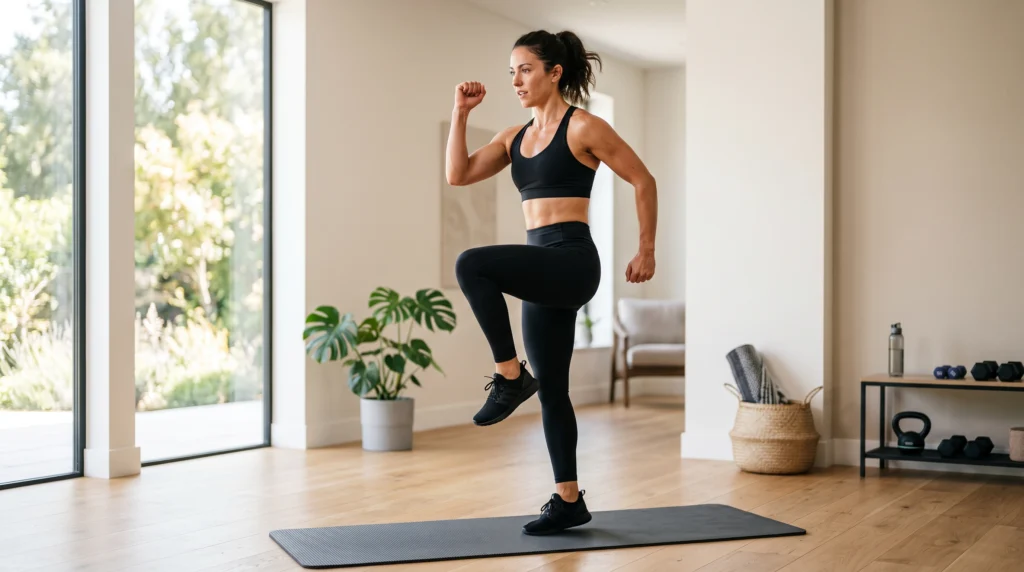
Stand tall and drive one knee up toward your chest, then alternate legs at a steady pace. Slow it down to make your core work harder. If your knees or hips complain, swap it for slow marching.
Make Your Standing Abs Workout at Home Easier or Harder
To make it easier:
- Shorten the range of motion and slow the pace.
- Hold a wall or chair for balance.
- Do 1 or 2 rounds.
To make it harder:
- Add 5 to 10 seconds to each move.
- Hold a light dumbbell or use a resistance band for the wood chops.
- Add more single-leg and rotational moves.
If something hurts:
- Replace knee drives with slow marching.
- Reduce rotation or keep your feet planted if twisting is uncomfortable.
- Stop any move that causes sharp or worsening pain.
Form Tips for Your Standing Abs Workout at Home
- Use your core, not momentum. Swinging your arms or legs makes the exercise easier and less useful.
- Breathe out on the effort. This helps you stay braced.
- Keep your chest open and your shoulders relaxed.
- Stand tall, as if a string were lifting the top of your head.
How Often to Do a Standing Abs Workout at Home
Start your standing abs workout at home three days a week, with a day between sessions. Adults are advised to do muscle-strengthening activity at least two days a week (CDC physical activity guidelines). Core work also counts when it’s part of a bigger routine, so pair this with a 20-minute full body routine, our upper body workout at home or our 10-minute glute workout. For gentle leg work, try our lazy girl thigh workout. On rest days, a walking workout for beginners keeps you moving.
A Sample Week for Your Standing Abs Workout at Home
| Day | Plan |
|---|---|
| Monday | Standing abs workout, 2 rounds |
| Tuesday | Walking workout or rest |
| Wednesday | Standing abs workout, 3 rounds |
| Thursday | Rest or gentle stretching |
| Friday | Standing abs workout, 2 to 3 rounds |
| Saturday | Full-body routine |
| Sunday | Rest or easy walk |
Common Mistakes
| Mistake | Fix |
|---|---|
| Rushing the reps | Slow down and feel the muscles work |
| Holding your breath | Breathe out on the hardest part of each rep |
| Pulling on your neck during crunches | Keep your elbows wide and your chest open |
| Leaning sideways during leg lifts | Keep your torso upright and lift only as high as you can |
Track Your Progress
Notice how steady you feel instead of how much you sweat. Good signs are less wobbling, more seconds or rounds with clean form, and better balance on one leg. Write down how many rounds you did and how it felt.
FAQ
Is a standing abs workout effective?
Yes. Standing moves work your abs, obliques and stabilizers together, and slow, controlled reps make them challenging without equipment.
Is this a good beginner core workout?
Yes. You can shorten the range, slow the pace and hold a wall or chair.
Do I need equipment for a no floor ab workout?
No. A light dumbbell or resistance band is optional later on.
How often should I do a standing abs workout at home?
Start with three days a week, with a rest day between sessions.
Is it safe if I have back or neck problems?
Standing moves avoid the neck strain of sit-ups, but you should still move slowly and avoid painful twisting. Check with a doctor or physical therapist first if you have a condition.