Greek Yogurt Bread: Easy High-Protein Loaf (No Yeast)
Looking for a protein bread recipe that doesn’t taste like cardboard? This Greek Yogurt Bread uses pantry staples and comes together in one bowl, with no mixer, no yeast, and no proofing time. The yogurt does double duty: it keeps the crumb soft and tender, and it turns an ordinary loaf into a high protein bread you can build breakfast, lunch or a snack around.
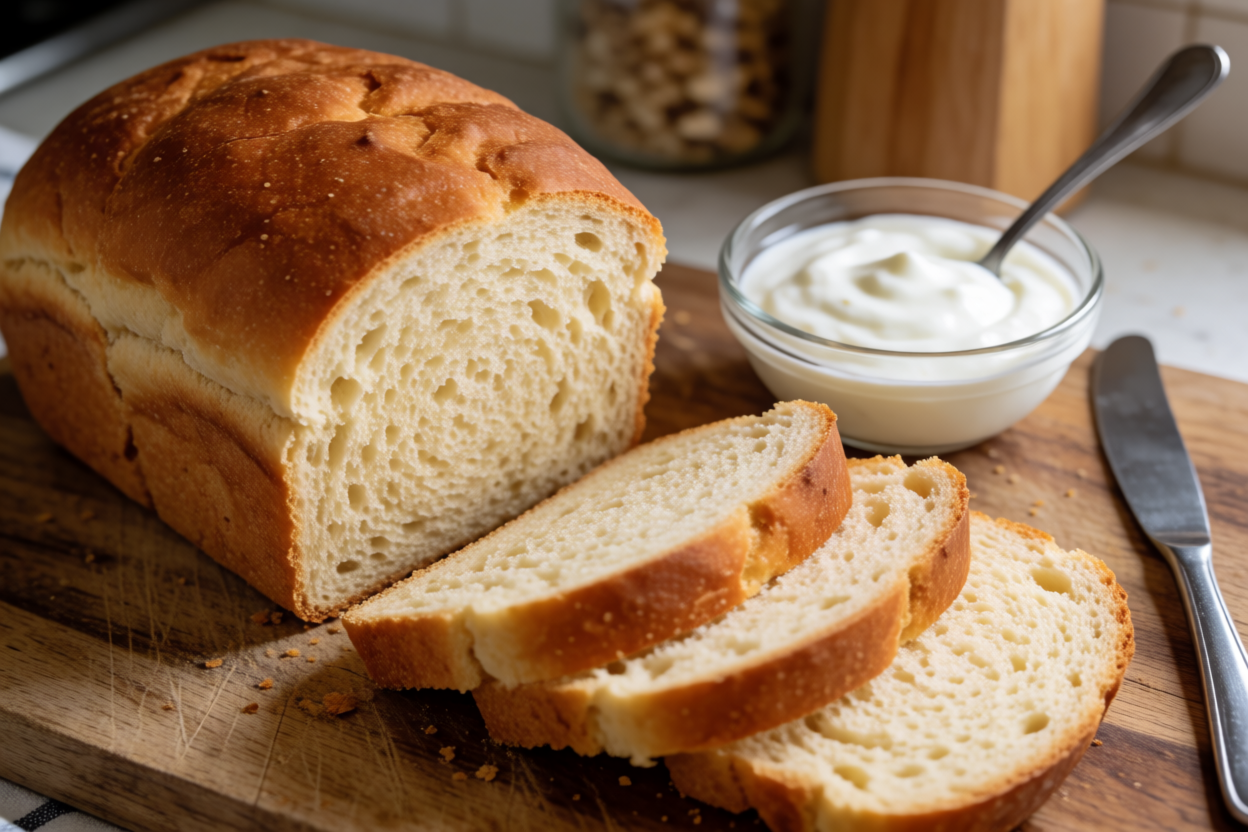
I used plain, full-fat Greek yogurt for this loaf, and it gave the bread a soft, moist texture without making it heavy. The loaf came out lightly golden on the outside and tender inside, and I found that letting it cool before slicing made it much easier to get clean, even slices.
Why Greek Yogurt Bread Turns Out So Soft
Greek yogurt is thick and acidic, and both of those properties matter here. The acidity reacts with the baking powder and baking soda to create extra lift, so you get a light crumb without yeast. The thickness adds moisture without the greasiness that a full cup of oil or butter would bring, which is why Greek Yogurt Bread stays soft on day three in a way most quick loaves don’t.
It’s also naturally high in protein compared to a standard water-based dough, since both the yogurt and the eggs contribute. For comparison, most sandwich bread has about 3 to 4 g of protein per slice (USDA FoodData Central), usually with fewer calories since the slices are smaller, while a slice of this loaf has about 8 g. That combination of yogurt and eggs is what actually makes this a high protein bread, not just a label on the title.
If you want an exact number for your own batch, run it through a nutrition calculator with your specific brand of yogurt, since the number varies enough between brands that one figure won’t be accurate for everyone, but the recipe card below has a rough estimate.
Equipment
9×5-inch loaf pan, large mixing bowl, whisk, silicone spatula, kitchen scale (recommended for the flour), food thermometer (optional, for checking doneness)
A note on yogurt fat content: full-fat yogurt gives the richest, most tender crumb. Nonfat works fine and keeps the loaf lighter, but it will be slightly less soft by day two. If your main goal is a low calorie bread recipe, nonfat is the better choice here, with only a small trade-off in texture.
This post may contain affiliate links. If you buy through one of them, FitFlow Kitchens may earn a small commission at no extra cost to you.
How to Make Greek Yogurt Bread, Step by Step
- Preheat and prep. Preheat your oven to 350°F (175°C), with a rack in the center. Grease a 9×5-inch loaf pan and line the bottom with parchment paper, leaving an overhang on the long sides so you can lift the loaf out later.
- Mix the wet ingredients. In a large bowl, whisk the Greek yogurt, eggs, oil, and honey (if using) until smooth. Using room-temperature eggs and yogurt helps everything blend evenly instead of curdling.
- Mix the dry ingredients. In a separate bowl, whisk the flour, baking powder, baking soda, and salt until evenly combined.
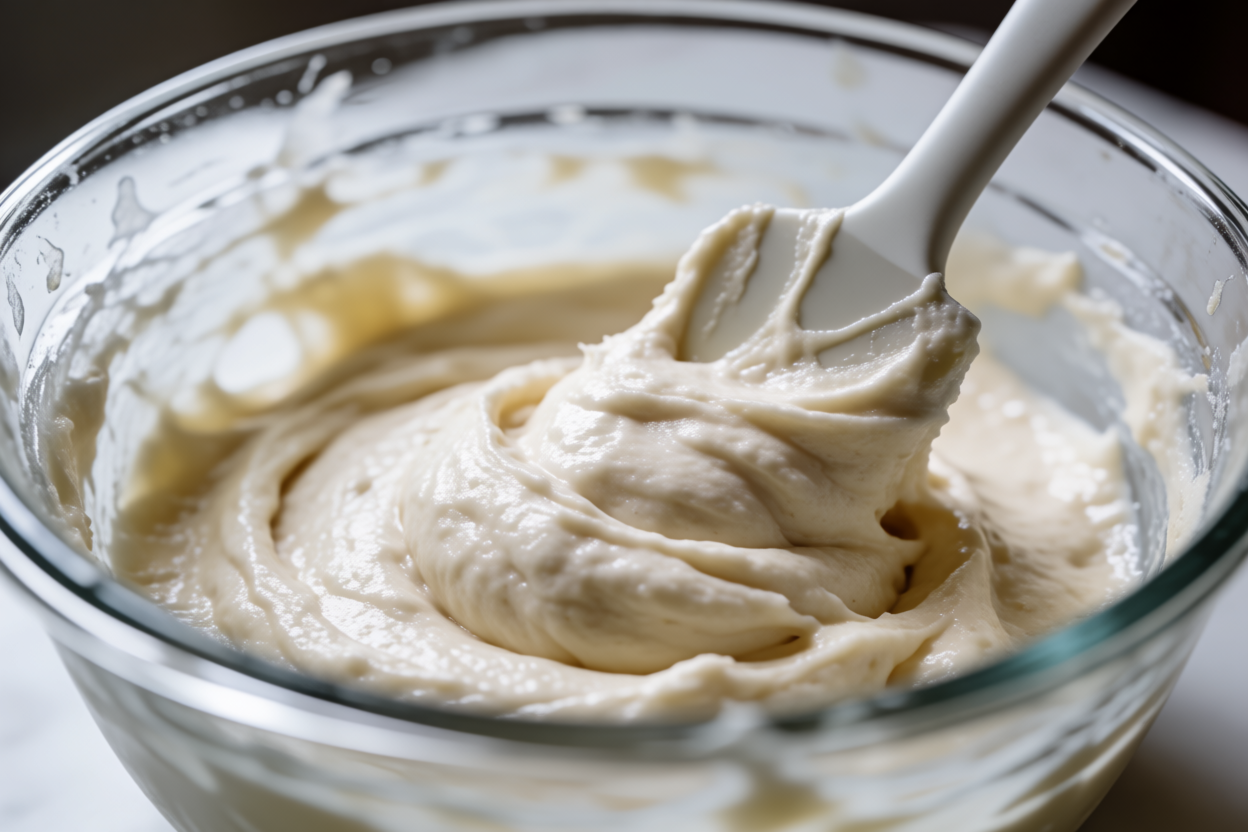
- Combine. Add the dry ingredients to the wet ingredients and fold gently with a spatula just until no streaks of flour remain. The batter will be thick, closer to muffin batter than cake batter. If it’s pourable like cake batter, your yogurt was likely too thin; don’t add extra flour to compensate, since overmixing is the more common problem.

- Add mix-ins. Fold in any sweet or savory additions now, reserving a small handful of cheese or seeds to sprinkle on top if you’d like.
- Bake. Pour the batter into the prepared pan and smooth the top. Bake for 45 to 55 minutes, until the top is golden and springs back when lightly pressed. If you have a food thermometer, the center should read 190 to 200°F.
- Cool before slicing. Let the loaf cool in the pan for 10 minutes, then transfer it to a wire rack. Wait at least an hour before slicing; cutting too early makes the crumb gummy, even if the Greek Yogurt Bread is fully baked.
Why Greek Yogurt Bread Works for Meal Prep
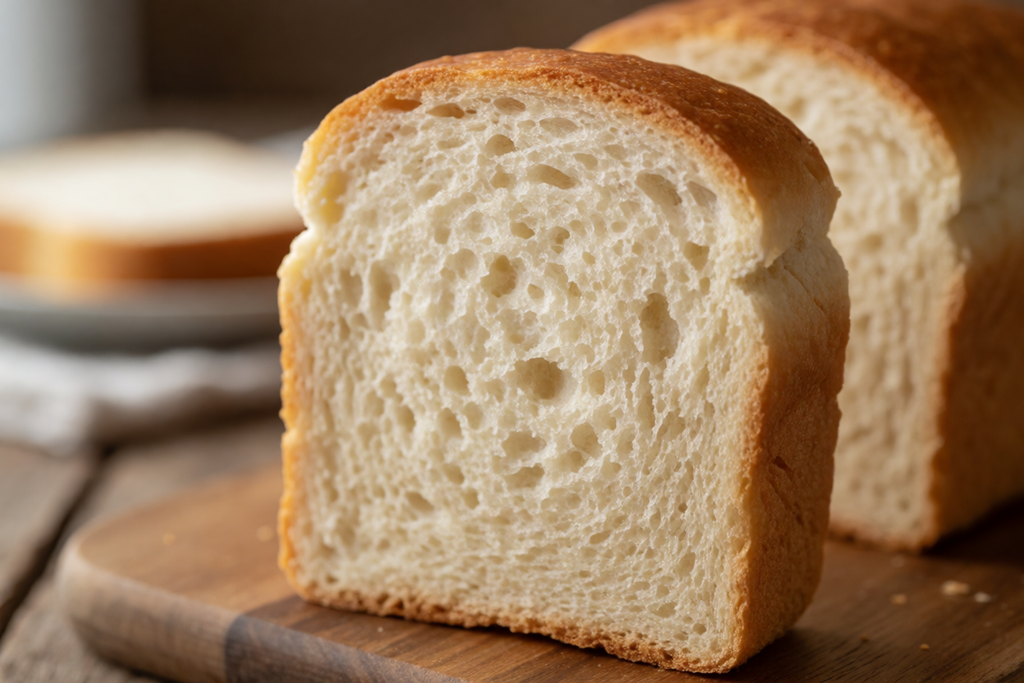
Greek Yogurt Bread is a good one to make ahead for the week rather than baking fresh each time, which is probably the bigger reason people search for a protein bread recipe in the first place.
- It slices cleanly once fully cooled, so you can portion the whole loaf right after baking instead of cutting slice by slice through the week.
- It freezes well per slice. Wrap individual slices and pull one out the night before, or toast straight from frozen.
- It holds up to repeated toasting better than most quick breads, since the yogurt keeps enough moisture in the crumb that it doesn’t dry out after a second or third reheat.
- It pairs with prepped proteins, not just spreads, so a batch of Greek Yogurt Bread plus some hard-boiled eggs or cottage cheese covers several breakfasts without any daily cooking.
It’s one of the easiest ways to add protein to your morning, alongside our easy high-protein breakfast ideas.
For more make-ahead recipes, check out our high protein meal prep guide.
Serving ideas
However you plan to eat it, here are a few ways to serve Greek Yogurt Bread:
- Spread with almond butter or honey for a quick breakfast.
- Serve alongside a warm bowl of vegetable soup.
- Top with poached eggs for a high protein lunch.
- Use two slices as the base for a grilled cheese with a lean protein filling.
- Toast and top with cottage cheese and sliced tomato for a savory snack.
- Enjoy with a side of fresh berries and extra Greek yogurt.
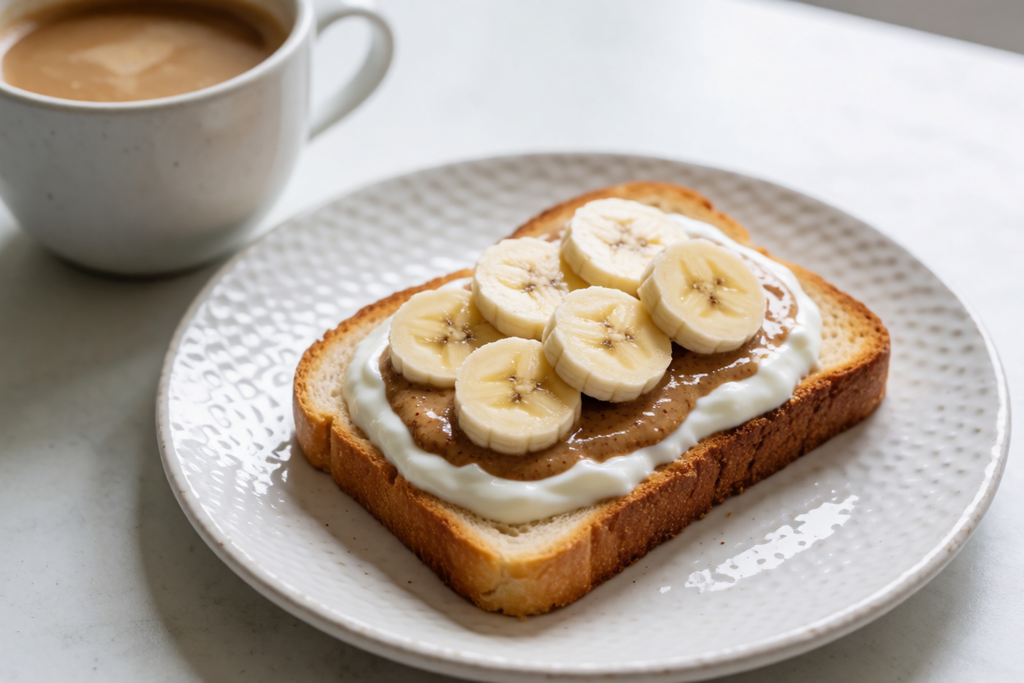
Customize it
| Style | Add-ins | Flavor |
|---|---|---|
| Sweet | Cinnamon, honey, berries | Light, aromatic |
| Savory | Garlic, rosemary, shredded cheese | Rich, earthy |
| Extra protein | 1-2 tablespoons chia or flax seeds | Nutty, slightly denser |
| Whole grain | Swap up to half the flour for whole-wheat | Hearty, more fiber |
If you add seeds for extra protein, stir in an extra tablespoon of yogurt, since seeds absorb moisture and can dry out the crumb otherwise.
Storage
Here’s how to keep Greek Yogurt Bread fresh after baking:
- Room temperature: airtight container, up to 2 days.
- Refrigerator: up to 1 week, airtight.
- Freezer: slice first, wrap each slice individually, freeze up to 3 months.
- Reheating: a toaster or a 350°F oven for a few minutes brings back the crust. The microwave works in a pinch but tends to make the crumb rubbery.
Troubleshooting
A few common issues can affect how your Greek Yogurt Bread turns out:
Gummy or dense center: almost always overmixing or underbaking. Fold just until the flour disappears, and confirm doneness with a thermometer (190 to 200°F) rather than guessing from color alone.
Dry or crumbly loaf: usually too much flour relative to yogurt. Weighing your flour on a kitchen scale instead of scooping with a measuring cup fixes this more reliably than any other single change.
Loaf didn’t rise much: check that your baking powder isn’t expired. It loses potency after about 6 months once opened.
FAQ
How is Greek Yogurt Bread different from a yeast bread?
Greek Yogurt Bread is a quick bread. It rises from baking powder and baking soda, not yeast, so there’s no proofing time, and it bakes in under an hour from start to finish.
How does this compare to cottage cheese bread?
Both are high protein bread options built on a dairy base. Cottage cheese bread tends to be heartier and slightly saltier because of the curds, while Greek Yogurt Bread blends completely into a smoother, tangier crumb.
Can I use nonfat Greek yogurt?
Yes, and it’s the better choice if you want a lighter, low calorie bread recipe. The loaf will be slightly less rich but still soft and moist. Full-fat gives the most tender crumb if you’re not watching fat content.
Why is my bread gummy in the middle?
Overmixing the batter or pulling it out before it’s fully baked are the two most common causes. See the troubleshooting section above.
Can I make this gluten-free?
Yes, with a 1:1 gluten-free flour blend that contains xanthan gum. You may need slightly more liquid, since gluten-free flours absorb differently; add an extra tablespoon of yogurt if the batter looks too stiff.
How long does it keep?
Two days at room temperature, up to a week in the fridge, or three months frozen in individually wrapped slices.
Greek Yogurt Bread
Equipment
- 1 9×5-inch loaf pan
- 1 Large mixing bowl
- 1 whisk
- 1 Silicone spatula
- 1 Kitchen scale recommended, for weighing the flour accurately
- 1 Food thermometer optional, for checking doneness
Ingredients
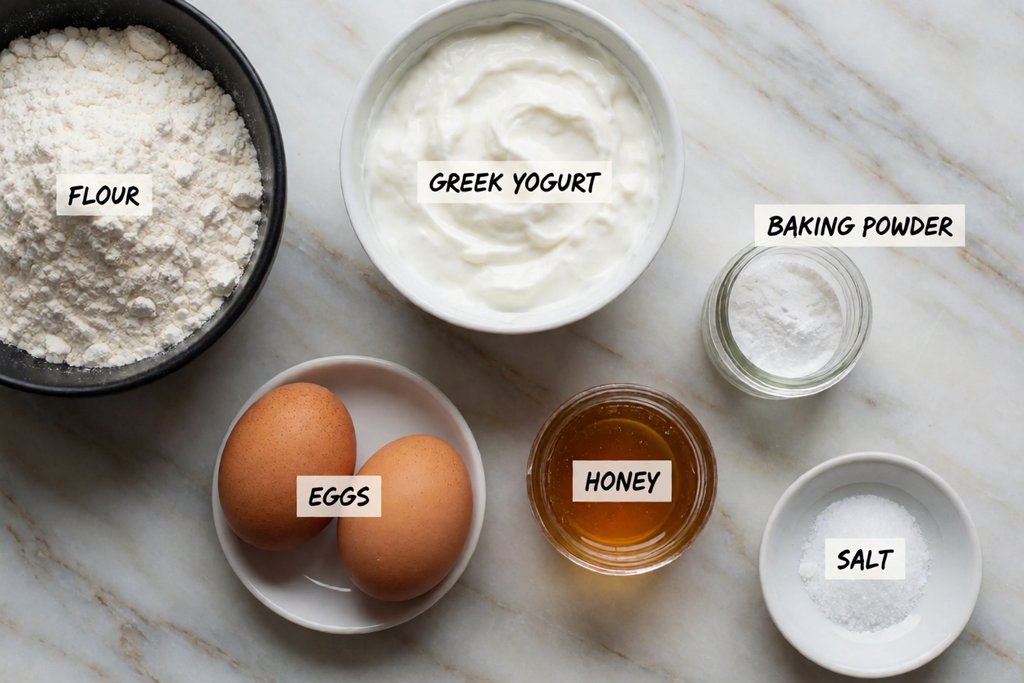
- 2 cups all-purpose flour
- 1 tablespoon baking powder
- 1/2 teaspoon baking soda
- 1/2 teaspoon salt
- 2 cups plain Greek yogurt (full-fat, low-fat, or nonfat)
- 2 large eggs, room temperature
- 2 tablespoons olive oil or melted butter
- 1 tablespoon honey or sugar (optional)
Optional savory mix-ins
- 1 tsp garlic powder
- 1 tbsp chopped fresh rosemary or thyme
- 1/2 cup shredded cheddar or parmesan
Optional sweet mix-ins
- 1 tsp vanilla extract
- 1/2 cup berries
- 1 tsp cinnamon
Instructions
- Preheat your oven to 350°F (175°C), with a rack in the center. Grease a 9×5-inch loaf pan and line the bottom with parchment paper, leaving an overhang on the long sides.
- Whisk the Greek yogurt, eggs, oil, and honey (if using) in a large bowl until smooth.
- In a separate bowl, whisk the flour, baking powder, baking soda, and salt until evenly Add the dry ingredients.
- In a separate bowl, whisk the flour, baking powder, baking soda, and salt until evenly combined.
- Fold in any sweet or savory mix-ins now.
- Pour the batter into the prepared pan and smooth the top. Bake for 45 to 55 minutes, until golden and springy to the touch, or 190-200°F on a food thermometer.
- Cool in the pan for 10 minutes, then move to a wire rack. Wait at least an hour before slicing.
Video
Notes
Nutrition (per slice)
| Field | Value |
|---|---|
| Calories | 175 |
| Protein | 8g |
| Carbohydrates | 22g |
| Fat | 5g |