Leg Workout at Home: The Complete Bodyweight Lower-Body Routine
You don’t need a squat rack or a leg press machine to build real lower-body strength. This leg workout at home hits your quads, hamstrings, glutes and calves in one short session, using nothing but your own bodyweight and a few feet of floor space.
It’s built as a complete bodyweight leg workout rather than a single-move routine. If you want a deeper dive on one specific area, check out our Squats Home Workout for form-focused squat progressions, or the 10-Minute At-Home Glute Workout for a glute-specific burner. This one is for when you want your whole lower body covered in one go.
Affiliate Disclosure: This post contains affiliate links. If you buy through one, FitFlow Kitchens may earn a small commission at no extra cost to you.
What You’ll Need
Nothing, really. A yoga mat makes the floor-based moves more comfortable on your knees and tailbone, and a sturdy step, low bench, or even a staircase step works for step-ups. Supportive shoes help with balance on single-leg moves, but this leg workout at home is genuinely doable barefoot on carpet if that’s all you’ve got.
Equipment That Can Help (Optional)
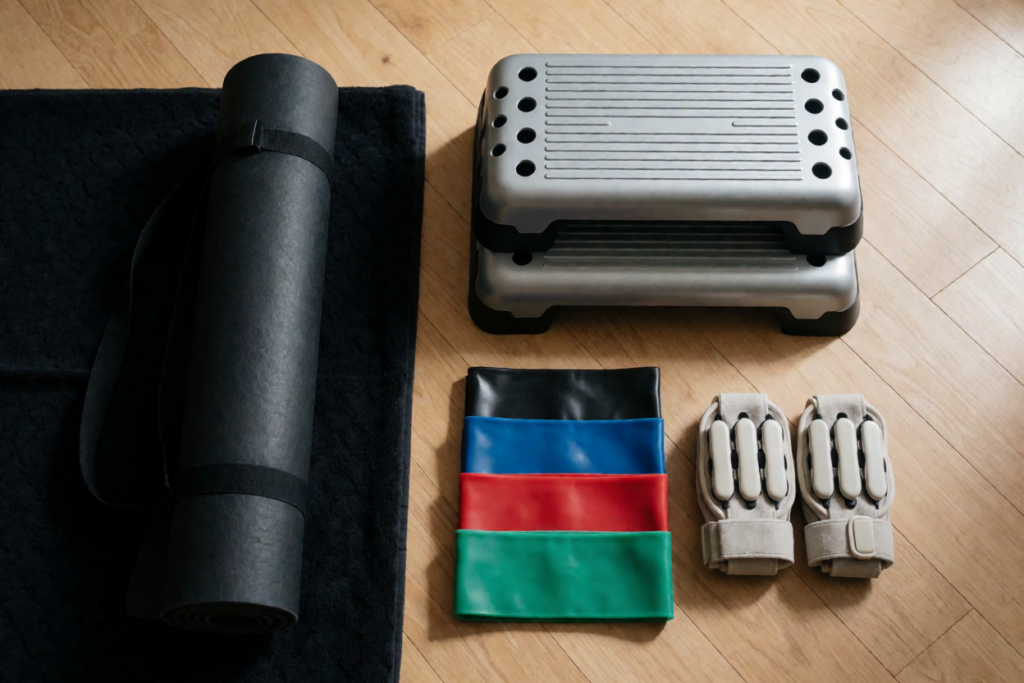
Everything in this leg workout at home routine works with just your bodyweight, but a few affordable extras make it more comfortable, or help you keep progressing once the bodyweight version feels easy:
- Non-slip yoga mat — cushions your knees and tailbone for the glute bridge and any floor-based moves.
- Adjustable aerobic step platform — gives you a stable, consistent height for step-ups instead of relying on furniture.
- Resistance loop bands (light to medium) — slip one around your thighs during squats and glute bridges to add resistance without any weights.
- Ankle weights (1-5 lb set) — the easiest way to add load to lunges and leg lifts once bodyweight reps stop being challenging.
- Supportive cross-training shoes — helps with balance and stability during single-leg moves like step-ups and reverse lunges.
Why This Bodyweight Leg Workout Works
Your legs carry you through every walk, every set of stairs, every time you stand up from a chair. Training them doesn’t require machines, it requires tension, range of motion, and consistency, all of which bodyweight training provides.
Each major lower-body muscle group plays a different role, and this routine is built to hit all of them instead of just one:
- Quads (front of the thigh): work hardest during squats and wall sits, and they’re what gets you up off a chair or a low couch without using your hands.
- Hamstrings (back of the thigh): engage during lunges and step-ups, and balancing quad and hamstring strength is one of the better ways to protect your knees over time.
- Glutes: drive the squat and lunge, but the glute bridge isolates them directly, since the other moves alone often undertrain them.
- Calves: rarely get trained on purpose in a bodyweight routine, which is exactly why calf raises are included here instead of left out.
A few real advantages of keeping this at home:
- No equipment, no excuses. You can do this leg workout at home in a hallway, a hotel room, or your living room floor.
- Joint-friendly progression. Bodyweight moves let you build control before adding load, which matters more than people think for knees and hips.
- Time-efficient. The full routine below takes about 20-25 minutes, including rest.
Warm Up First
Spend 3-5 minutes warming up before you start. Bodyweight leg work is still real work, and cold muscles are where most beginner injuries happen.
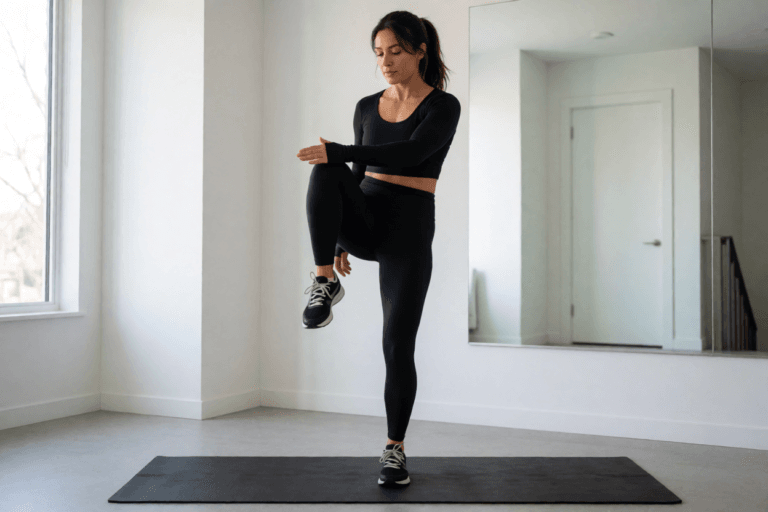
- 30 seconds marching in place
- 10 bodyweight hip circles each direction
- 10 slow bodyweight squats, just the first half of the range
- 10 walking lunges, no added speed
The Routine
Do each move for the listed reps or time, resting 30-45 seconds between moves. Complete the full circuit 2-3 times depending on your fitness level.
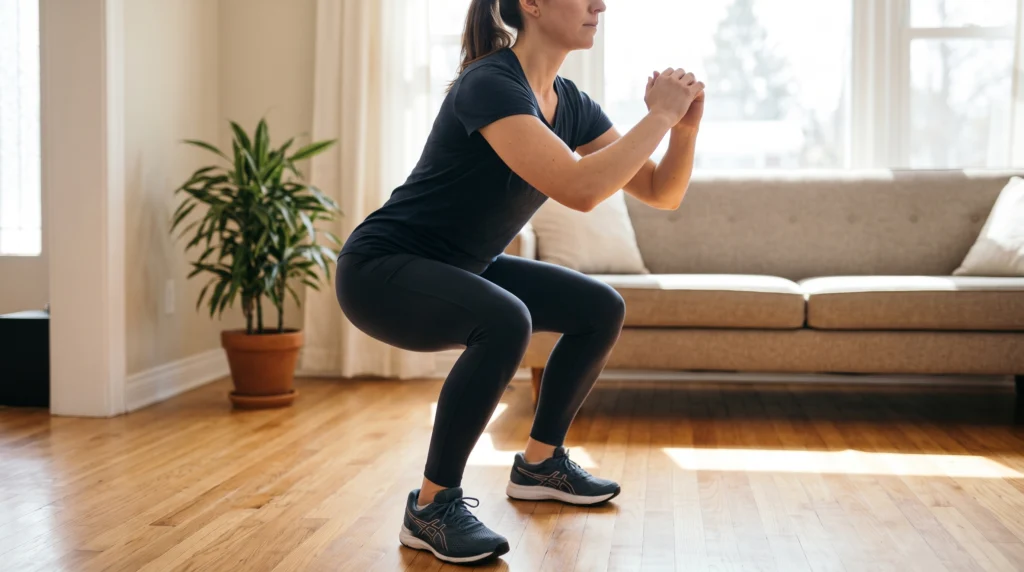
1. Bodyweight squats — 15 reps
Feet shoulder-width apart, sit back like you’re reaching for a chair behind you, keep your chest up. Breathe in as you lower, exhale as you push back up. For a full breakdown of form and common mistakes, see our dedicated Squats Home Workout guide.
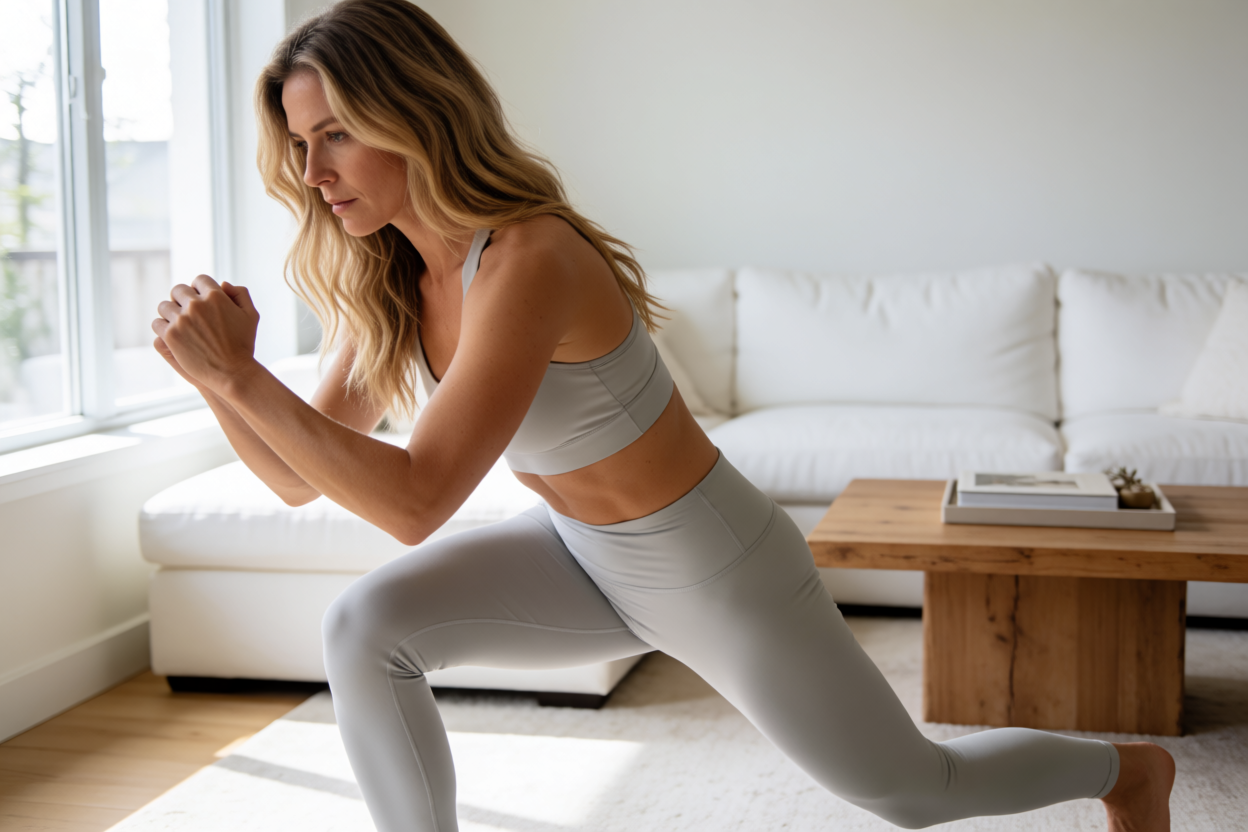
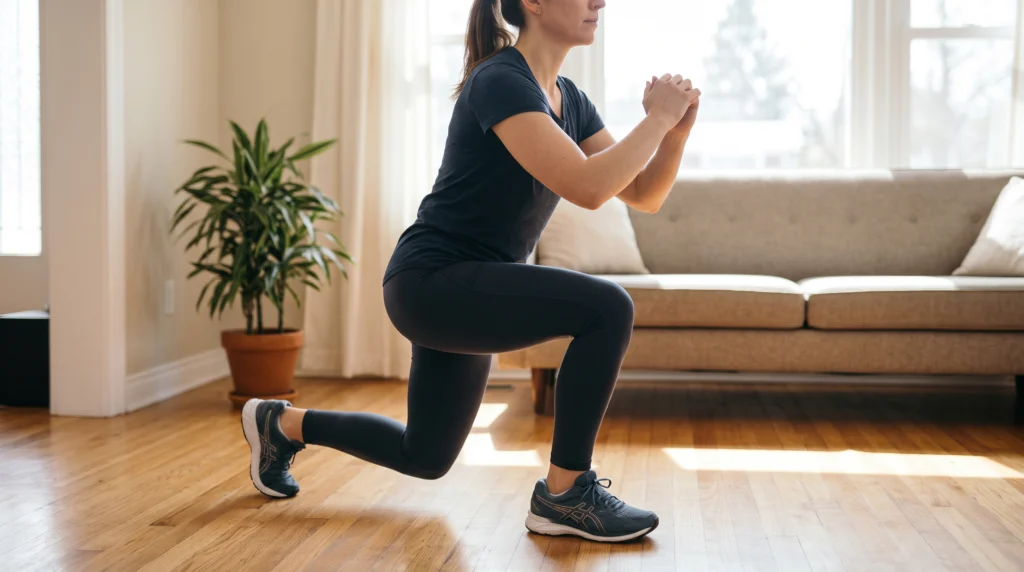
2. Reverse lunges — 10 reps per leg
Step one foot back, lower until your front thigh is parallel to the floor, push back to standing. Stepping backward is gentler on the knees than a forward lunge, which makes it a good entry point if you’re newer to lunging. Keep your front knee tracking over your foot, not caving inward.
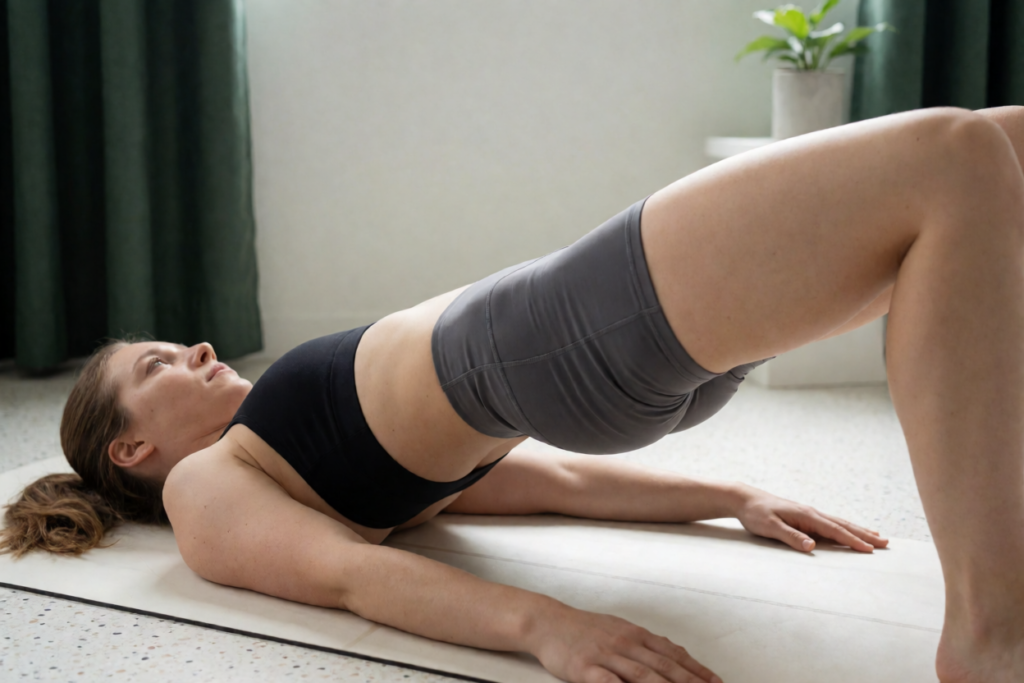
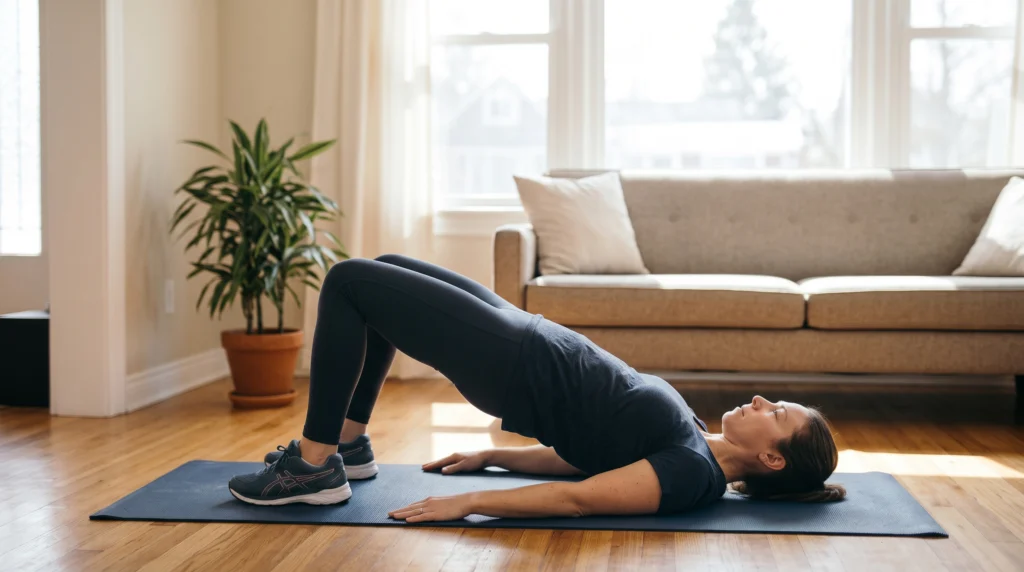
3. Glute bridges — 15 reps
Lie on your back, knees bent, feet flat. Squeeze your glutes to lift your hips, pause for a second at the top, lower slowly. This one directly targets what the squat and lunge miss. For more glute-specific work, our Glute Workout builds on this exact move.
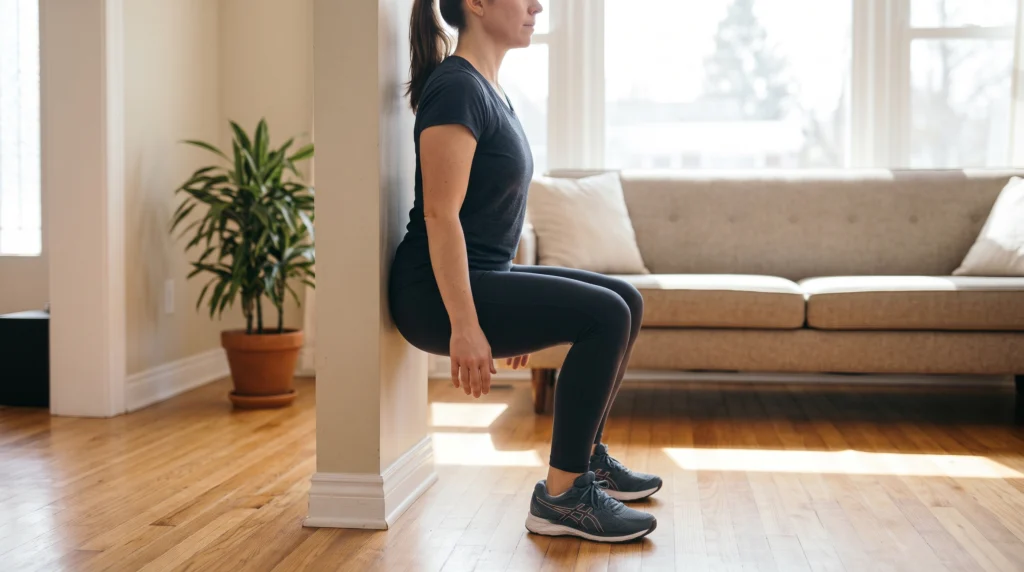
4. Wall sit — 30-45 seconds
Back flat against a wall, knees bent to roughly 90 degrees, like sitting in an invisible chair. This is pure time-under-tension for the quads, and it’s deceptively hard for how little it looks like you’re doing. Keep your weight in your heels, not your toes.
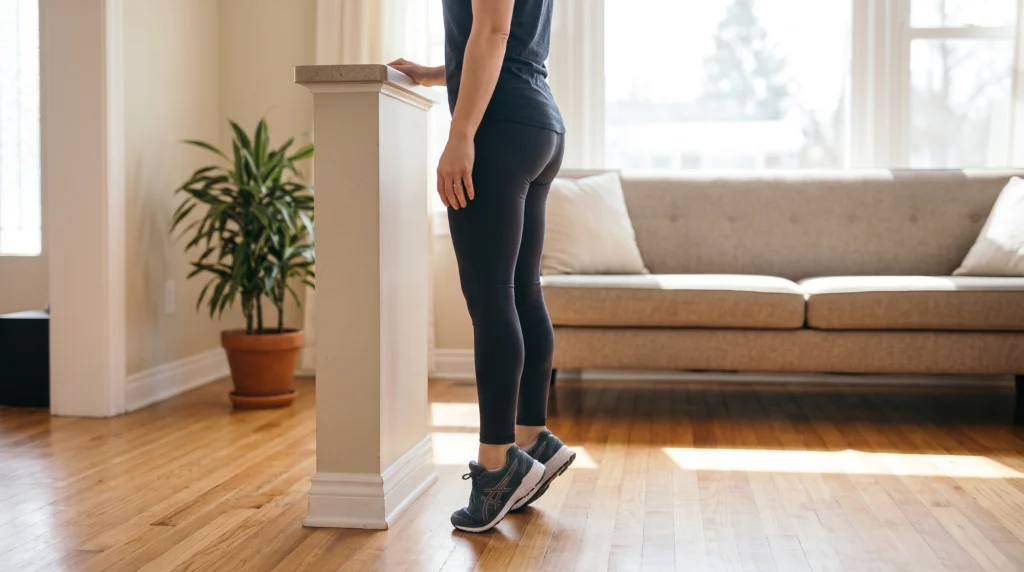
5. Calf raises — 20 reps
Stand tall, rise onto your toes, lower with control. Hold onto a wall or counter for balance if needed. Calves get skipped in most lower-body routines, so don’t rush through this one, the lowering phase is where most of the benefit happens.
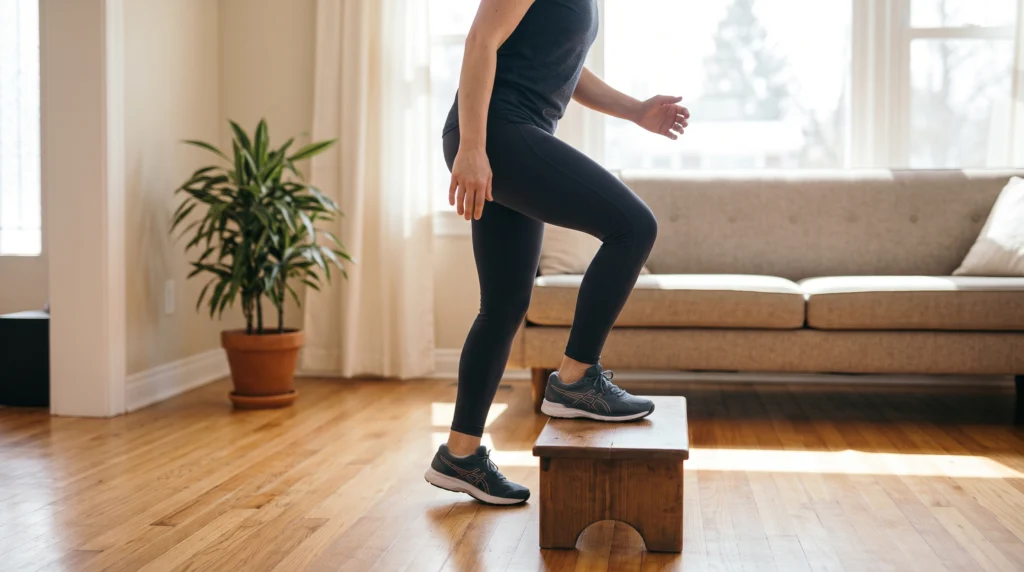
6. Step-ups — 10 reps per leg
Using a sturdy step or low bench, step up fully onto it, then step back down with control. This builds single-leg strength and balance that squats and lunges alone don’t fully cover. Drive through the heel of the stepping foot, not your toes.
Making It a Beginner Leg Workout, or a Harder One
This same routine scales both directions, which is exactly why it works as a beginner leg workout and as something you can grow into.
If you’re just starting out:
- Do 1 round instead of 2-3.
- Hold onto a chair or wall for balance on single-leg moves.
- Cut the wall sit to 15-20 seconds.
If it’s starting to feel easy:
- Add a fourth round.
- Slow each rep down to a 3-second lowering phase.
- Add resistance with a set of ankle weights or loop bands instead of household items.
Common Mistakes to Avoid
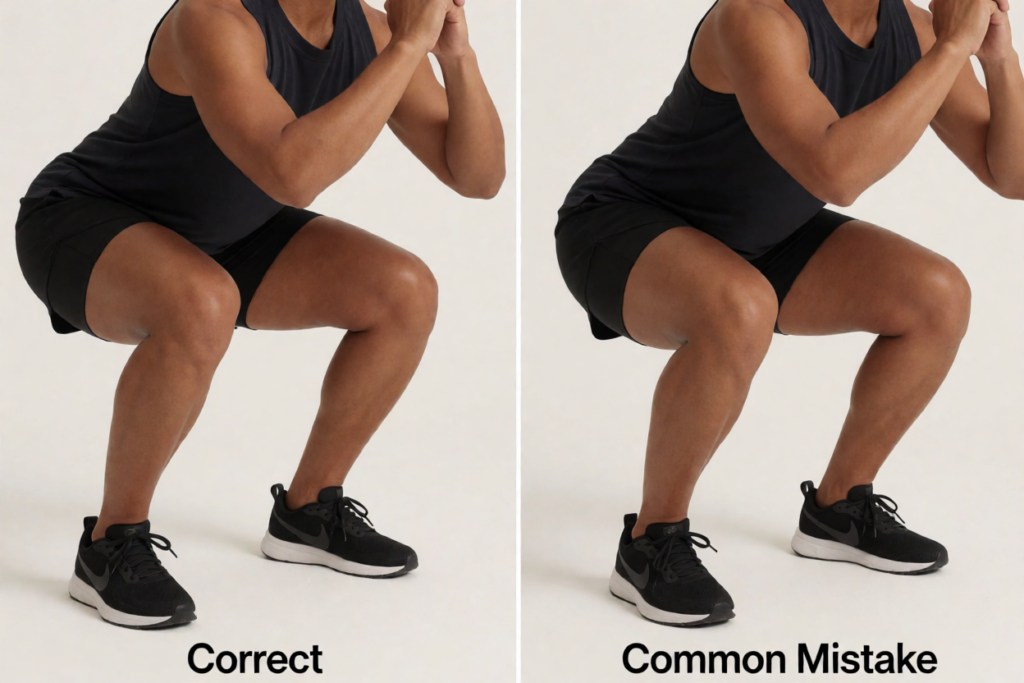
A few small form errors show up again and again in a bodyweight leg workout, and fixing them matters more than adding extra reps.
- Letting the knee cave inward during squats and lunges. This is the single most common issue, and it puts unnecessary stress on the knee joint. Focus on pushing your knee out in line with your toes.
- Rushing the lowering phase. The slow, controlled part of each rep is where most of the muscle-building work actually happens. Speeding through it to get more reps in defeats the purpose.
- Holding your breath. It’s tempting during a wall sit or the last few squats, but holding your breath spikes your blood pressure unnecessarily. Breathe steadily throughout.
- Skipping the warm-up on short-time days. Five minutes feels skippable when you’re busy, but it’s exactly when most minor strains happen.
Building It Into a Lower Body Workout at Home Routine
For most people, doing this lower body workout at home 2-3 times a week, with at least one rest day between sessions, is enough to see real strength gains without overtraining the same muscles. Pair it with upper-body days (our Upper Body Workout at Home is a natural fit) or a walking session on your off days to keep moving without hammering your legs two days in a row.
Soreness in the first week or two is normal, especially in the glutes and calves if those muscles haven’t been worked directly before. Sharp or joint-level pain isn’t, and is a sign to scale back the range of motion or skip that move for now.
FAQ
Do I need any equipment for this leg workout at home
No. Every move here uses just your bodyweight. A step or sturdy low bench helps for step-ups, but a staircase step works just as well.
How often should I do this bodyweight leg workout?
2-3 times a week, with a rest day in between, is a solid starting point. Your legs need recovery time between sessions just as much as the workout itself.
Is this routine good for beginners?
Yes, it’s built to scale. Start with one round at a slower pace, and use the beginner modifications above if any single move feels too intense.
What if I don’t have a step for step-ups?
The bottom stair of a staircase works just as well, or you can swap step-ups for an extra set of reverse lunges instead.
How long until I notice results?
Most people feel a strength difference in daily movement, like climbing stairs more easily, within 3-4 weeks of doing this twice a week. Visible changes take longer and depend on diet and consistency as much as the workout itself.
Will this replace squats or a dedicated glute workout?
It covers both, but lightly. If quads or glutes are your main focus, our dedicated Squats Home Workout and Glute Workout guides go deeper into each.